Air Duct Cleaning After a Florida Roof Replacement
A roof replacement can leave dust, shingle granules, and small bits of construction debris around your attic. If you're searching for air duct cleaning roof replacement advice after a reroof, start with one fact: replacing the roof doesn't automatically mean your ducts need cleaning.
Roofing debris in the attic and contamination inside the HVAC duct system are different problems. The right next step is an inspection that traces where the debris is located and checks whether it entered the equipment or ductwork. These practical steps can help you protect your Florida home before, during, and after the roofing project.
Air Duct Cleaning Roof Replacement: When It Makes Sense
Roof replacement usually happens outside the home, while your air ducts carry conditioned air through the interior. If the duct system remains sealed and the attic stays clean, the work may have little effect on HVAC cleanliness.
However, many Florida homes have air handlers and flexible ductwork in the attic. Roofers may need attic access, repair sections of roof decking, or move insulation near the work area. Those activities can disturb dust and debris around the HVAC equipment.
The roof work itself
Tear-off work can release old shingle material, underlayment particles, sawdust, and loose insulation. Some of that material may fall into the attic, especially when workers repair damaged decking or work around roof penetrations.
Debris on top of a duct does not prove that debris is inside the duct. A technician needs to check the duct surface, connections, registers, return plenum, and air handler before recommending a full cleaning.
Existing HVAC conditions matter
A roof project may bring attention to problems that existed before the work began. Weak airflow, an overdue filter change, a musty odor, or dust around supply registers can point to HVAC maintenance or duct concerns that are separate from the new roof.
For example, a dirty coil, blower compartment, or drain pan may need air-handler service rather than duct cleaning. Homeowners comparing these options can review this guide to compare HVAC tune-ups with duct cleaning before scheduling service.
Roofing Debris in the Attic Is Not Duct Contamination
The attic is a construction area during many roof replacements. Workers may leave a few granules or particles near the roof deck, but loose debris in that space doesn't automatically travel into the duct system.
Duct contamination means dust or debris has settled inside the duct runs, plenums, registers, or connected HVAC components. That can happen when a duct is torn, disconnected, poorly sealed, or left open during construction. A return-side leak in an attic can also pull dusty attic air into the HVAC system when the blower runs.
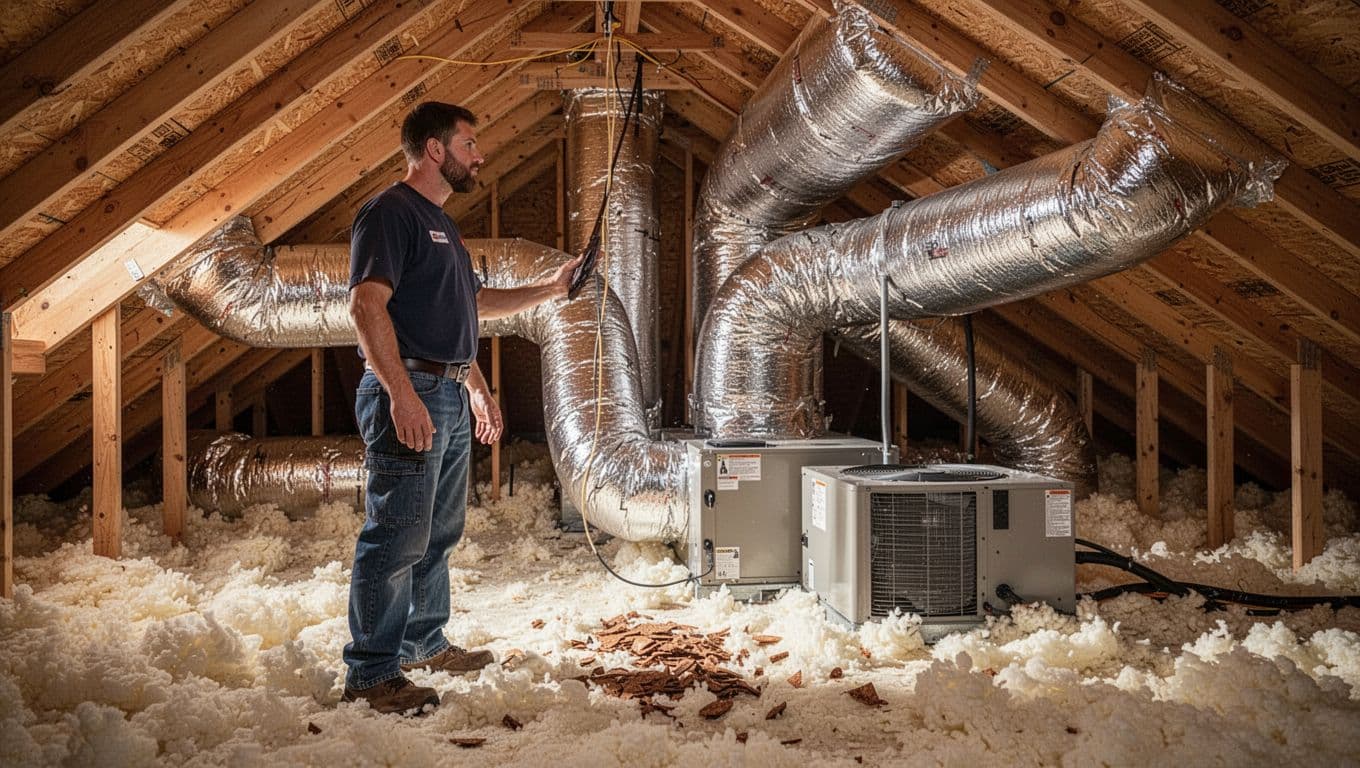
Roofing debris on the outside of a duct proves where the debris landed. It doesn't prove that contamination reached the inside.
Supply registers and return grilles provide useful clues, but they only show small portions of the system. Dust around one grille may come from household activity, an unsealed boot, or normal buildup at the opening. A qualified professional should inspect the area before treating it as evidence of contamination throughout the home.
If the roof crew worked near an attic air handler, ask for a visual check of the filter rack, blower compartment, return plenum, and nearby duct connections. The findings will show whether you need register cleaning, air-handler cleaning, duct cleaning, or no additional service.
Before Roof Work: Make a Protection Plan
A short conversation with the roofing contractor and an HVAC professional can prevent confusion later. Begin by locating the air handler, attic access, supply ducts, and return ducts. Take a few photos before work starts, especially if equipment sits near the roof access path.
Document the HVAC system
Record the filter size and condition, then note any existing odors, airflow problems, or visible dust around the vents. This information gives you a useful comparison after the roof work is complete.
Tell the roofer where the air handler and ductwork are located. The crew should know which attic areas contain HVAC equipment and should avoid placing tools or materials on top of ducts. If insulation or ductwork needs to move, ask who will inspect and restore it afterward.
Your pre-work plan should also include these steps:
- Keep the attic access closed when workers aren't using it.
- Ask how the crew will protect the air handler and nearby ductwork.
- Confirm who will remove attic debris after the roofing work.
- Plan to check or replace the HVAC filter after dusty work ends.
- Keep children and pets away from attic access and active work areas.
Plan for safe HVAC operation
Ask your roofer or HVAC contractor whether the system should stay off during active tear-off. The right choice depends on the home's ventilation, weather, equipment location, and work being performed.
If the system is off, a professional may use temporary protection around registers or equipment. If the system remains on, don't cover supply vents or return grilles with loose plastic, because restricted airflow can strain the equipment.
The outdoor condenser also needs sensible protection from falling debris. Never leave a cover over a running condenser. A contractor should remove any temporary cover before the system operates.
After the Roof Is Finished, Inspect Before Booking Cleaning
Wait until the roof crew has completed cleanup before judging the HVAC system. Ask whether anyone entered the attic, whether the roof deck needed repairs, and whether insulation or ductwork was moved.
Walk through the home and look at the registers without removing them yourself. Check for new particles, damaged covers, unusual odors, or changes in airflow. A small amount of dust at one grille may need a focused cleaning, while debris across several openings deserves a wider inspection.
Start at the air handler
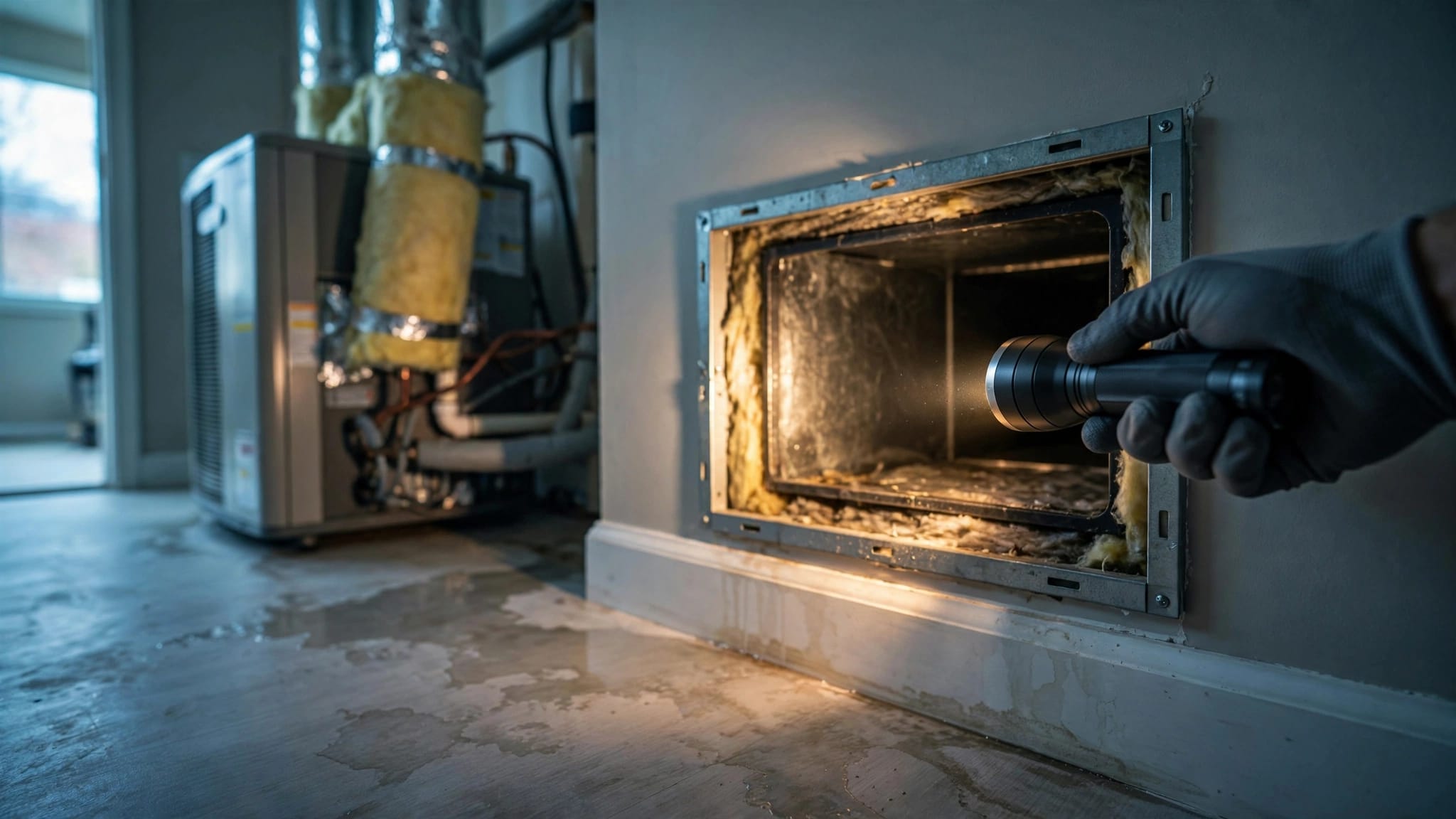
The air handler is often the most important inspection point because it contains the blower and other components that move air through the system. A technician can check the filter, cabinet, return plenum, blower area, coil area, and drain pan for signs of construction dust or damage.
If debris appears only inside the air handler, cleaning that equipment may address the problem without cleaning every duct run. Conversely, visible material in both the air handler and connected ducts may call for a broader service.
Follow the airflow path
The technician should trace the path between the return grilles, air handler, supply ducts, and registers. This process helps identify an open connection, crushed flexible duct, torn insulation jacket, or loose register boot.
Roof repairs can also expose old sealing issues that have nothing to do with the replacement itself. Inspection separates new construction debris from long-term dust buildup and helps prevent you from paying for a service your system doesn't need.
What Qualified Duct Cleaning Should Include
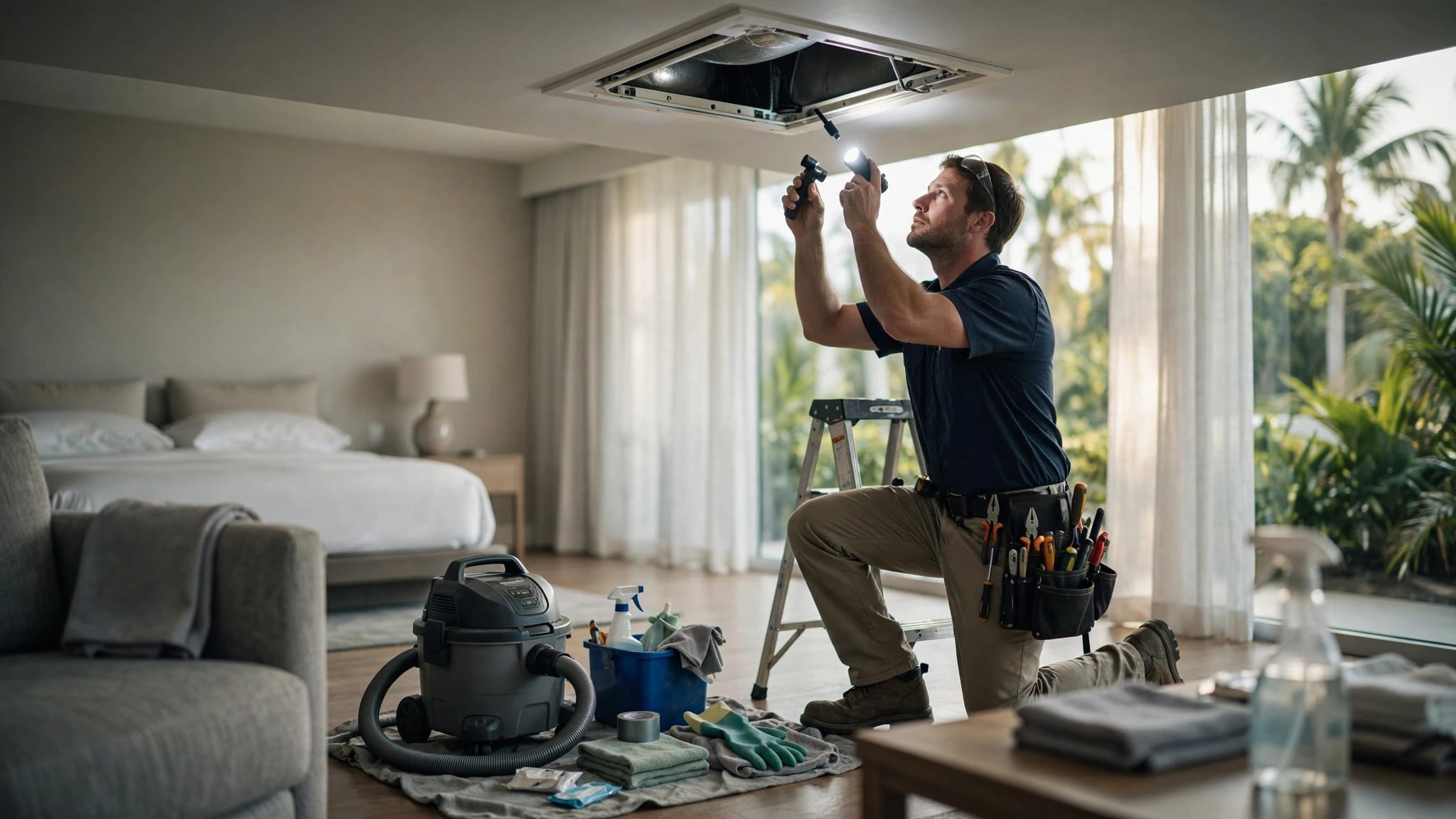
A professional air duct cleaning visit should begin with an evaluation and a clear description of the work. The provider should explain which parts of the system show contamination and which areas are outside the proposed scope.
For a full duct service, the crew may clean accessible supply and return runs, registers, grilles, plenums, and other connected areas. The exact process depends on the duct design, access points, material, and condition.
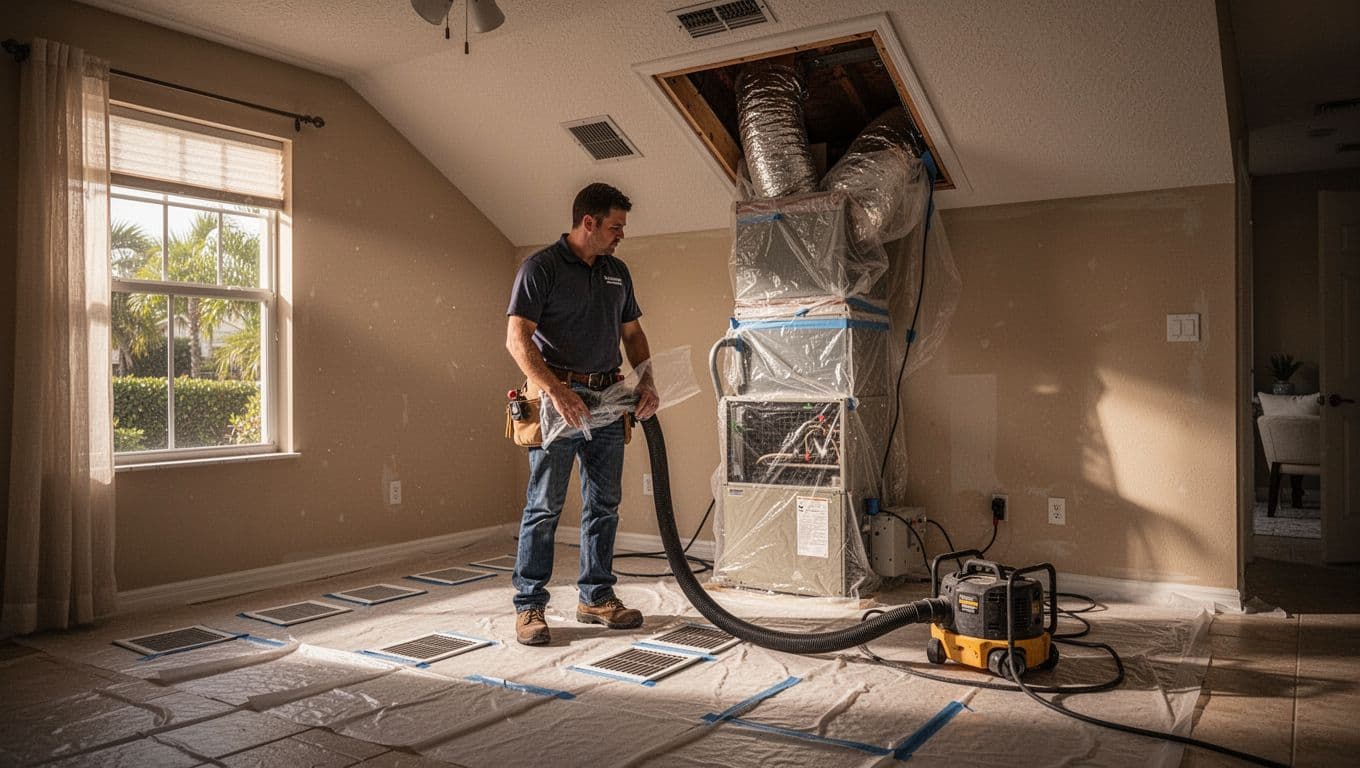
Protection should be visible
Before cleaning begins, the crew should protect flooring, furniture, walls, and nearby openings. Registers may need to be removed and sealed while the technician works on connected sections.
The cleaning method should collect debris rather than scatter it through the home. Depending on the system, the provider may connect a powerful vacuum to the ductwork and use controlled agitation to loosen settled material. HVAC components should remain protected throughout the process.
A good crew also keeps the work area orderly. Loose hoses, unsealed openings, or uncovered furniture are signs that you should ask how the company controls dust.
The service scope should match the findings
Duct cleaning and air-handler cleaning are related but separate services. Make sure the estimate states whether it includes the return side, supply side, registers, plenums, blower compartment, coil area, and drain pan.
Sanitizers, inhibitors, or microbial treatments shouldn't be automatic add-ons. Ask what the product is intended to address, where it will be applied, and why the inspection supports using it. A qualified provider should answer those questions in plain language.
Before hiring a company, review these questions to ask an air duct cleaning company, including questions about insurance, training, equipment, scope, and inspection photos.
Signs to Call an HVAC or Duct-Cleaning Professional
Contact an HVAC or duct-cleaning professional after roof work if you notice a clear change in system performance or visible evidence of debris. Schedule an inspection when:
- New dust or particles blow from multiple supply registers.
- An odor starts after the roof work and returns when the blower runs.
- A duct looks crushed, disconnected, torn, or open in the attic.
- The HVAC filter becomes unusually dirty soon after replacement.
- One or more rooms develop a sudden airflow change.
- Roofing material or insulation appears inside a register or return grille.
- The air handler shows visible dust in areas that should remain enclosed.
These signs don't identify the exact cause by themselves. A blocked filter, damaged duct, dirty blower, loose register, or unrelated HVAC problem can produce similar symptoms. Inspection keeps the solution focused.
Remember the dryer vent is separate
A roof replacement doesn't clean the dryer vent. The dryer exhaust line has its own path, and it should receive a separate inspection if it runs through the attic or exits through the roof.
Long drying times, a hot laundry area, or lint around the outdoor termination can indicate restricted exhaust airflow. Roof work may also disturb a rooftop vent cap or damage the termination if contractors work near it. Ask a professional to check the dryer vent independently instead of adding it to a general HVAC diagnosis without an inspection.
Choosing the Right Time and Company in Florida
The best time for air duct cleaning roof replacement service is after all dusty roof, attic, insulation, and drywall work has finished. Cleaning too early can leave the system exposed to another round of construction dust.
If the roof replacement involved only exterior work and the HVAC inspection finds no debris or damage, you may not need duct cleaning at all. Continue normal filter changes and HVAC maintenance, then watch for changes in airflow, odor, or visible dust.
Timing depends on the work
A same-week inspection makes sense when workers entered the attic, moved ductwork, repaired roof decking, or left debris near the air handler. Otherwise, you can arrange an inspection during your next HVAC service visit.
Florida homeowners should choose a company familiar with attic-mounted equipment, high heat, humidity, flexible ductwork, and tight access points. A Fort Myers-based provider serving the Gulf Coast, such as Fort Myers air duct and dryer vent cleaning, can help separate roof-related concerns from regular HVAC maintenance.
Questions help you compare providers
Ask whether the company inspects before recommending cleaning. Confirm what the estimate includes, how the crew protects the home, and whether technicians have suitable training and insurance.
You can also ask for photos of any suspected contamination. A provider that explains the findings and gives you options is easier to trust than one that recommends the same treatment for every house.
If debris, dust, or odor remains a concern after your roof project, you can Get a Free Estimate for air duct or dryer vent cleaning.
Conclusion
A Florida roof replacement doesn't automatically require air duct cleaning. The important distinction is location: loose roofing debris in the attic is different from contamination inside the HVAC system.
Protect the equipment during the project, inspect the air handler and duct connections afterward, and choose service based on visible findings or clear performance changes. When the evidence supports cleaning, proper containment and a clearly defined scope can address the problem without treating every roof replacement as a duct emergency.
A new roof should give you confidence in the structure above your home. A careful HVAC inspection confirms that the system below it stayed clean, sealed, and ready to run.