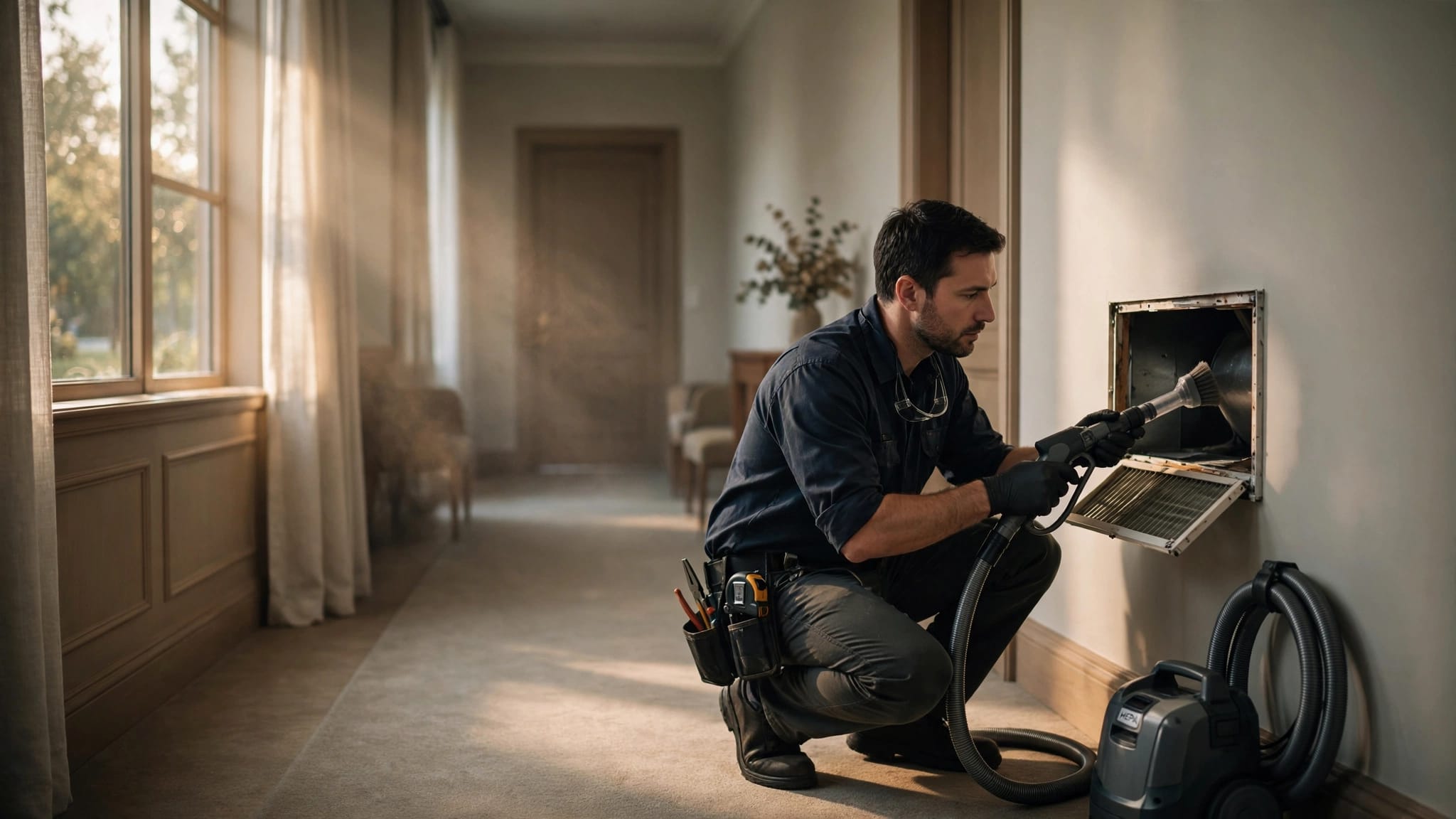
Can Sawdust From a Home Workshop Reach HVAC Ducts?
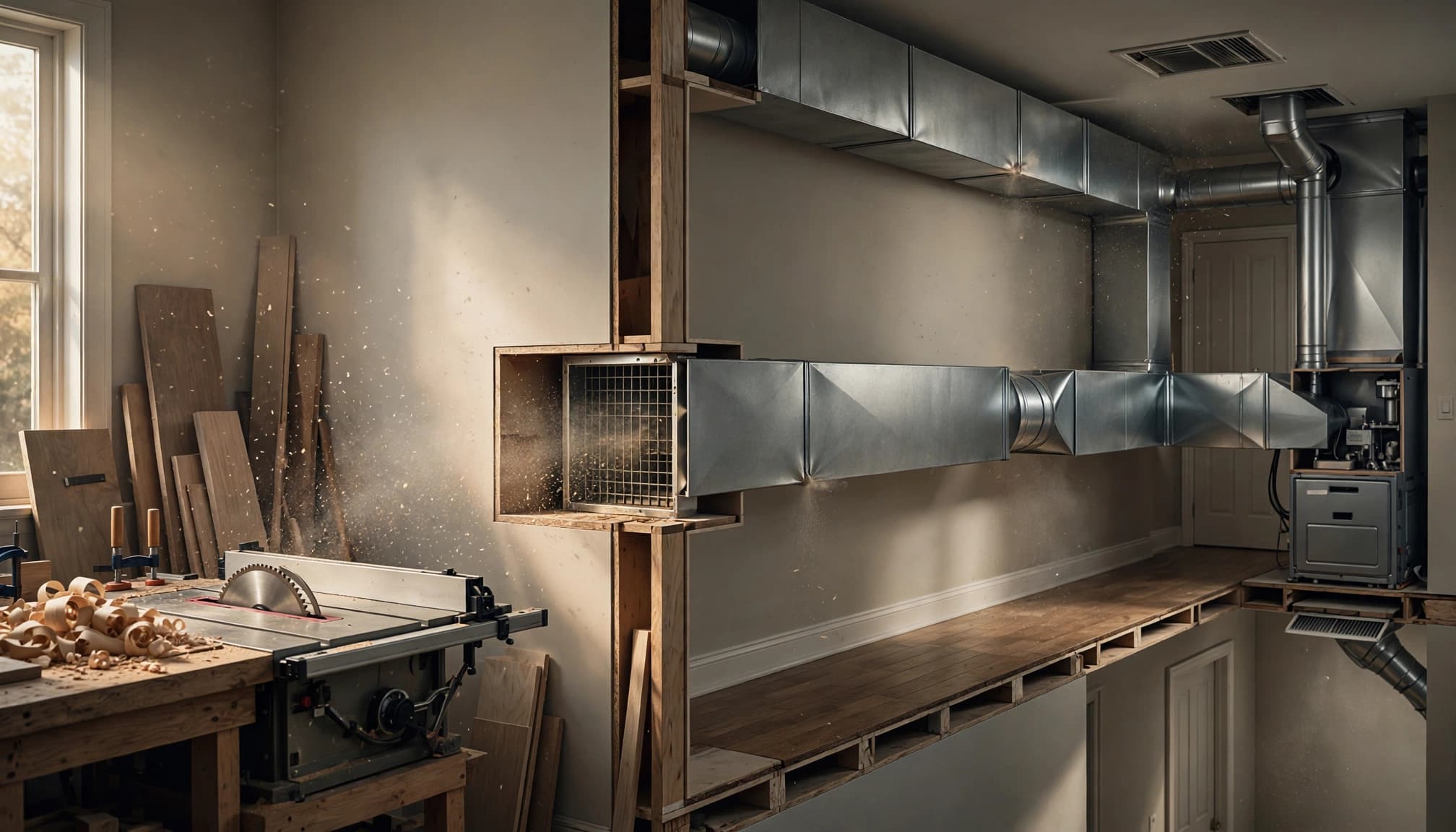
Yes, workshop sawdust can reach HVAC ducts if airborne dust finds a path into the system. Shared returns, gaps in return ducts, and open registers can all provide a route.
That doesn't mean every dusty workshop has contaminated ductwork. Where the dust travels depends on your home's layout, the condition of the ducts, and whether the system runs during woodworking. Knowing those pathways can help you protect your home.
How workshop sawdust can enter HVAC ducts
Cutting and sanding release dust into the air. Some settles near your tools, while some can move through the workshop and into adjoining rooms.
Shared returns and airflow between rooms
A return grille draws room air back toward the air handler when the system runs. If the workshop has a return connected to the home's system, airborne sawdust can enter that return path.
Dust can also leave the workshop through an open door or other gaps and reach a return in a nearby room. The filter catches some material, but dust may collect on the return side before it reaches the filter. A poorly fitted filter can also allow air to bypass it.
Duct leaks and open registers
Leaks on the return side can draw dusty air into the system. This matters when a return duct or air-handler cabinet sits in or near the workshop. Our guide to how duct leaks affect airflow and indoor air quality covers the difference between leaks and debris buildup.
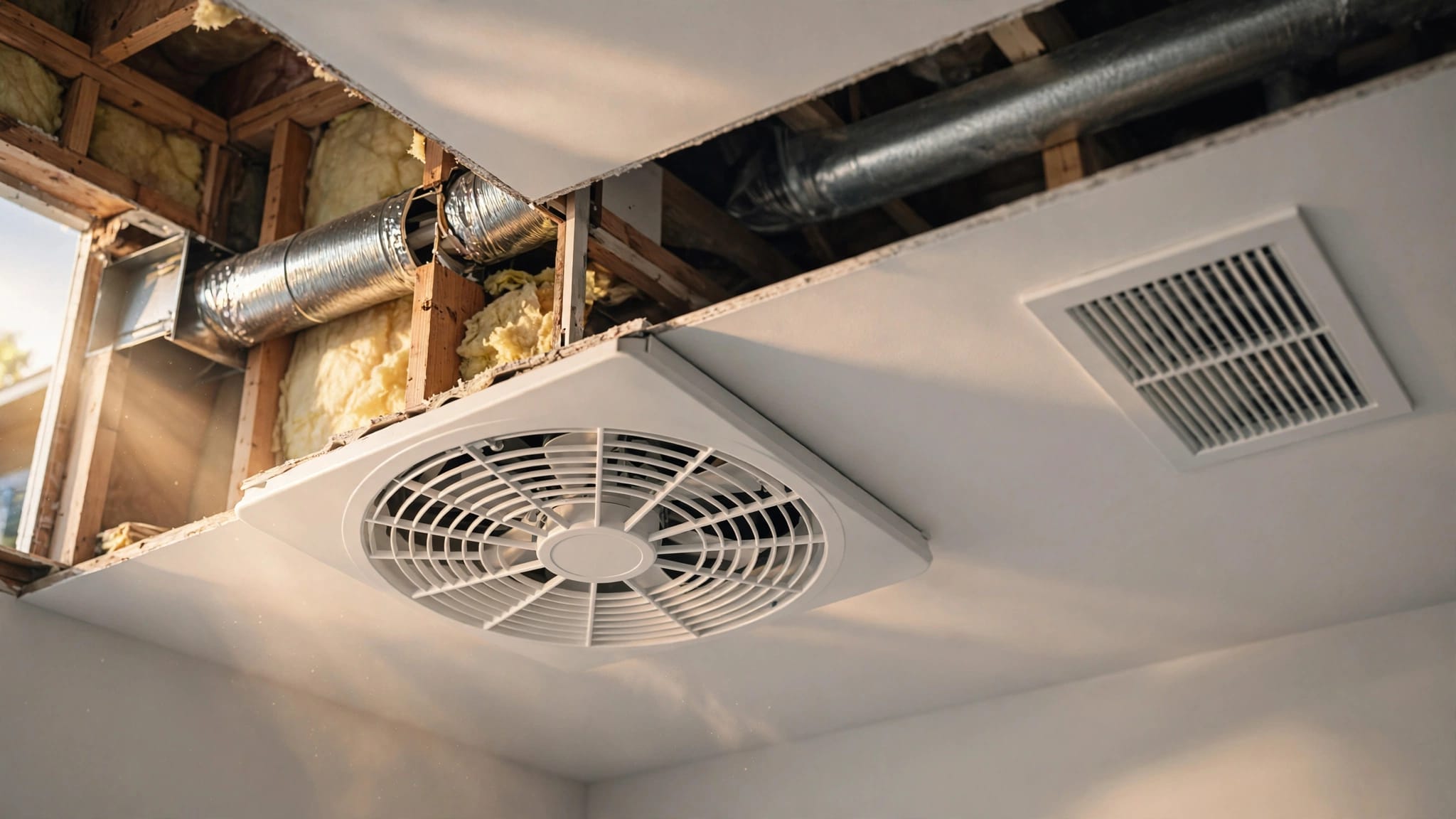
Supply ducts usually push air outward when the system runs. However, dust can settle through an uncovered supply register, particularly when the system is off. It can also enter ductwork left open during a renovation.
Signs workshop dust may be spreading
A dusty floor beside a saw is expected. Dust appearing farther from the workshop after cutting or sanding deserves a closer look.
Watch for these changes:
- Fine dust returns to nearby rooms soon after you clean them.
- A filter becomes loaded sooner than usual after a woodworking project.
- You see loose debris inside a return opening or supply register.
- Dust appears to blow from a supply vent when the system starts.
- Airflow weakens after a period of heavy dust-producing work.
These signs don't prove that sawdust has reached every duct. Household dust and airflow problems have other causes, too. Still, the timing and location can help an HVAC professional identify where to look.
Dust on a grille alone may need only surface cleaning. Debris deeper inside an opening, or particles blowing from several vents, gives a technician a stronger reason to inspect the system.
How to keep sawdust out of your HVAC system
The most effective approach is to capture dust close to the tool and limit its movement into the rest of the house.
Collect dust where you make it
Connect cutting and sanding tools to a suitable dust collector or vacuum designed for the material and equipment. Empty the collection container as needed, following the equipment manufacturer's instructions.
Keep the workshop door closed during dusty work. If the space opens directly into living areas, a temporary barrier can help limit dust movement. Avoid using compressed air to blow sawdust around the room, since that puts settled material back into the air.
A garage workshop needs particular care. Keep the separation between the garage and living space intact, and don't rely on a shared home return to ventilate workshop dust or fumes.
Protect the HVAC system during dusty work
When conditions allow, turn off the central HVAC system during sanding or other heavy dust-producing work. Protect nearby openings while the system is off, then remove those coverings before restarting it.
Don't block a return or supply register while the system is running. Restricting airflow can strain the equipment. If you can't safely turn the system off, contain the work area and use dust collection at the source.
After the dusty work is complete, inspect the filter. Replace a loaded filter with the correct size and an efficiency approved for your system.
Clean the workshop before restarting the system
Finish cutting and sanding before the final cleanup. Use a suitable HEPA-filtered vacuum on floors, ledges, and other accessible surfaces, following the vacuum manufacturer's directions. Dry sweeping can stir settled dust back into the air.
Wipe accessible hard surfaces as appropriate for the material. Clean register covers and the area around them without pushing debris deeper into the opening. If you see substantial material beyond easy reach, leave it for an inspection rather than blowing air into the duct.
The same principle applies after other dusty projects. Our article on duct cleaning for drywall dust explains how renovation debris can affect the HVAC path.
When to inspect or clean the HVAC system
Arrange an inspection if dust keeps blowing from supply vents, a replacement filter loads quickly, or you can see debris inside duct openings. An inspection also makes sense if the HVAC system ran throughout extensive sanding and dust reached areas beyond the workshop.
A technician can look at accessible supply and return ducts, the filter area, and the air handler to determine where debris has collected. If cleaning is needed, the written scope should identify the affected areas and any components included.
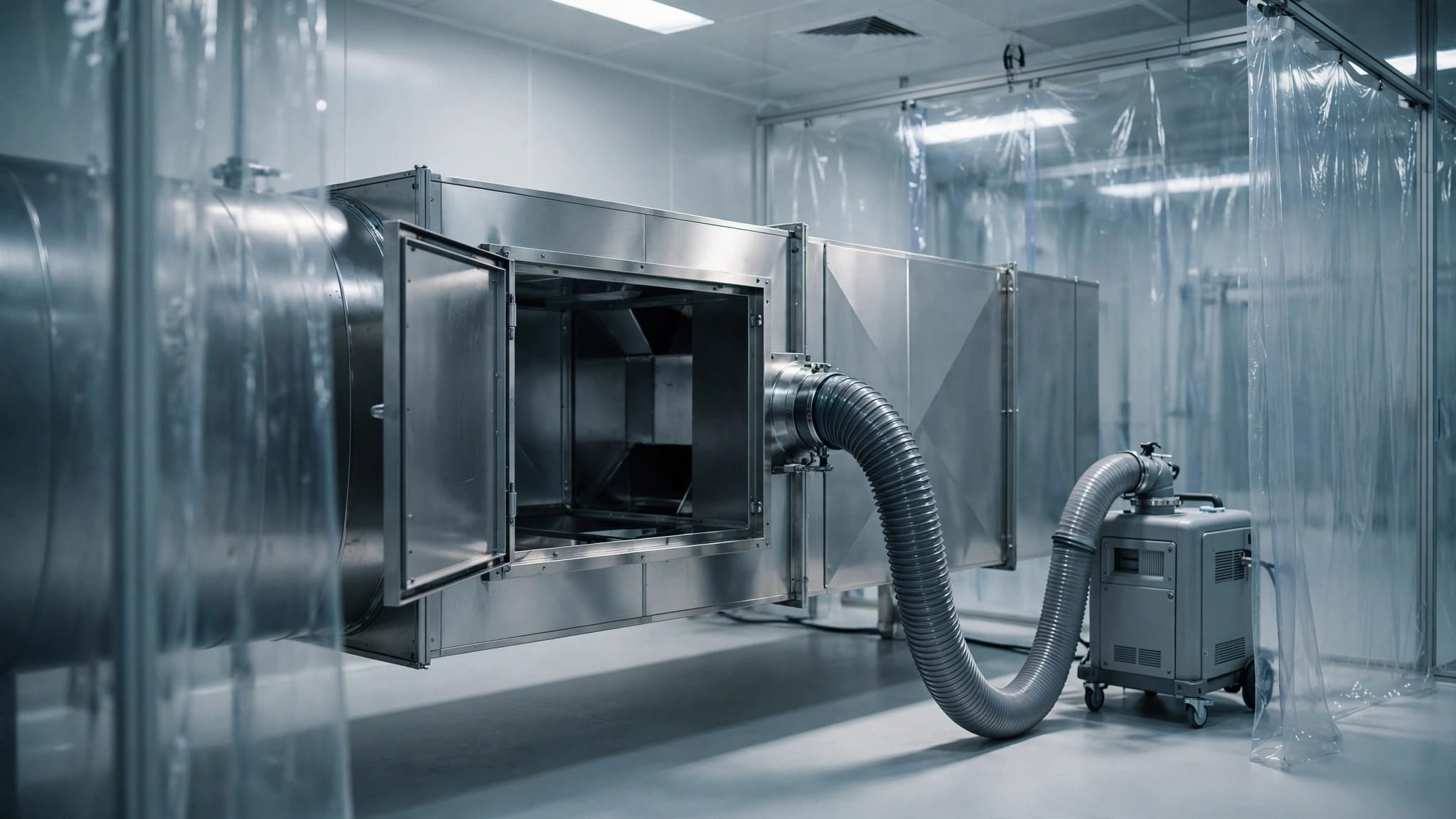
Professional equipment can loosen debris while a connected vacuum collects it. Our explanation of negative-pressure duct cleaning describes how that process helps contain dust.
Cleaning won't repair a leaking duct. Damaged connections need repair, and wet insulation or pest contamination may require a different response. If you'd like us to assess the situation, Get a Free Estimate for air duct cleaning.
Keep workshop dust contained
Sawdust can enter an HVAC system when it has a path to a return, a leak, or an open register. Good dust collection and a contained work area reduce the chance of it spreading.
If you see debris inside the system or dust continues to come from vents, an inspection can identify the affected areas before you decide on cleaning.