Do UV Lights Keep HVAC Ducts Clean?

Adkins Duct Cleaning • August 28, 2026

A UV light can be useful inside your HVAC system, but it won't vacuum dust from ductwork or make every indoor-air problem disappear. UV lights HVAC ducts setups are designed to reduce or inhibit biological growth under the right conditions.

That distinction matters in humid Florida homes, where moisture near an evaporator coil can encourage mildew and microbial buildup. A clean system still needs good filtration, moisture control, and physical cleaning when debris has collected.

How UV Lights HVAC Ducts Work

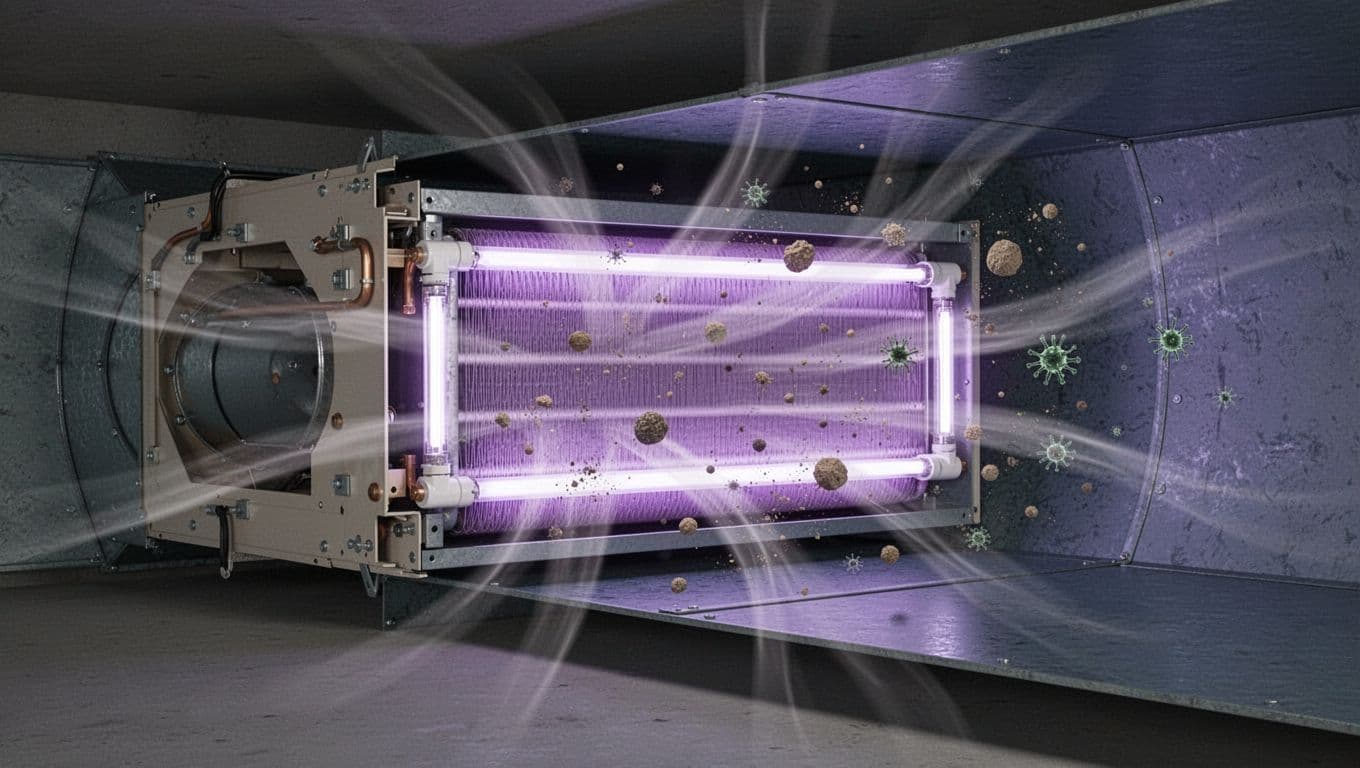
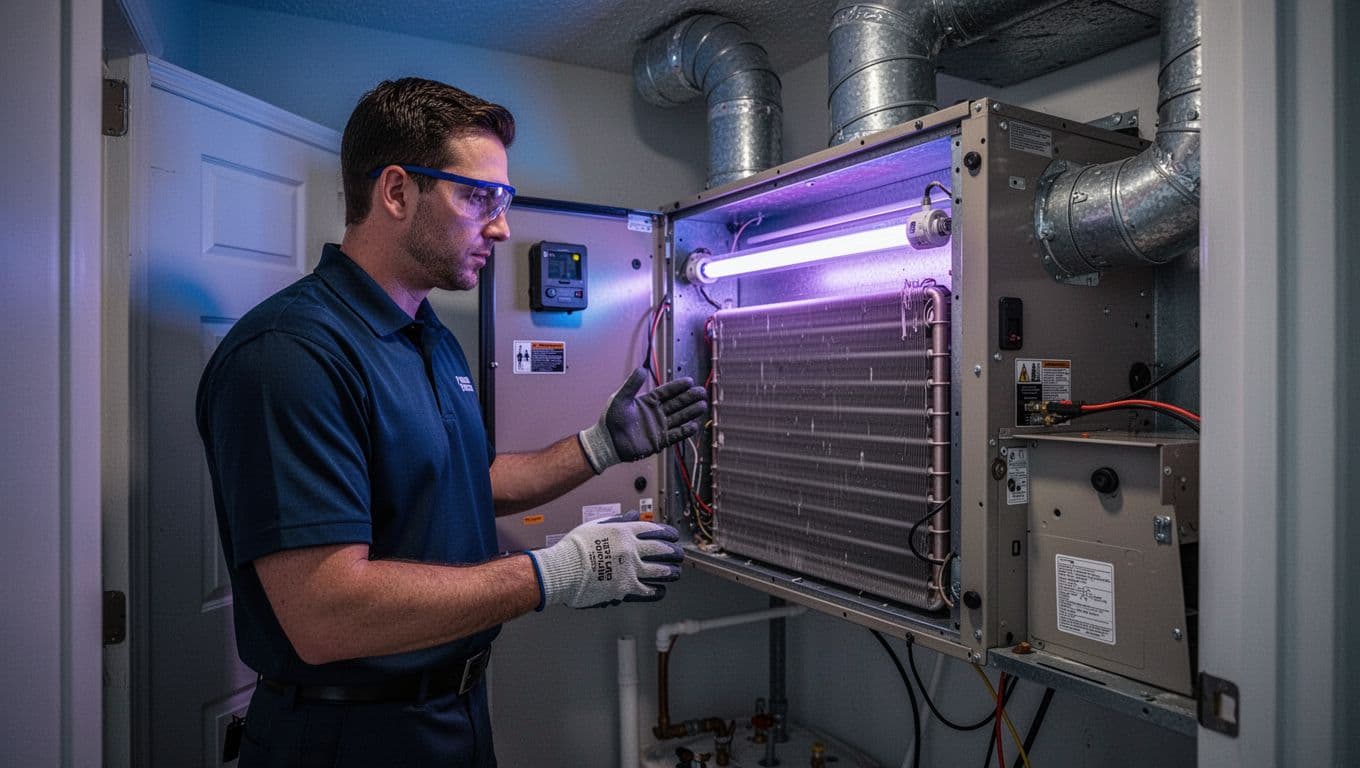
Most HVAC UV systems use UV-C light. This wavelength can disrupt microorganisms when they receive enough direct exposure. Installers often place lamps near the evaporator coil and drain pan because those areas can stay damp during cooling season.

The light shines on a fixed surface for long periods. As a result, it may help limit microbial growth on the coil, drain pan, and nearby components. That can be helpful when a system has recurring musty odors tied to moisture around the air handler.

UV-C does not physically clean ductwork

Dust, pet hair, insulation fibers, and construction debris don't disappear under UV-C light. They still cling to duct walls, settle in return runs, and collect on blower parts. Those materials need removal through proper HVAC cleaning methods.

UV-C also doesn't repair a dirty filter, clogged condensate drain, water leak, or poorly insulated duct. If moisture keeps entering the system, the cause needs attention first.

UV-C is most useful as a maintenance tool near damp HVAC components, not as a substitute for duct cleaning.

Coil lights and in-duct lights have different jobs

A coil-mounted lamp focuses on surfaces that receive steady light. In-duct units target moving air, but airborne particles pass the lamp quickly. That short exposure can limit results unless the unit is designed for the system's airflow and duct layout.

For this reason, a lamp near the coil is often the more practical choice when moisture and biological buildup are the main concerns.

What Determines UV-C Effectiveness

The question isn't only whether a UV lamp is installed. Performance depends on UV-C intensity , exposure time, placement, airflow, lamp condition, and the design of the air handler.

A powerful lamp has little effect on an area it can't reach. Likewise, bends, shadows, dirty lamp sleeves, and high airflow can reduce exposure. A lamp aimed at a coil may help keep that surface cleaner, while the same light may have limited reach into distant supply ducts.

System conditions matter more than the lamp alone

A wet drain pan, blocked condensate line, or oversized air conditioner can create moisture problems that UV-C can't solve. First, the HVAC system should drain correctly and run with proper airflow.

Filtration also matters. A correctly fitted filter captures particles before they coat the coil and ducts. If dust appears around vents soon after cleaning, inspect filter fit, return leaks, and duct connections.

For homeowners comparing options, this guide to UV lights and air purifiers for Florida homes explains why purifiers and filtration address particles differently than UV-C equipment.

When Duct Cleaning Is Still the Right Move

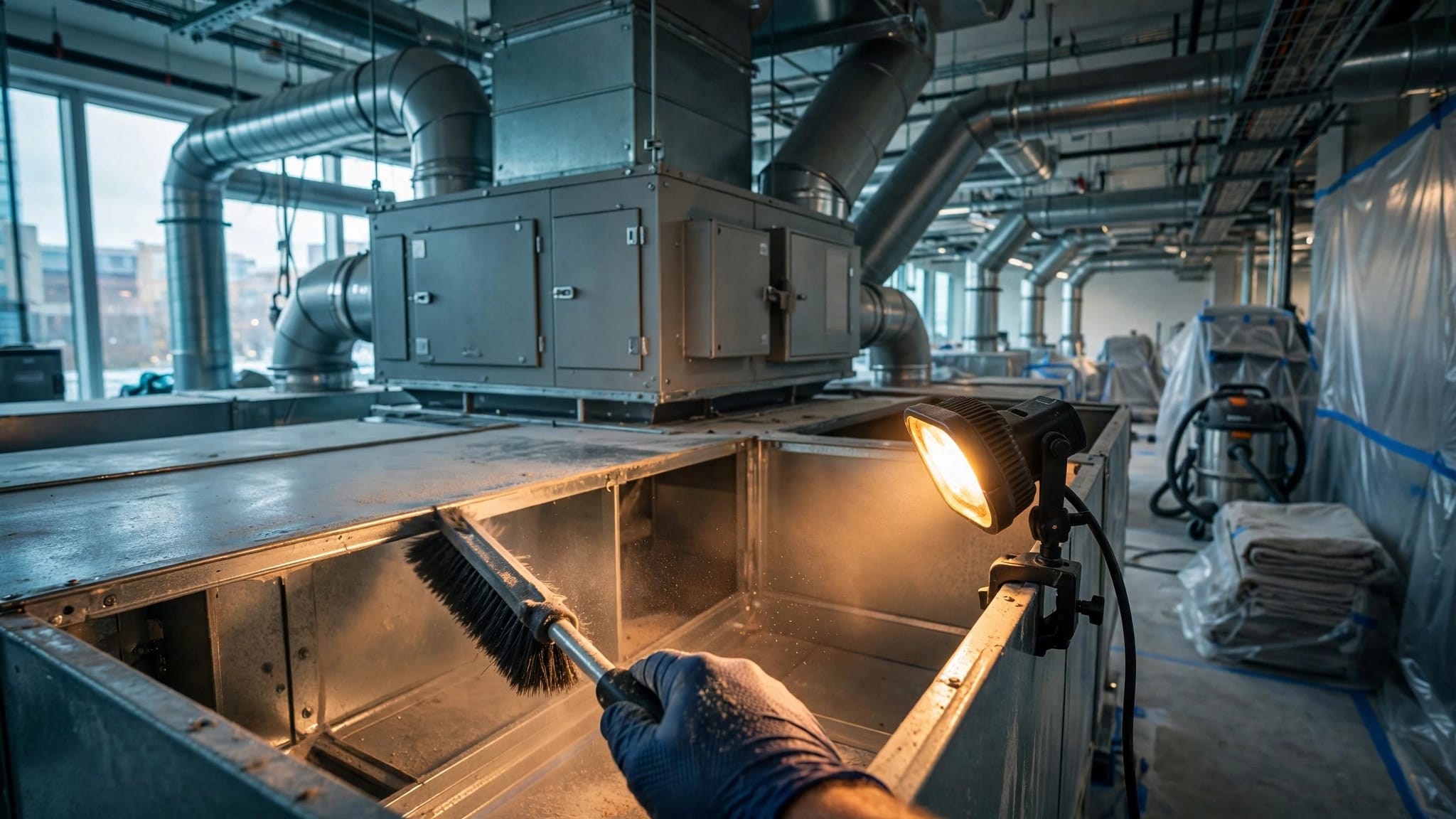
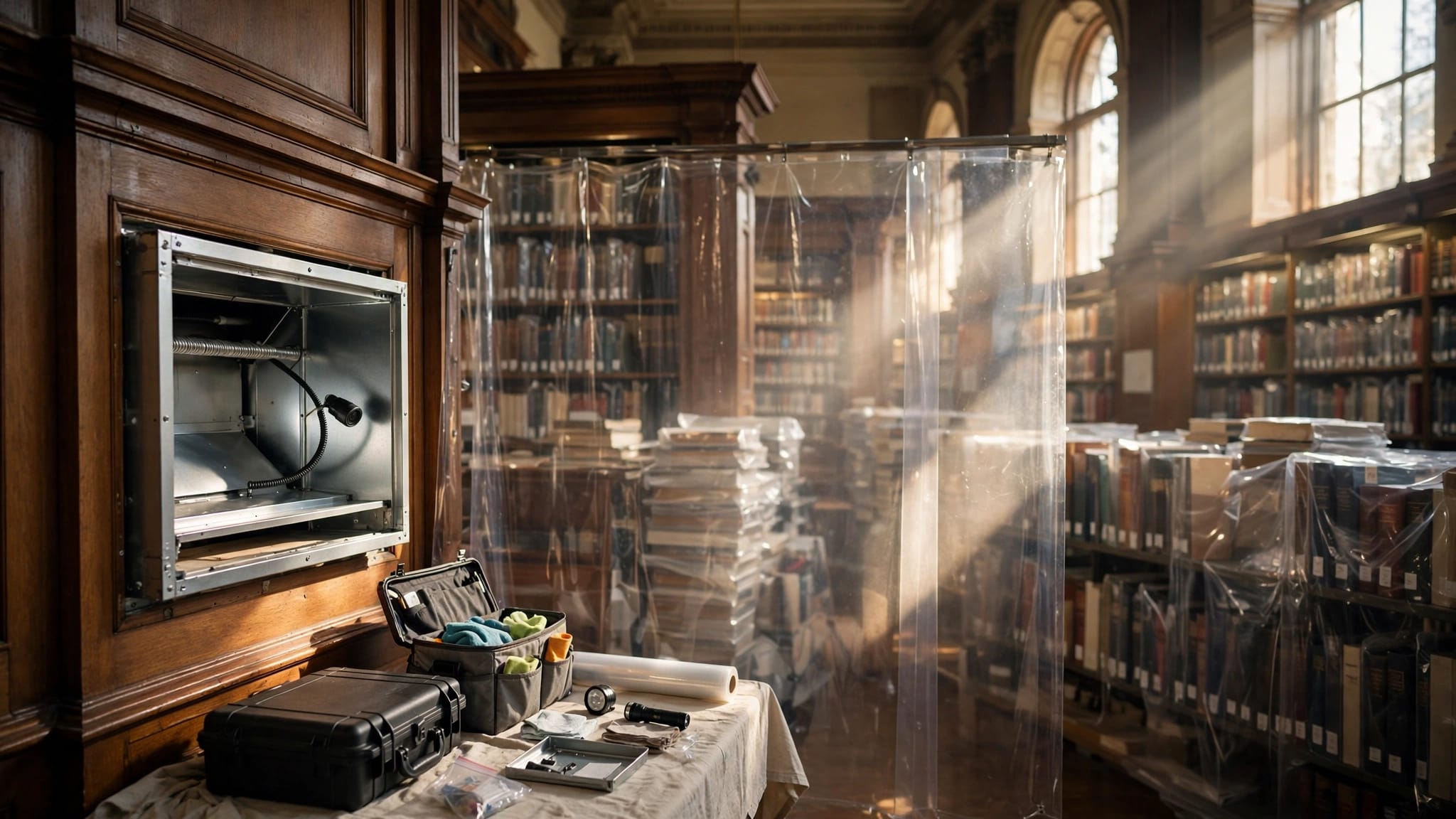
If you can see debris inside accessible ducts, notice dust blowing from vents, or find a heavy buildup on registers, UV light won't remove it. A professional cleaning uses containment and a powerful vacuum to pull loose material out of the system.

Cleaning is also appropriate after major renovation work, pest activity, smoke contamination, or a confirmed buildup in accessible HVAC components. Where microbial growth or odors are a concern, cleaning should come before any sanitizer, inhibitor, or UV installation.

Address moisture before treating odors

A musty smell can come from a dirty coil, damp insulation, a drain issue, or growth on reachable hard surfaces. Spraying a product or adding a lamp without finding the moisture source often leads to the same problem later.

A targeted air duct microbial treatment may fit some situations after cleaning. However, it isn't a blanket solution for every odor or stain inside a home.

Choosing and Maintaining a UV-C HVAC System

Start with a professional assessment of your air handler, coil condition, drain pan, duct layout, and indoor-air concerns. The installer should recommend a lamp location that gives the intended surface or air stream sufficient exposure.

Ask what type of lamp is being installed, where it will sit, how it is powered, and when it needs replacement. UV-C lamps can continue to glow after their germicidal output has declined, so visible light alone doesn't prove full performance.

Safe service protects people and equipment

UV-C can injure eyes and skin. Never look directly at an operating lamp or open the air handler to inspect it while power remains on. A qualified technician should disconnect power before servicing the unit and follow the equipment manufacturer's instructions.

During routine HVAC maintenance, have the technician check lamp age, electrical connections, mounting, coil cleanliness, and drainage. Replace lamps on the schedule provided by the manufacturer, not only when they stop lighting.

If dust, odors, or restricted airflow are already affecting your home, Fort Myers air duct cleaning can address the physical buildup UV-C cannot remove. You can also Get a Free Estimate for air duct or dryer vent cleaning.

A Cleaner HVAC System Needs More Than UV-C

UV-C lights can help inhibit biological growth near damp HVAC components when they are correctly selected, placed, and maintained. They don't clean dust-filled ducts or eliminate every mold, bacteria, virus, or indoor-air-quality concern.

The strongest approach combines physical cleaning , proper drainage, good filtration, and UV-C where it fits the system. That combination gives your HVAC equipment a better chance to stay cleaner between service visits.

By Adkins Duct Cleaning August 27, 2026
Spray foam can make an attic less drafty and help insulated ductwork hold its temperature. However, spray foam around ducts can create a service problem when it covers parts of the system a technician needs to reach. Your ducts don't automatically become impossible to clean af...
By Adkins Duct Cleaning August 26, 2026
One clear camera pass can look convincing while the worst buildup sits beyond the recorded section. After main trunk line cleaning , you should be able to confirm the route, the material removed, and the working condition of the full pipe. A drain may run after service while a...
By Adkins Duct Cleaning August 25, 2026
A clean air system should not leave you guessing about when to turn the thermostat back on. After an HVAC sanitizer treatment , wait for the interval given by the technician and product label, for treated surfaces to dry fully, and for any required ventilation to finish. There...