Dryer Fire Cleanup: Safe Vent Cleaning and Inspection
A dryer fire can leave damage that reaches well beyond the appliance. Dryer fire cleanup starts with keeping the dryer off and treating the entire exhaust path as potentially unsafe.
Even a small fire can leave soot, heat damage, and hidden lint in places you can't see. The right response protects your home, supports an insurance claim, and helps prevent a second incident when laundry routines resume.
Dryer Fire Cleanup Starts With Stopping Use
Do not restart the dryer to see if it still works. Do not attempt to clean fire-damaged equipment, reconnect a vent hose, or remove internal dryer panels until qualified professionals inspect the appliance and exhaust system.
If smoke remains, flames return, or you smell an active electrical burning odor, leave the area and call 911. Follow instructions from the fire department before entering or using the laundry room.

Take these immediate steps
After the fire is out and authorities say it is safe to enter, take a careful, hands-off approach:
- Keep the dryer switched off. If it is safe to do so, disconnect power without touching damaged wiring, wet surfaces, or hot metal.
- Avoid moving the dryer or vent duct before taking photos for your insurer, especially if the fire's origin is unclear.
- Keep children and pets away from the laundry area, since soot residue and damaged parts may be present.
- Contact your insurance carrier and follow its instructions about documentation, mitigation, and approved restoration work.
- Arrange inspections by the appropriate qualified professionals, which may include an appliance technician, licensed electrician, dryer vent specialist, and fire restoration company.
A dryer that appears intact can still have heat-damaged wiring, compromised safety controls, or a blocked exhaust route behind the wall.
Inspect the Whole Dryer Vent System
Cleaning lint from the connection behind the dryer is not enough after a fire. The inspection needs to follow the full route that exhaust air takes from the appliance to the outdoors.
A short transition duct behind the dryer is part of that route. If it is crushed when the appliance is pushed back, airflow can remain restricted even after the rest of the line is cleaned.
Check the appliance and electrical connections
A qualified appliance technician should inspect the dryer's cabinet, lint screen housing, blower area, heating components, sensors, and controls for heat or smoke damage. A gas dryer may also require an inspection of its gas connection and combustion-related components.
Electrical damage needs a licensed electrician's attention. Scorched insulation, a damaged cord, loose connections, tripped breakers, or melted outlet components are reasons to leave the circuit off until it has been evaluated.
Follow the duct to the exterior termination
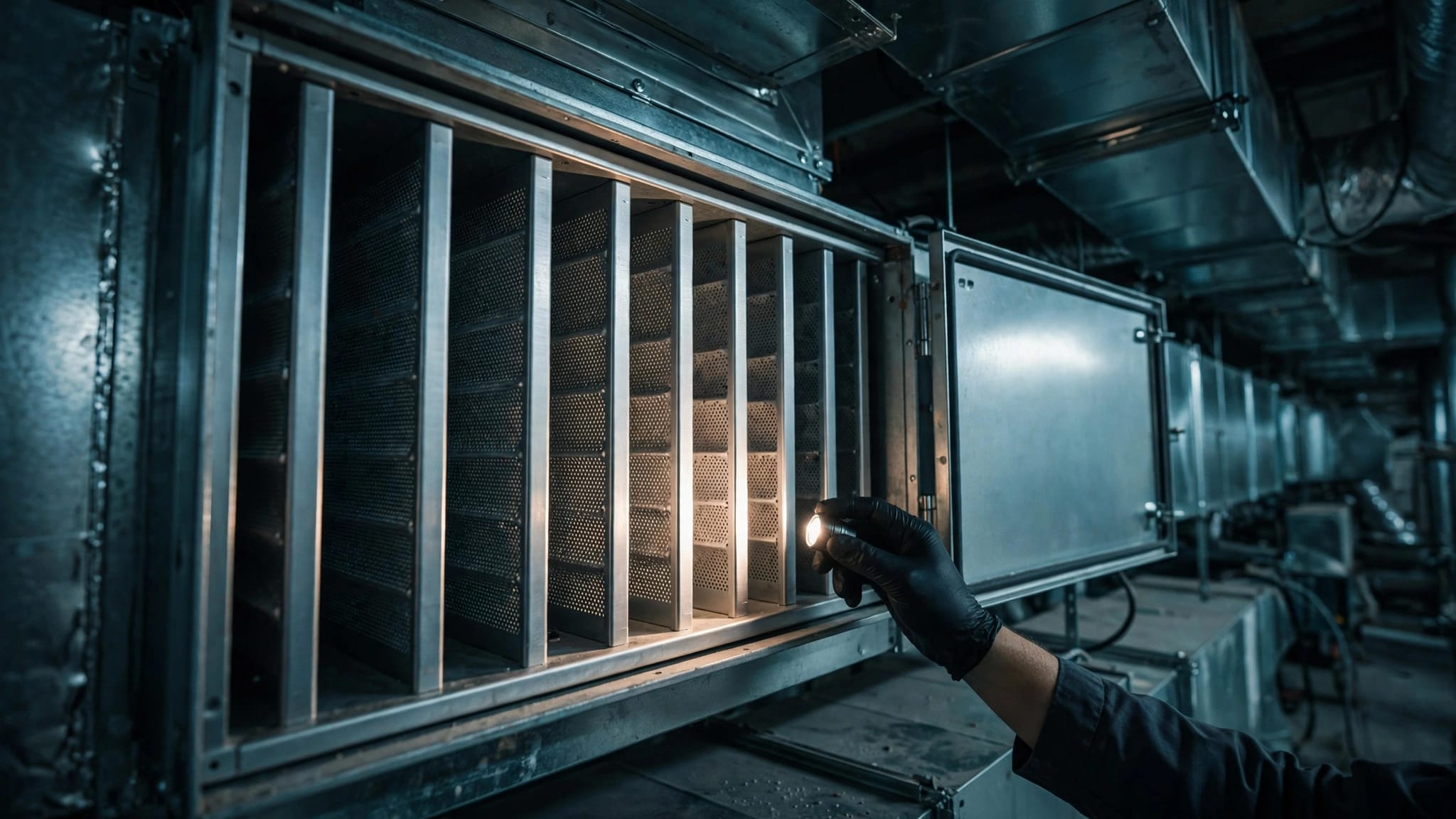
The vent duct may pass through a wall, ceiling, attic, crawl space, or roof before it exits outdoors. Inspectors should look for loose joints, corrosion, holes, sagging sections, disconnected pipe, excessive bends, and lint escaped into building cavities.
The exterior hood also matters. Its damper should open freely during normal operation, and lint should not blanket the outlet. Screens can catch lint at the termination, so any replacement cap should follow the dryer manufacturer's instructions and local building-code requirements.

Why Hidden Damage Changes the Cleanup Plan
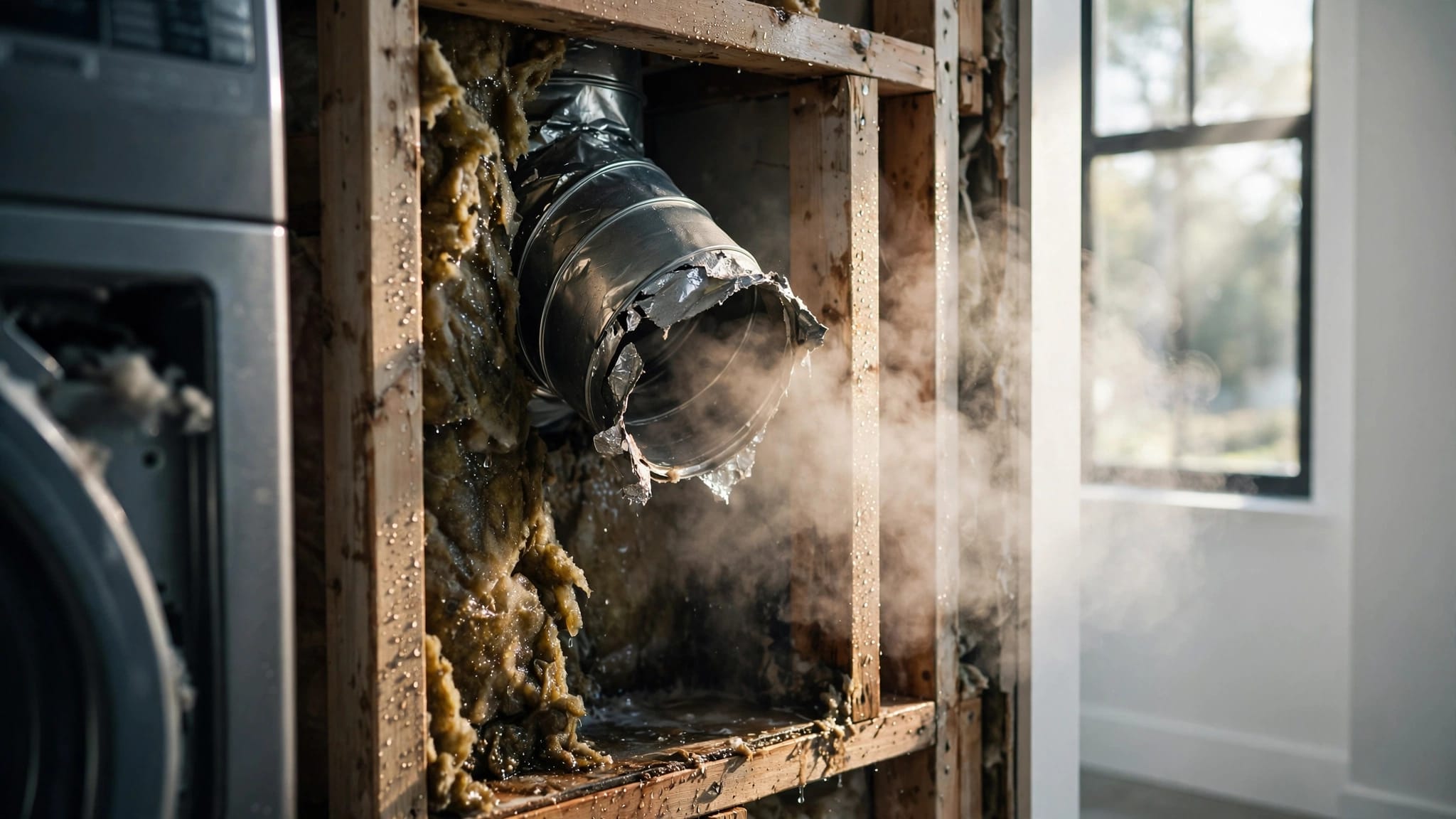
Fire heat can affect areas that look normal from the front of the laundry room. A vent joint inside a wall can separate, releasing lint, soot, and humid exhaust into a concealed space.
For that reason, dryer fire cleanup should include a close look at nearby drywall, flooring, cabinetry, insulation, framing, and the path around the wall penetration. Water used to put out the fire can add another concern, particularly where insulation or wood framing stayed damp.
Cleaning cannot fix damaged ductwork
Lint removal is useful when the duct is sound and the problem is buildup. However, a crushed, torn, disconnected, corroded, or incorrectly routed duct may need repair or replacement before the dryer can return to service.
Do not force brushes or flexible cleaning rods into a hidden, damaged line. A tool can snag at a joint, damage duct material, or push debris farther into a bend. Technicians can use accessible measurements, attic access, construction details, and inspection equipment to determine the route without guessing.
Wall and floor cavities may need separate evaluation
Soot near the dryer is often visible, but contamination can settle behind baseboards, under flooring edges, or inside a wall cavity. If fire or smoke entered those spaces, a restoration professional may recommend controlled cleaning, drying, material removal, or other repairs based on the actual damage.
Keep the dryer exhaust system separate from your HVAC system during this assessment. Dryer vent cleaning does not clean supply and return ducts, and HVAC duct cleaning does not remove lint from the dryer exhaust line.
How Professional Dryer Vent Cleaning Works After a Fire
A post-fire service begins with inspection, not aggressive cleaning. The technician needs to confirm the duct's material, condition, route, access points, and exterior exit before choosing equipment.
A complete visit may include cleaning from the dryer connection, the exterior termination, or both. The method depends on the length of the route, number of bends, duct material, and whether the line has accessible damage.
The full route needs attention
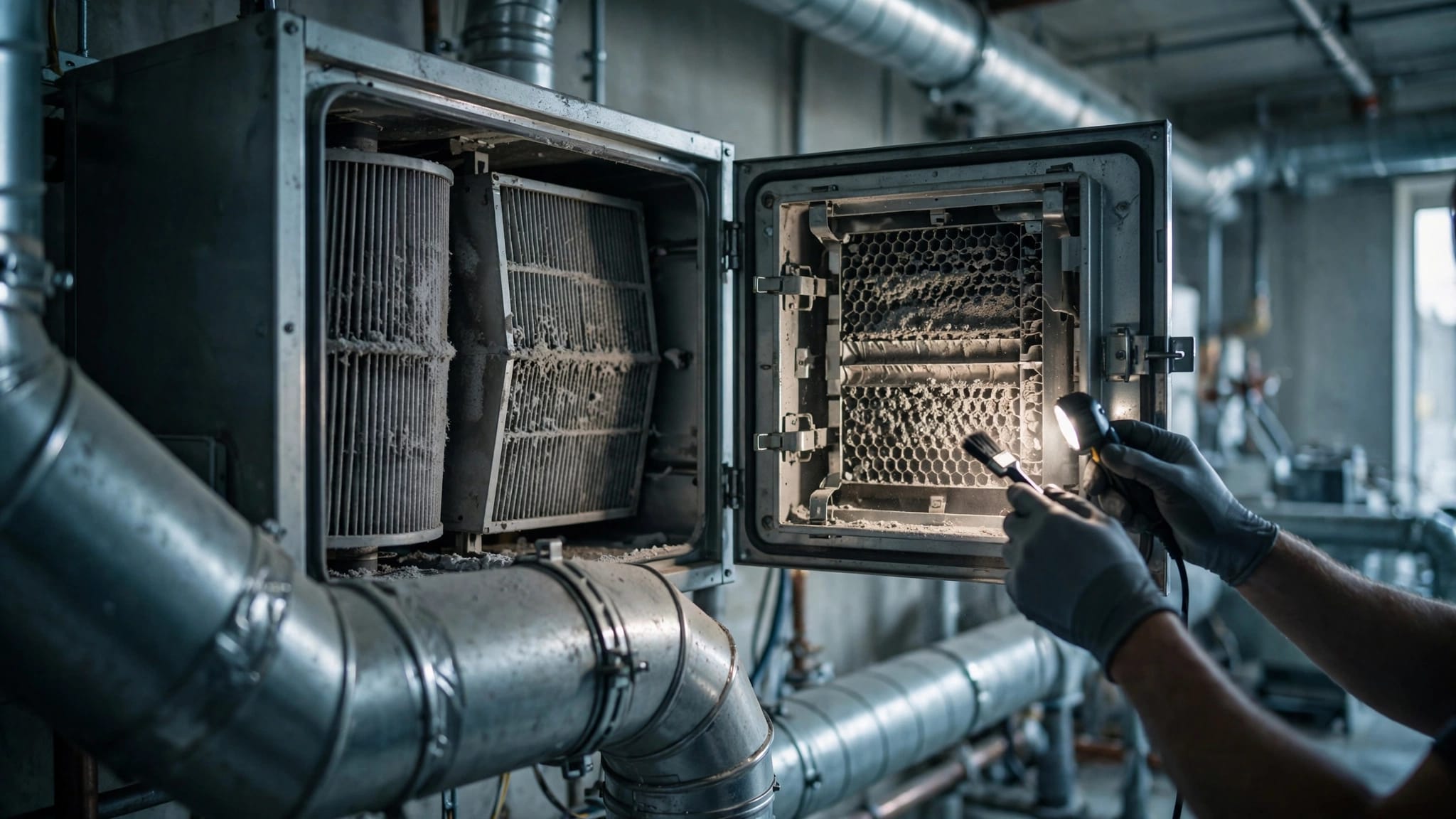
Professional equipment can remove lint and debris from accessible duct sections while protecting the laundry area. A thorough scope should include the transition duct, the interior exhaust line, the outdoor hood, and an airflow check after cleaning when the system is cleared for testing.
Ask the provider to document what they found. A useful report identifies the appliance served, sections accessed, lint removal performed, exterior termination condition, airflow observations, and visible damage that needs repair.
For a closer look at the normal process, review what happens during dryer vent cleaning. After a fire, the process may need additional precautions or repair work before cleaning begins.
Airflow testing has limits
A meter reading can help compare airflow before and after a service. Still, one number cannot diagnose every problem. Dryer model, duct diameter, duct length, bends, a roof exit, and the exterior damper all affect the result.
Strong airflow after cleaning does not erase fire damage to the dryer itself. The appliance technician, manufacturer's guidance, and local requirements determine when the dryer can safely operate again.
Removing Soot and Smoke Odor Safely
Soot is more than ordinary dust. Dry wiping or scrubbing it can smear residue into paint, grout, fabric, and unfinished surfaces. Fire restoration professionals use methods suited to the material, extent of contamination, and moisture conditions.
Avoid applying fragranced sprays, ozone devices, sanitizers, or deodorizing products to fire-damaged equipment before it has been assessed. Fragrance can mask an odor without removing the source. It can also make it harder for inspectors to evaluate the affected area.
Start with the source, then clean surfaces
The dryer, vent path, damaged building materials, and nearby contents may all contribute to lingering odor. Removing soot and replacing damaged components, when needed, comes before odor treatment.
If smoke moved through the home's heating and cooling system, ask for a separate HVAC evaluation. Smoke particles can settle in returns, supply ducts, filters, and air-handler components. Cleaning smoke-contaminated HVAC ducts may be appropriate when the inspection finds residue or odors in that separate system.
Protect insurance documentation
Photograph the dryer, vent connection, wall area, floor, and visible soot before cleanup starts, if conditions are safe. Keep estimates, invoices, inspection reports, and photos with your claim records.
Ask the insurer before discarding damaged equipment or approving major repairs. The insurer may need to inspect the appliance, or it may request a cause-and-origin assessment.
When You Can Return the Dryer to Service
The dryer should remain out of use until the professionals involved have completed their work and cleared the equipment for operation. This decision should account for the appliance, power source, exhaust duct, exterior termination, and surrounding structure.
Manufacturer instructions are important at this stage. If the manufacturer requires replacement parts, specific testing, or service by an authorized technician, follow that direction.
Confirm repairs before the first load
Before anyone runs the dryer again, confirm that the vent is securely connected and has no crushed sections, loose joints, or openings into a wall or attic. The exterior termination must also be intact and able to discharge outdoors.
A qualified technician may test the appliance and exhaust system under controlled conditions. Stop use immediately if you notice burning odors, smoke, unusual electrical sounds, weak exhaust outside, excessive cabinet heat, rattling, or longer drying times.
Build a safer maintenance routine
Once repairs are complete, clean the lint screen after every load. Keep the space behind the dryer clear, and avoid pushing the appliance back far enough to flatten the transition duct.
Schedule inspection based on the dryer's use, vent length, number of bends, and performance. Heavy laundry use, pets, long concealed runs, or a roof termination can justify more frequent attention. Homeowners along the Gulf Coast can arrange Fort Myers dryer vent cleaning services when the full route needs a professional review.
Key Takeaways for Dryer Fire Cleanup
- Keep the dryer off until qualified professionals inspect it. Do not test-run a fire-damaged appliance.
- Treat the dryer, electrical connection, transition duct, full vent line, exterior hood, and nearby wall or floor cavities as part of the inspection.
- Cleaning removes lint and soot residue, but damaged ductwork, wiring, and appliance parts may require repair or replacement.
- Follow guidance from the fire department, insurer, dryer manufacturer, licensed technicians, and local building officials.
- Request written documentation of the inspection, cleaning scope, airflow findings, and recommended repairs.
If a post-fire inspection finds a safe, serviceable vent route with lint buildup, Get a Free Estimate for professional dryer vent cleaning and a clear explanation of the work needed.
A Safe Restart Depends on a Complete Inspection
A fire that began near a dryer can leave hidden problems behind the machine and inside the vent route. The safest dryer fire cleanup removes soot and lint only after qualified professionals identify damaged equipment and building materials.
Clear exhaust flow matters, but it is only one part of a safe return to laundry. Inspection before operation protects your home when the visible damage tells only part of the story.