Duct Cleaning Above Suspended Ceilings: What to Know
Duct cleaning above suspended ceilings requires the same attention to contamination as any HVAC cleaning job, plus a plan for accessing the space above the ceiling. The crew must work around ceiling tiles, duct connections, and other building systems while limiting disruption below.
A dusty tile or grille alone doesn't mean the ducts need cleaning. For facility managers, the first step is an inspection that separates debris in the ceiling space from buildup inside the HVAC system.
Why suspended ceilings change duct access
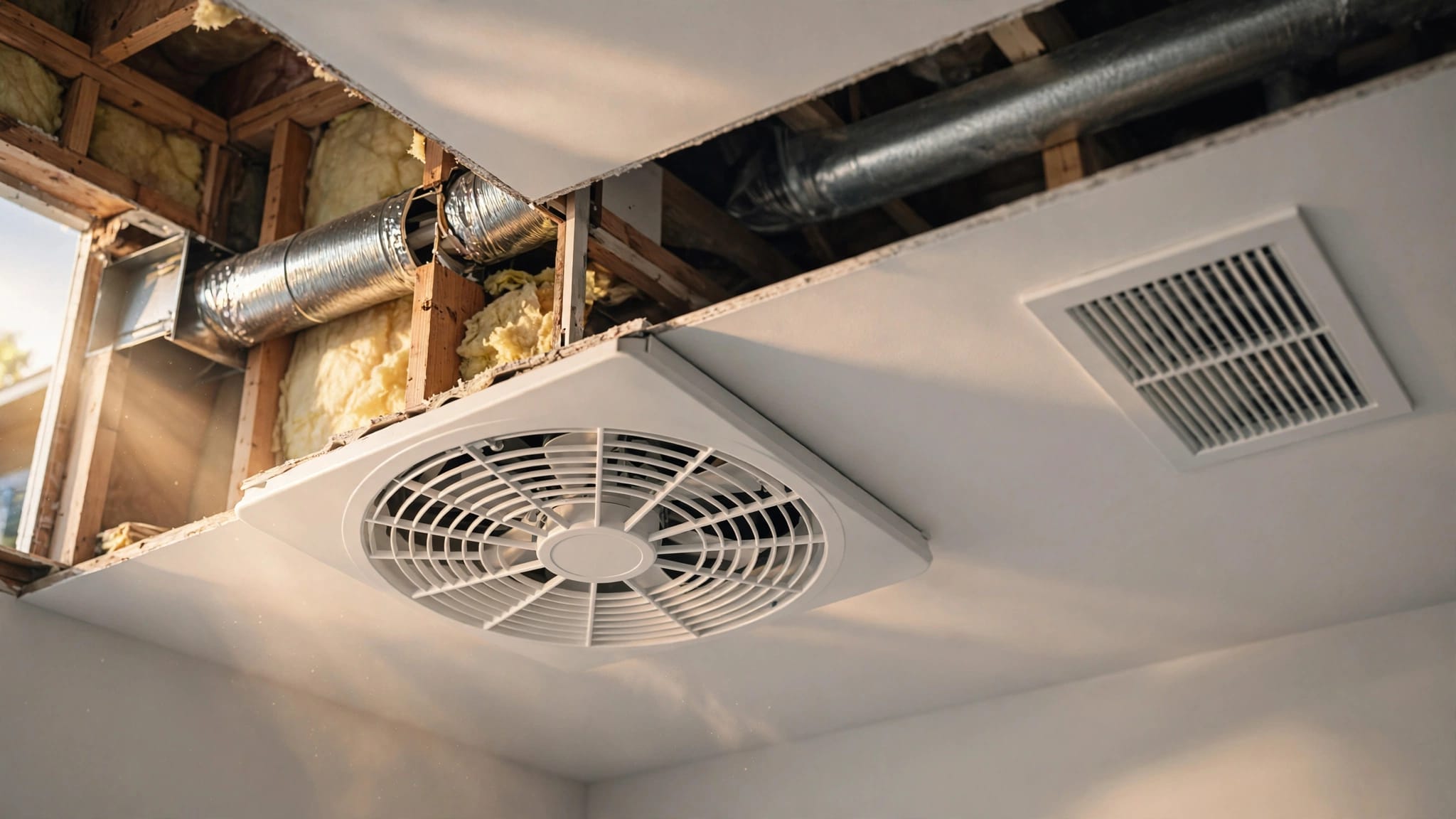
A suspended ceiling, often called a drop ceiling, hangs below the building's structural ceiling. Its removable panels can provide access to ductwork without opening a finished wall or ceiling. Even so, removing one tile rarely reveals the whole system.
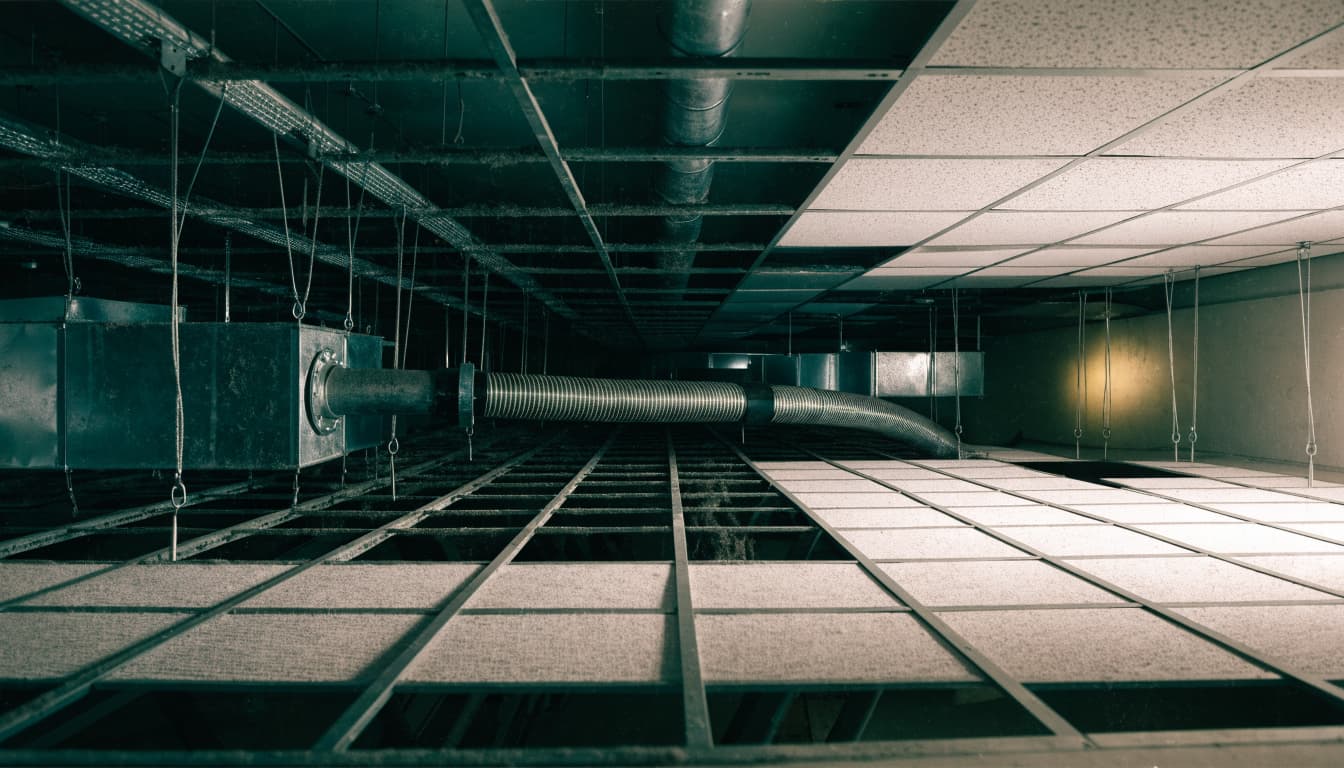
Above the grid, ducts may share space with electrical wiring, plumbing, insulation, and other equipment. A technician may need access at several locations to inspect the system and reach the sections included in the cleaning scope. Furniture and equipment below those locations also affect the plan.
Duct interior versus ceiling space
Dust on the outside of a duct is different from debris inside it. The space above the tiles can collect dust from construction or other sources without the duct interior being heavily contaminated.
Some buildings also use the ceiling cavity as a return-air plenum . In that arrangement, air travels through the ceiling space on its way back to the HVAC system. Conditions in the cavity may therefore matter even when an enclosed supply duct looks clean.
Supply and return routes
The supply side carries conditioned air into rooms. The return side carries air back toward the air handler. Depending on the building, the return path may include enclosed ducts, a ceiling plenum, or both.
Knowing which arrangement a building uses helps define the inspection. It also prevents confusion about whether a quote covers duct interiors, the return-air space, or both.
Signs that cleaning may be warranted
Visible buildup inside ducts is a stronger reason to consider cleaning than dust on a grille. The U.S. Environmental Protection Agency identifies substantial mold growth, vermin activity, and excessive dust or debris in ducts as conditions that can support cleaning.
Other observations can point to a problem that deserves a closer look:
- Particles continue to blow from supply registers after construction work.
- Rodent or insect debris appears inside an accessible duct or return area.
- Water stains or a musty odor occur near ductwork or the air handler.
- A ceiling project disturbed insulation, and fibers or debris entered an open duct.
Each sign helps direct an inspection, but it doesn't automatically establish that every duct needs cleaning. For example, weak airflow may come from a loaded filter, a crushed flexible duct, a dirty coil, or a blower issue.
Dark marks in a duct aren't proof of mold either. Dust, adhesive, soot, and staining can look similar. If moisture or suspected microbial growth is present, the response should address the source of moisture as well as any affected material.
After ceiling or insulation work, inspecting ducts for insulation debris can help distinguish material in the ceiling cavity from material that entered the HVAC system.
What an inspection should assess
A useful inspection connects the complaint to a location and a condition. Before recommending cleaning, the technician should look at accessible system components and show you the evidence behind the recommendation.
Duct condition and contamination
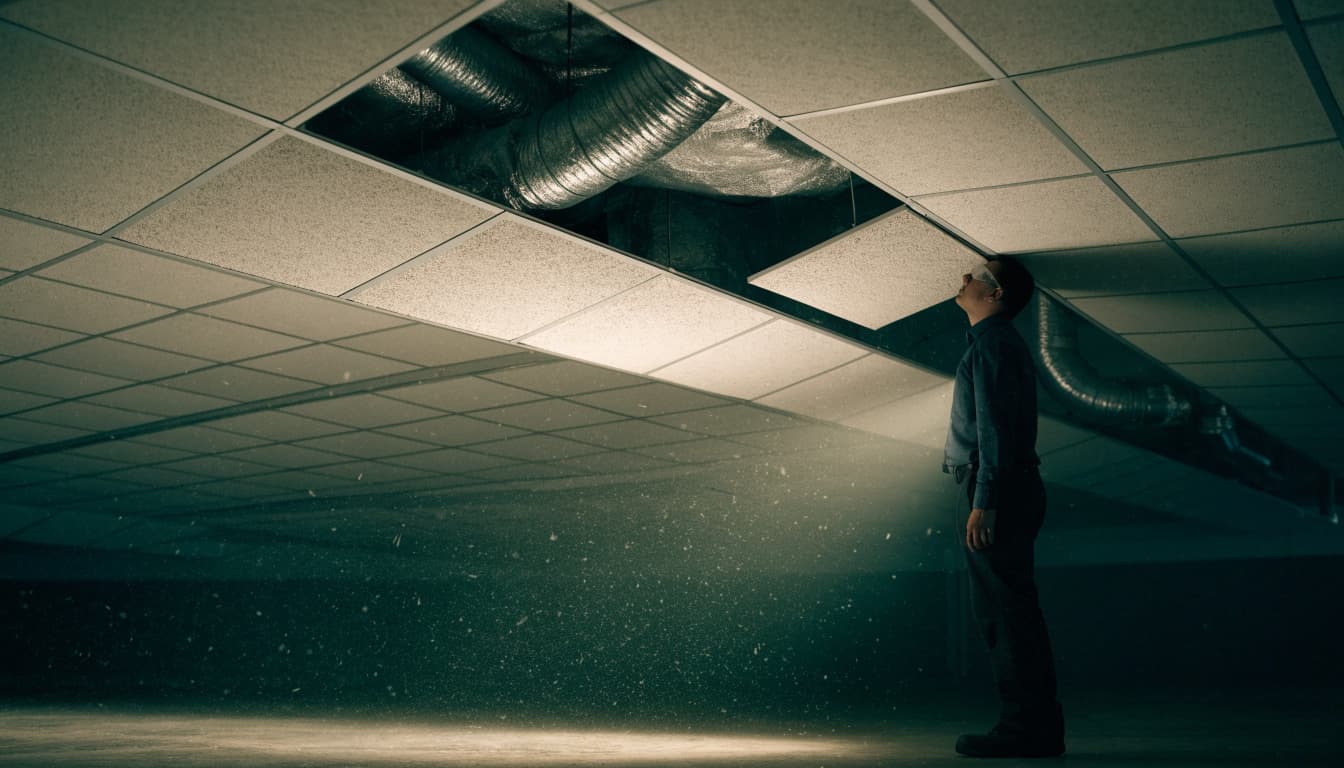
The inspection can include accessible supply and return openings, duct interiors, grilles, and the air handler. A camera may help show areas that aren't visible from a register. Photos also give facility managers a record of the affected areas before work begins.
The technician should identify the duct material and its condition. Sheet-metal ducts, flexible ducts, and internally insulated sections can respond differently to cleaning tools. Torn flex duct, failed insulation facing, or disconnected joints may call for repair rather than cleaning alone.
Moisture, access, and other building systems
Above the ceiling, the inspection can reveal stained tiles, condensation, damaged duct insulation, or signs of a roof or plumbing leak. These findings matter because cleaning won't stop new moisture or repair a leak.
The layout matters too. Lighting, pipes, cables, and crowded ceiling grids can limit access to a section. In older buildings, suspect asbestos-containing material deserves attention before anyone disturbs it. A qualified asbestos professional can assess the material and advise on the separate work it may require.
How duct cleaning works above a suspended ceiling
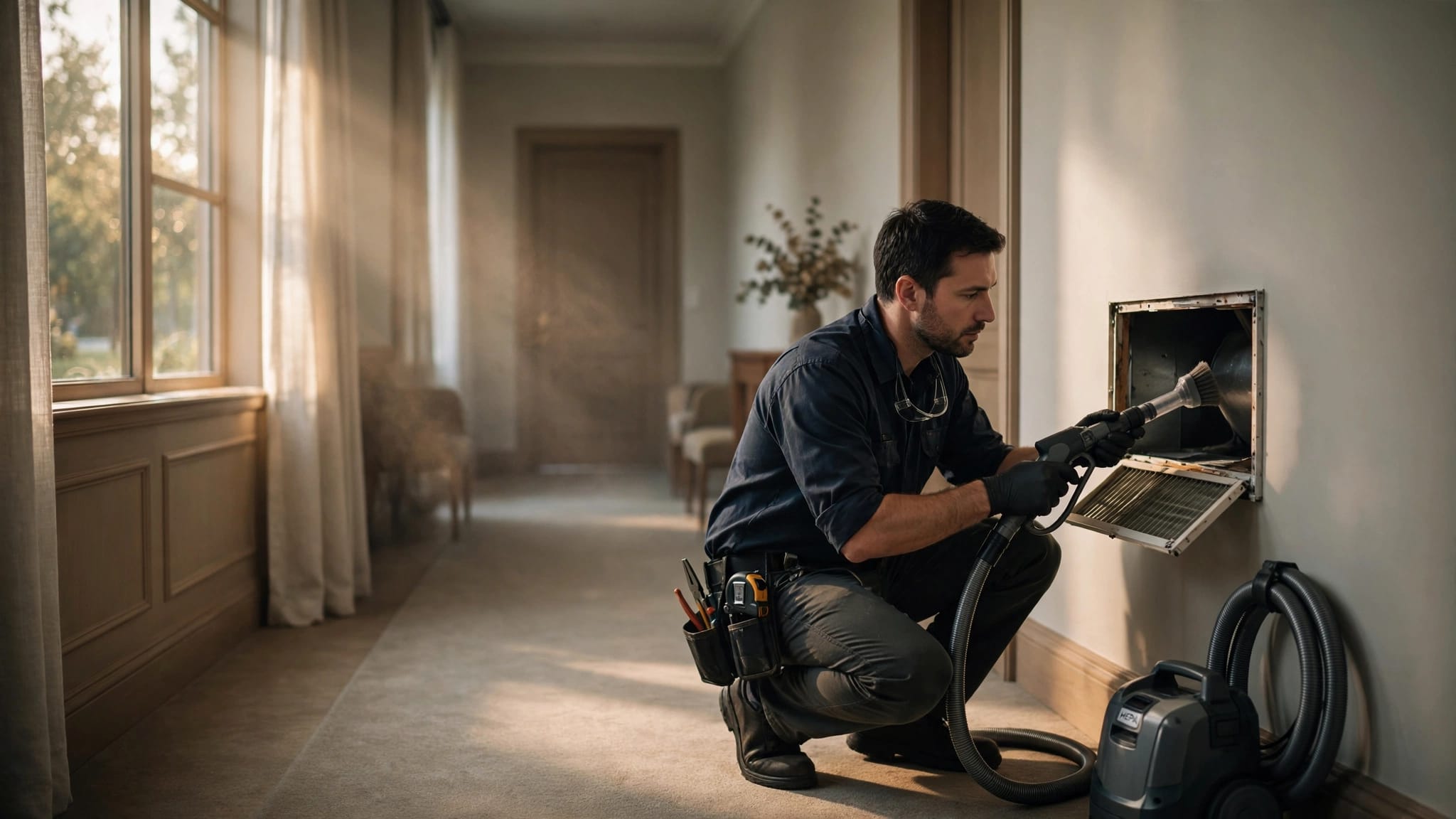
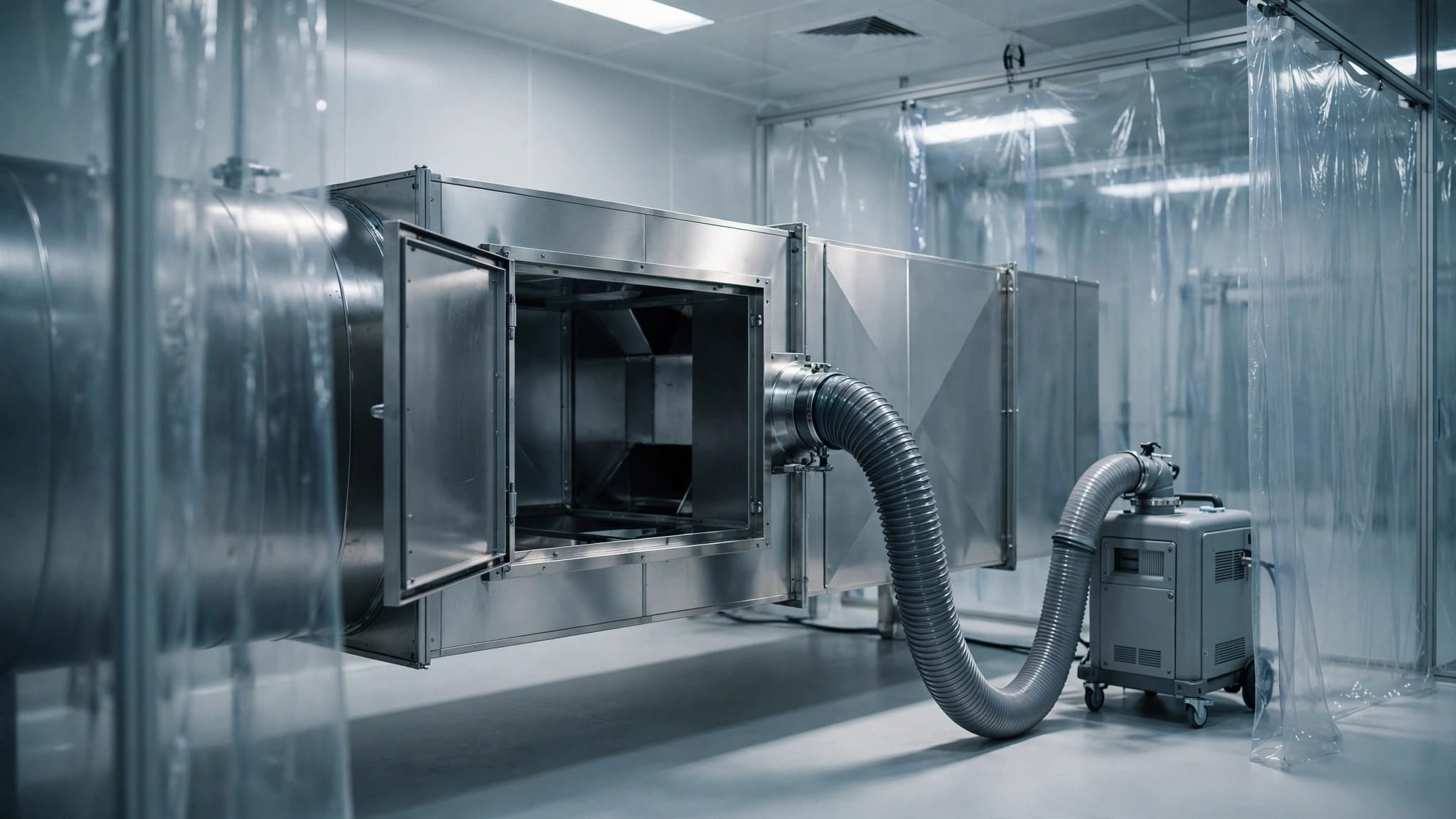
The exact process depends on the duct layout, material, and condition. In a typical job, the crew identifies access points, protects the work area, and connects vacuum equipment to collect loosened debris. Ceiling tiles may be removed where they provide access to the agreed sections.
Loosening and collecting debris
Technicians may use agitation tools to dislodge buildup while vacuum equipment collects it. The tools should suit the surface: a method appropriate for rigid metal may be too aggressive for a damaged liner or flexible duct.
Blowing debris loose without effective collection can move dust elsewhere. For that reason, the cleaning plan should explain how the crew will contain material rather than simply move it through the system.
Restoring the work area
After cleaning, the crew can inspect accessible areas again and document the results with photos. The work also includes restoring the openings used for access and returning removed grilles and ceiling panels to position.
The agreed scope determines whether the air handler, blower compartment, coil area, or drain pan receives attention. Our explanation of what air duct cleaning can remove also covers problems that cleaning alone won't solve.
Plan around ceiling tiles and building systems
A removable tile offers convenient access, but it can be fragile, stained, or difficult to replace with an exact match. Before work starts, identify areas where tiles are damaged and decide who will handle any replacements. That helps avoid disagreements after the ceiling is closed.
The crew also needs room below the access points. Desks, inventory, medical equipment, and sensitive electronics may need to be moved or covered. In a retail space, the access plan may affect aisles and displays as well as the ceiling itself.
Above the grid, ducts can sit close to wiring, sprinkler components, and other services. A crowded section may be difficult to reach without additional coordination. The estimate should identify known access limitations rather than assume that every section is equally available.
If a duct is disconnected, crushed, or leaking, record its location and arrange the appropriate repair. Cleaning and sealing are separate tasks. A clean duct with an open return-side connection can still draw dust from the surrounding ceiling cavity.
Coordinate the work with occupants
Duct cleaning can affect more than the room directly below an access point. A single air handler may serve several offices or tenant spaces, so a planned shutdown can affect people who never see the crew.
Choose a workable service window
Map the areas served by the system and coordinate access with tenants, building staff, and other contractors. An evening or a period between events may reduce disruption. For a business with long operating hours, the work may need to be divided into manageable areas.
Tell occupants which rooms will be affected, when access is planned, and whether ventilation or cooling will be interrupted. Include any changes to normal room use in the notice.
Protect the people and spaces below
The work plan should account for equipment noise, hoses, covered furniture, and temporary restrictions around access areas. Facilities with sensitive operations may need a more detailed arrangement for isolating the work area.
If an indoor air quality investigation is already planned, coordinate its timing before cleaning. Baseline testing may be useful before conditions change; our guide to duct cleaning and air quality testing explains that sequence.
Put the scope and estimate in writing
A written estimate gives everyone the same understanding of what the job includes. It should identify the system or areas to be cleaned, the access arrangements, and any limitations visible during inspection.
Define the work and exclusions
Supply ducts, return ducts, grilles, diffusers, and accessible air-handler components are separate scope items. The quote should make clear which ones are included. If a section can't be reached or needs repair first, that limitation belongs in the discussion too.
Sanitizers, microbial treatments, and odor treatments have different purposes. They shouldn't be assumed to be part of every cleaning. The estimate should explain any optional treatment and its separate charge.
Decide how results will be documented
Before work begins, agree on how the crew will show what was cleaned. Photos of accessible areas before and after service can be useful, especially where the ceiling normally hides the ductwork.
Also discuss who handles stained tile replacement, duct repair, or moisture correction if the inspection reveals a problem. Our questions for an air duct cleaning company can help you compare proposed scopes.
Maintain the system after cleaning
The best follow-up plan addresses the conditions that allowed debris or moisture to accumulate. Keep a record of the inspection findings, cleaning scope, access points, and any areas that were excluded. Those details help the next service provider understand what happened above the ceiling.
Manage filtration and moisture
Replace or clean filters according to the equipment manufacturer's guidance. A filter should fit its housing properly so air doesn't bypass it. Keep supply and return openings clear, and arrange HVAC maintenance for dirty coils, drain problems, or equipment issues.
In Florida buildings, condensation and high humidity deserve attention alongside roof and plumbing leaks. Stained tiles can provide an early clue, but replacing a tile alone won't correct the source of water.
Protect ducts during future projects
Ceiling, insulation, and renovation work can disturb duct connections or introduce debris. After dusty work is complete, inspect accessible grilles and nearby ductwork for loose material or damage. Cleaning ducts before the final dusty task can leave the system exposed to another round of debris.
Keep records of recurring complaints and their locations. If dust returns, that history can help distinguish a new contamination issue from an unresolved leak, filtration problem, or source within the occupied room.
Start with the evidence above the ceiling
Suspended ceilings make ductwork accessible in many buildings, but the space above them contains more than ducts. A sound plan identifies the contamination, protects the ceiling and occupied rooms, and defines which HVAC components the service covers.
At Adkins Duct Cleaning, we focus on the conditions found during inspection rather than treating a dusty grille as proof that the entire system needs cleaning.
If your facility has signs of duct contamination, Get a Free Estimate for air duct cleaning.