Food Plant Air Duct Cleaning With Hygiene Controls
Food plant air duct cleaning supports hygiene controls by removing accumulated material from HVAC systems while keeping that material away from food and production surfaces. The work needs a site-specific plan that accounts for the plant's airflow, sanitation procedures, and production schedule.
A duct crew may need to open overhead equipment, move hoses through controlled areas, and temporarily change how air moves. Those activities can create contamination risks if the plant and cleaning team haven't agreed on the work boundaries.
The safest plan starts with the conditions inside the system and the areas it serves.
Why Duct Cleaning Matters in Food Processing
Air ducts can collect dust, ingredients, packaging fibers, and debris introduced during construction or maintenance. If that material reaches exposed food or clean equipment, it can undermine the plant's hygiene controls.
Contamination Can Travel Through Airflow
Supply ducts deliver air to production areas, while return ducts draw air back toward the air handler. Debris can accumulate on either side. A dirty return path, for example, may carry ingredient dust toward filters and other HVAC components.
The risk depends on where air travels and what it contacts. A duct above an open product line deserves different attention than one serving an enclosed warehouse. Allergen-containing dust also matters when air movement could carry it into an area handling a different product.
Moisture Changes the Response
Condensation, leaks, and wet insulation need attention beyond routine vacuuming. Moisture can support microbial growth and damage duct materials. It can also drip onto food, packaging, or food-contact surfaces.
If technicians find wet insulation, suspected growth, pest waste, or damaged lining, they should stop work in the affected area for assessment. A qualified remediation or HVAC professional may need to address the source or replace material that cleaning can't restore.
How Duct Cleaning Fits Food Safety Rules
For many human-food facilities, the FDA's current good manufacturing practice requirements address ventilation and condensate. Section 117.20 calls for adequate ventilation or control equipment where dust, odors, or vapors could cause allergen cross-contact or contaminate food.
The same section addresses condensate from ducts and pipes that could contaminate food, packaging, or food-contact surfaces. It also requires fans to be located and operated to minimize those risks.
Facilities subject to USDA Food Safety and Inspection Service oversight have separate sanitation requirements. Under 9 CFR 416.2, ventilation must control odors, vapors, and condensation as needed to prevent product adulteration and insanitary conditions.
These requirements focus on sanitary conditions and prevention. A plant's food safety team should decide how duct inspection and cleaning fit its written programs, hazard assessment, and applicable recordkeeping.
Coordinate the Work Before Production Stops
A food plant air duct cleaning plan should identify the affected air handler and every production zone connected to it. Cleaning one room's supply branch can affect other rooms when they share a system.
Bring production, sanitation, maintenance, and food safety staff into the planning conversation before work begins. The cleaning team needs to understand where food is exposed, how the plant separates allergen activities, and which areas require special entry procedures.
Choose a Work Window
A scheduled shutdown can give the crew access without working over exposed product. However, the plan also needs time for setup, cleaning, inspection, sanitation, and release.
For larger systems, work may be divided into phases. Each phase should follow the actual duct and air-handler layout, with clear boundaries between the section under service and areas that remain in operation.
Assign Responsibilities
Maintenance personnel should manage equipment isolation and any required lockout procedures. Plant staff should also decide who can change fan or damper settings, since airflow changes can affect pressure relationships between rooms.
Sanitation and food safety personnel need authority to inspect the area and release it for production. The duct crew should know whom to contact if it finds unexpected contamination or can't reach a planned section.
Protect Product and Contain Debris
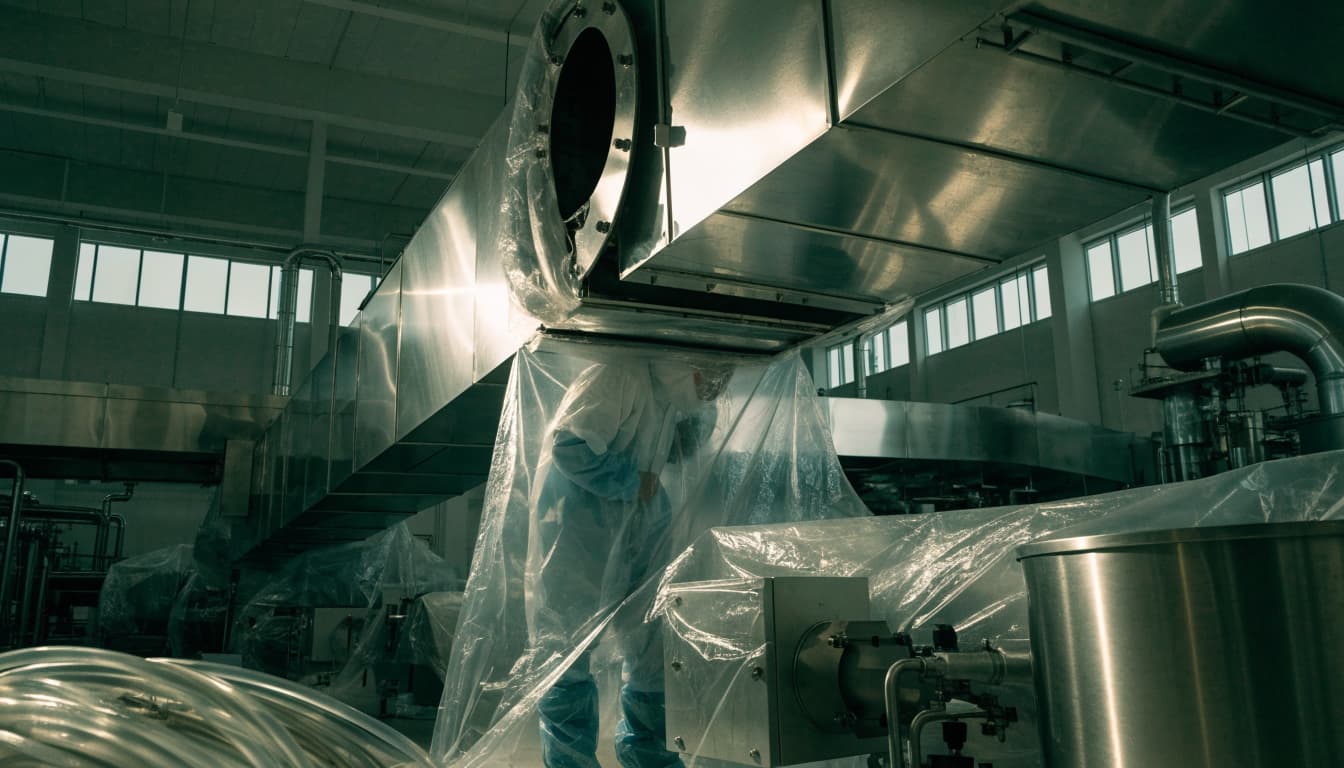
Before an access panel opens, remove exposed food and packaging from the affected area or protect them under the plant's approved procedure. Cover food-contact equipment and other surfaces that could collect dust. The plan should also address nearby ingredients, utensils, and open containers.
Separate the Work Area
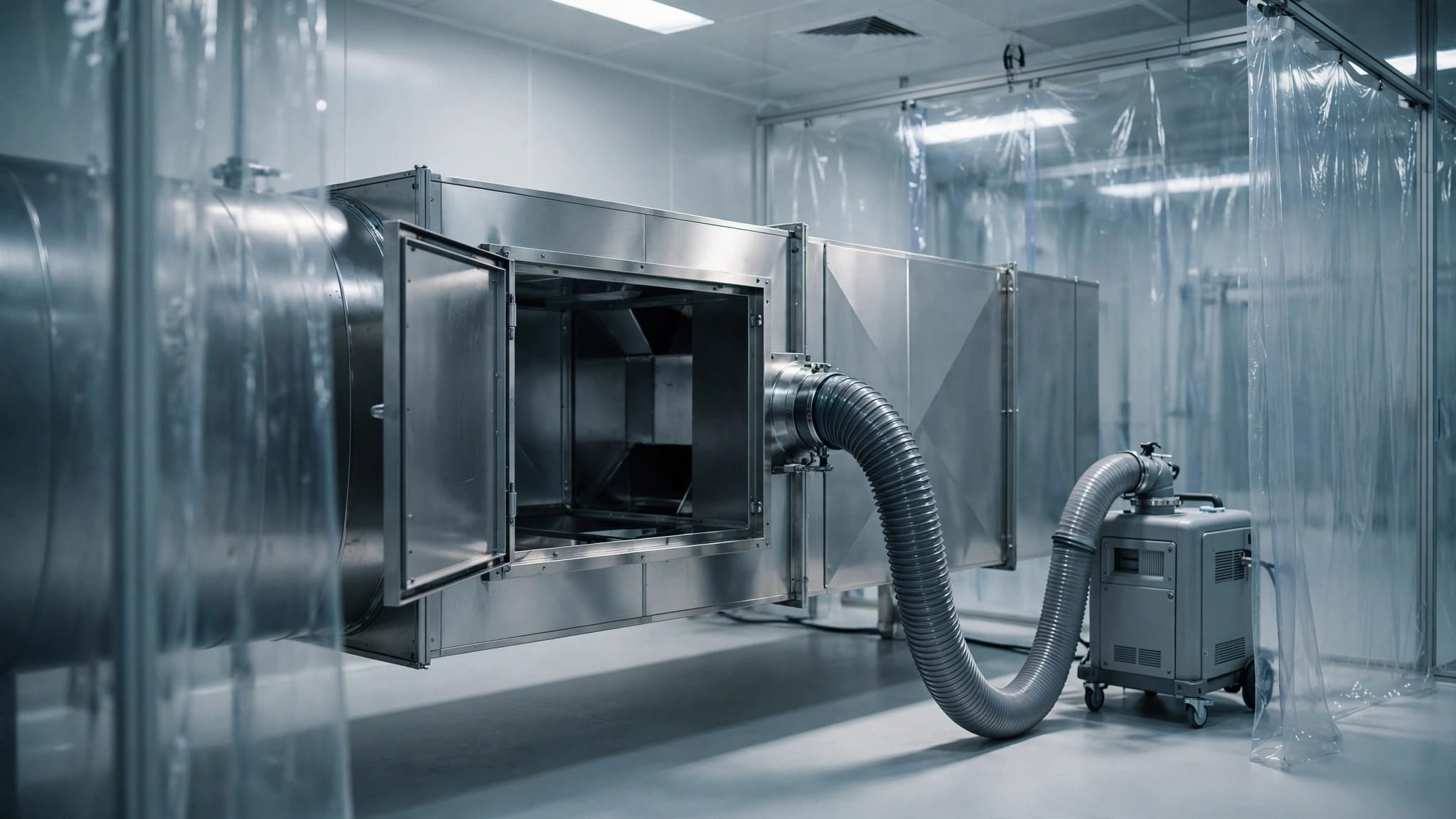
Temporary barriers and covered openings can limit the spread of debris. Place hoses and collection equipment so they don't cross clean surfaces or interfere with plant traffic. Tools entering controlled areas should meet the facility's hygiene requirements.
A vacuum connected to the duct can create negative pressure inside the section being cleaned. That helps draw loosened material toward the collection equipment. Our explanation of negative-pressure duct cleaning covers how the method works.
Protect Adjacent Zones
The cleaning crew and plant team should agree on fan shutdowns, isolation points, and any temporary changes to airflow. Vacuum exhaust and equipment placement also matter, especially near outdoor air intakes or sensitive production areas.
If debris escapes containment or contacts product, stop the work. The food safety team should assess affected food and surfaces under the plant's incident procedures before production resumes.
Match Cleaning Methods to the System
The written scope should identify supply and return trunks, branches, registers, and accessible air-handling components. It should also name exclusions. Cleaning visible grilles alone leaves much of the system unaddressed.
Our guide to full-system duct cleaning scope explains why registers, ducts, and air-handler components should be listed separately.
Remove Buildup Without Damaging Ducts
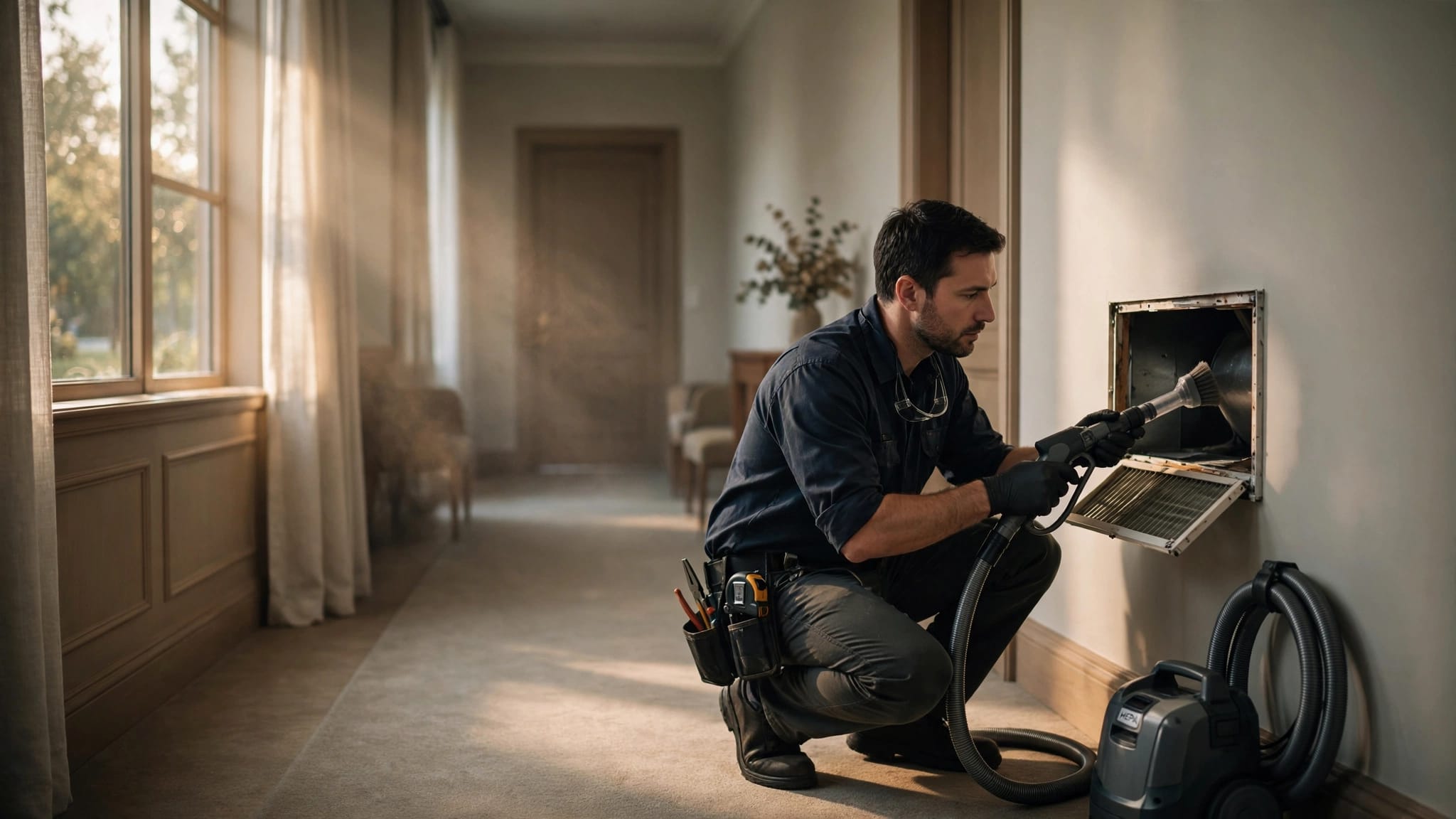
Once collection equipment is connected, technicians can loosen accessible debris with tools suited to the material. Rigid metal ductwork may tolerate controlled brushing or air tools. Flexible duct and internal liner need gentler handling because aggressive agitation can tear or dislodge them.
Crews should close and seal access openings after the work. If a section can't be reached safely, the report should identify that limitation rather than imply it was cleaned.
Address Components Outside the Ducts
A dirty blower, coil, drain pan, or air-handler cabinet can affect conditions in the system. Those components may require separate access and methods, so they belong in the written scope when included.
Duct cleaning won't repair a leak, clear every condensate problem, or correct a damaged connection. Maintenance staff should address those defects so debris or moisture doesn't return.
Use Chemical Treatments With Care
A sanitizer, inhibitor, or microbial treatment isn't a substitute for removing debris. It also won't correct an active water leak or restore contaminated insulation that needs replacement.
If a treatment is proposed, the plant's food safety team needs to understand the product, intended use, application area, and potential exposure to food or equipment. The product must be appropriate for the intended application and used according to its label and the plant's procedures.
Keep food and packaging protected during application. The plan should address any required drying, ventilation, residue removal, and re-entry conditions. Document the product name and where it was applied rather than making claims that treatment eliminated every contaminant.
Our guide to air duct microbial treatment explains its limits and why moisture control comes first.
Set Cleaning Frequency Around Inspection Findings
Food plant air duct cleaning frequency depends on conditions inside the system and the risk associated with the areas it serves. A calendar can schedule inspections, but the findings should guide the decision to clean.
An air handler serving an ingredient-dust area may accumulate material differently than one serving enclosed storage. Production volume, filtration, outside air, duct condition, and maintenance history can all affect buildup.
Review accessible ducts and components as part of the plant's maintenance program. Compare photos and observations over time, particularly around returns, supply outlets, filters, and areas near open product.
Events can also justify an earlier inspection:
- Construction or equipment work may introduce dust into an open HVAC system.
- Water intrusion or recurring condensation can affect ducts and insulation.
- Pest activity may leave contamination that needs a different cleanup plan.
- Debris blowing from a supply outlet can point to a problem inside the system.
Record what was found and what action followed. A clean inspection can support continued monitoring, while substantial buildup or damage may call for cleaning, repair, or a more specialized response.
Verify the Work Before Releasing the Area
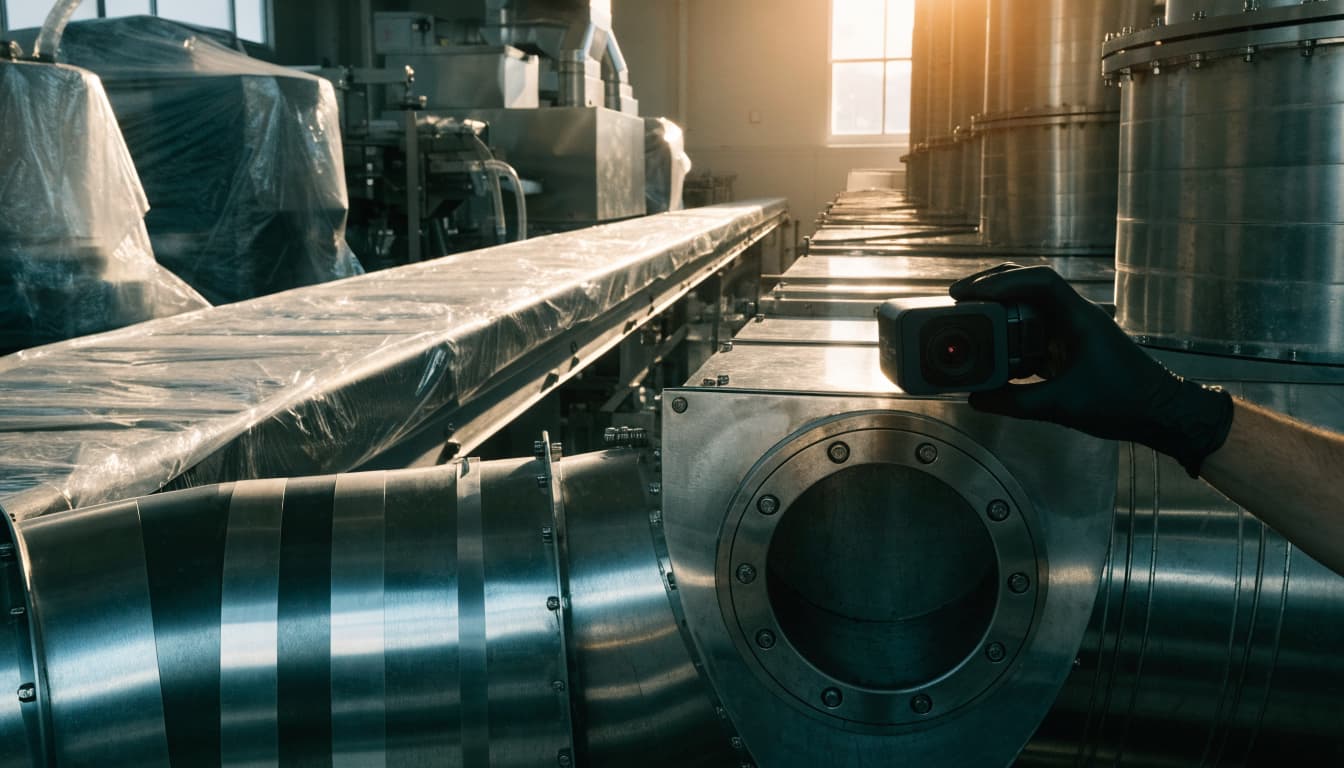
Finishing the duct work doesn't automatically make a production area ready to use. The plant's release process should cover both the HVAC system and the surrounding work zone.
Inspect and Clean Up
Review accessible cleaned surfaces and compare before-and-after photos of recognizable locations. The crew should account for tools, remove waste and temporary barriers, and close access points.
Next, sanitation staff can clean affected surfaces under the plant's procedures. Maintenance can return fans and dampers to their approved operating positions. If the plant uses surface swabs or other tests for release, apply the sampling plan to the relevant surfaces and hazards. A visual inspection alone doesn't establish microbiological safety.
Keep a Useful Service Record
A useful report identifies the service date, air handler, duct sections cleaned, access points, methods, and any areas the crew couldn't reach. Include photos, observed damage, repairs needed, and details of any chemical application.
The plant should also retain its applicable sanitation and release records. For facilities subject to FDA preventive-controls requirements, monitoring, corrective action, and verification records depend on the controls in the food safety plan.
If your Gulf Coast facility needs duct service, Get a Free Estimate and share the system layout, production constraints, and required documentation with us.
Make Duct Cleaning Part of the Hygiene Plan
Clean ductwork supports plant hygiene when the work is coordinated with the people responsible for food safety and production. The plan should protect exposed materials, contain debris, and account for every affected HVAC zone.
Use inspection findings to set the scope, then document the work and release the area through your plant's procedures. That gives your team a record for the next maintenance decision.