Auto Shop Air Duct Cleaning for Fine Dust
Cleaning the air ducts in an auto shop can remove accumulated debris from accessible HVAC components when an inspection shows that cleaning is needed. It works best alongside ongoing dust control , rather than as a substitute for it.
A dusty grille alone doesn't tell you what's happening deeper in the system. For shop owners and managers, the first step is understanding how dust travels and where to look for meaningful buildup.
How fine shop dust reaches HVAC components
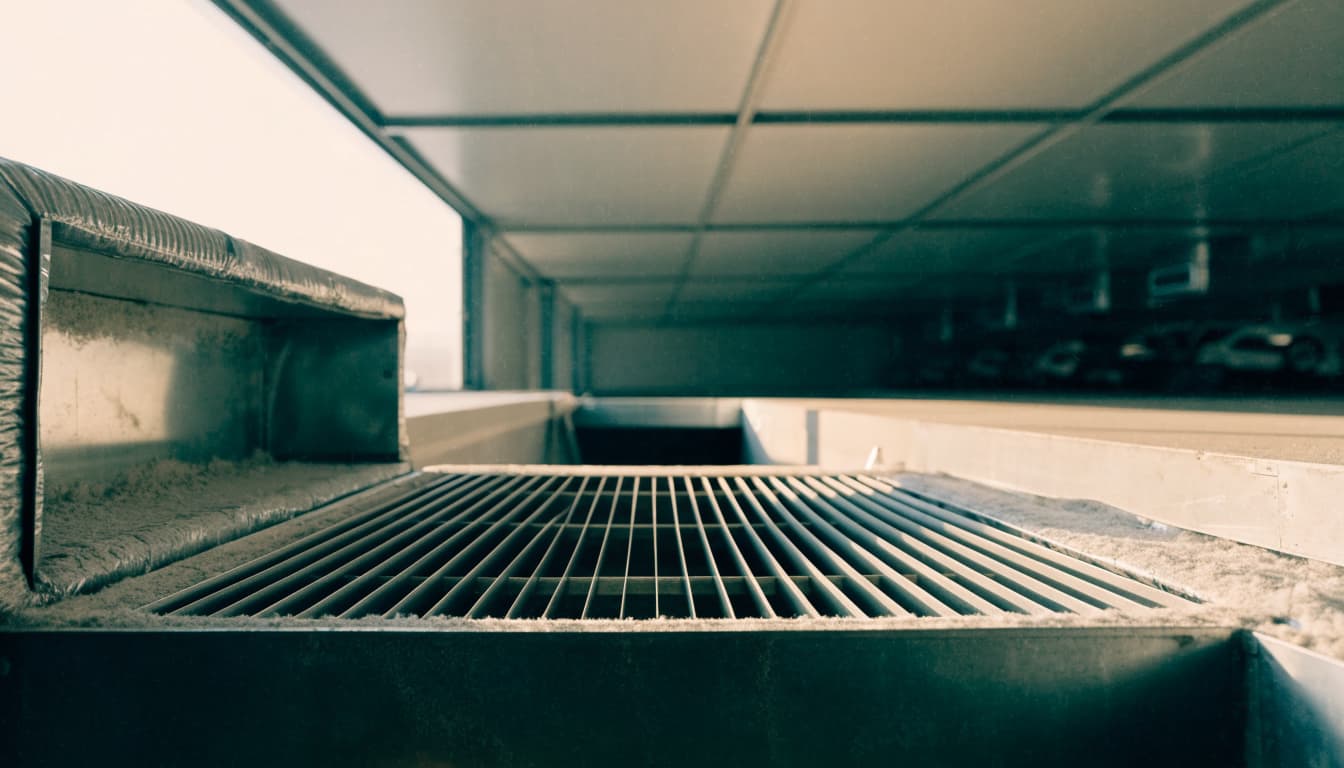
Open service bays, foot traffic, and everyday work can leave fine dust suspended in the air or settled on surfaces. When the heating and cooling system runs, some of that material can enter a return grille and move toward the air handler.
Returns, filters, and air handlers
Return ducts carry air back to the HVAC equipment. Depending on the system's layout, dust may collect near the grille, inside return branches, or in the return plenum.
A properly fitted filter captures some particles before air passes through the equipment. However, a loaded filter or gaps around the filter rack can affect how well the system handles dust. Material that bypasses the filter may settle on accessible components, including the blower compartment.
Supply ducts and other entry points
Dust can also enter through disconnected duct sections, gaps, or open registers during building work. If material reaches the supply side, the system may carry some of it toward occupied areas.
The path matters when deciding what to clean. Debris limited to a grille calls for a different response than buildup inside return trunks, supply branches, or the air handler. An inspection helps distinguish one condition from another.
When auto shop air duct cleaning makes sense
A shop doesn't need full-system cleaning on a fixed calendar. Look for evidence inside the HVAC system and pay attention to changes that persist after ordinary maintenance.
Signs that warrant an inspection
Visible debris inside accessible duct sections or particles coming from supply registers are reasons to arrange an inspection. A filter that loads much faster than usual can also point to increased dust or a problem with the filter setup.
Poor airflow deserves attention, too. A clogged filter, damaged duct, dirty coil, or blower problem can all affect air movement. Cleaning the ducts won't correct every one of those conditions, so the cause needs to be identified before work begins.
Dust around a return grille is useful information, but it doesn't prove the whole system is dirty. A technician can look beyond the grille and document what is accessible.
Moisture, odors, and damaged materials
A musty odor, staining, pest evidence, or damaged insulation calls for a closer look. These findings may require repairs or a separate service before ordinary duct cleaning can be completed.
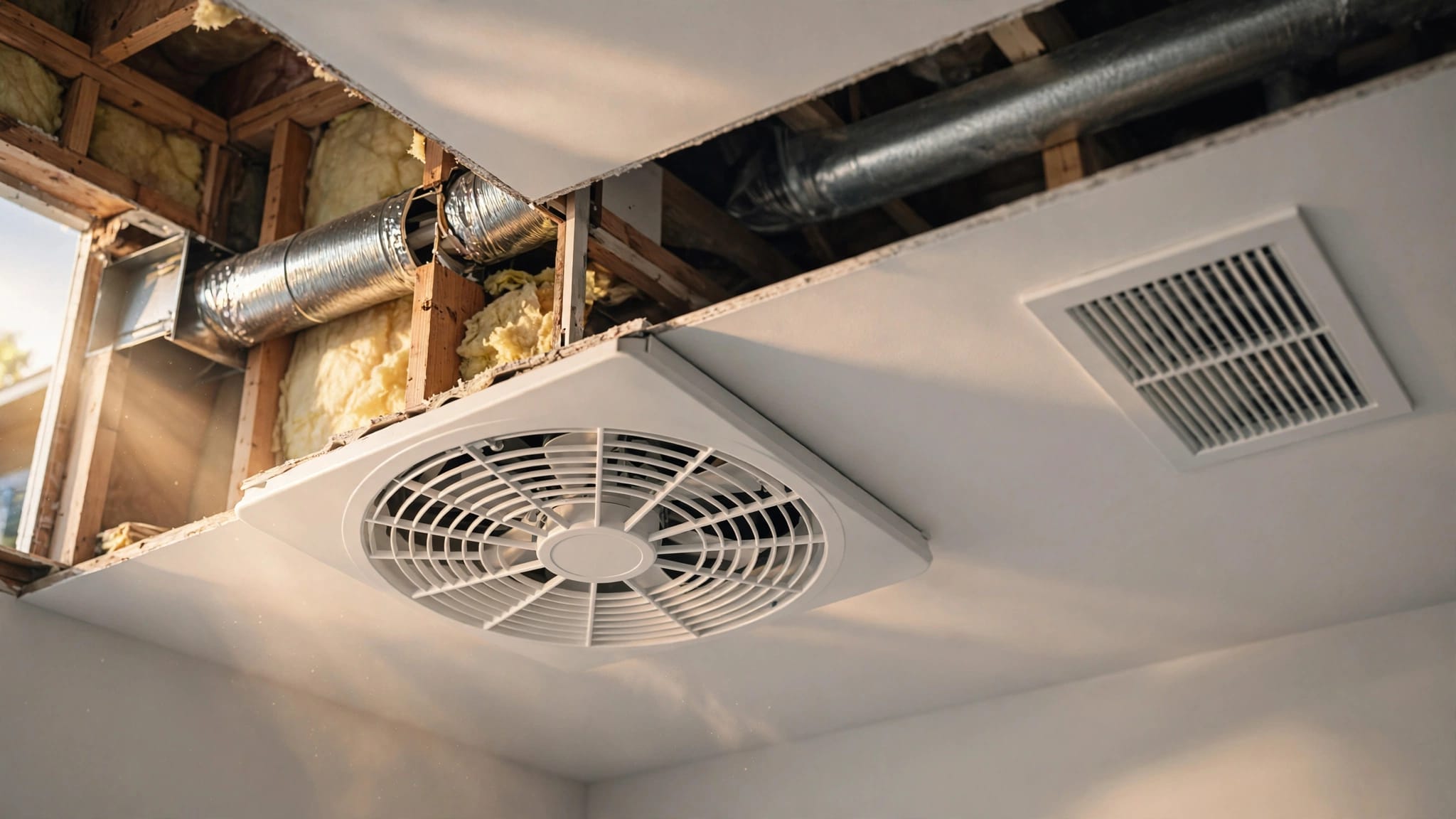
For example, moisture should be addressed at its source. Applying a treatment over debris won't remove the buildup or correct the water problem. Some damaged or contaminated porous materials may need replacement rather than cleaning.
Our guide to what air duct cleaning can remove explains the difference between removable debris and problems that need another approach.
What professional duct cleaning involves
When the inspection supports cleaning, the goal is to remove debris from the agreed areas while keeping it contained. The process should address more than the visible faces of the vents.
Containment and debris removal
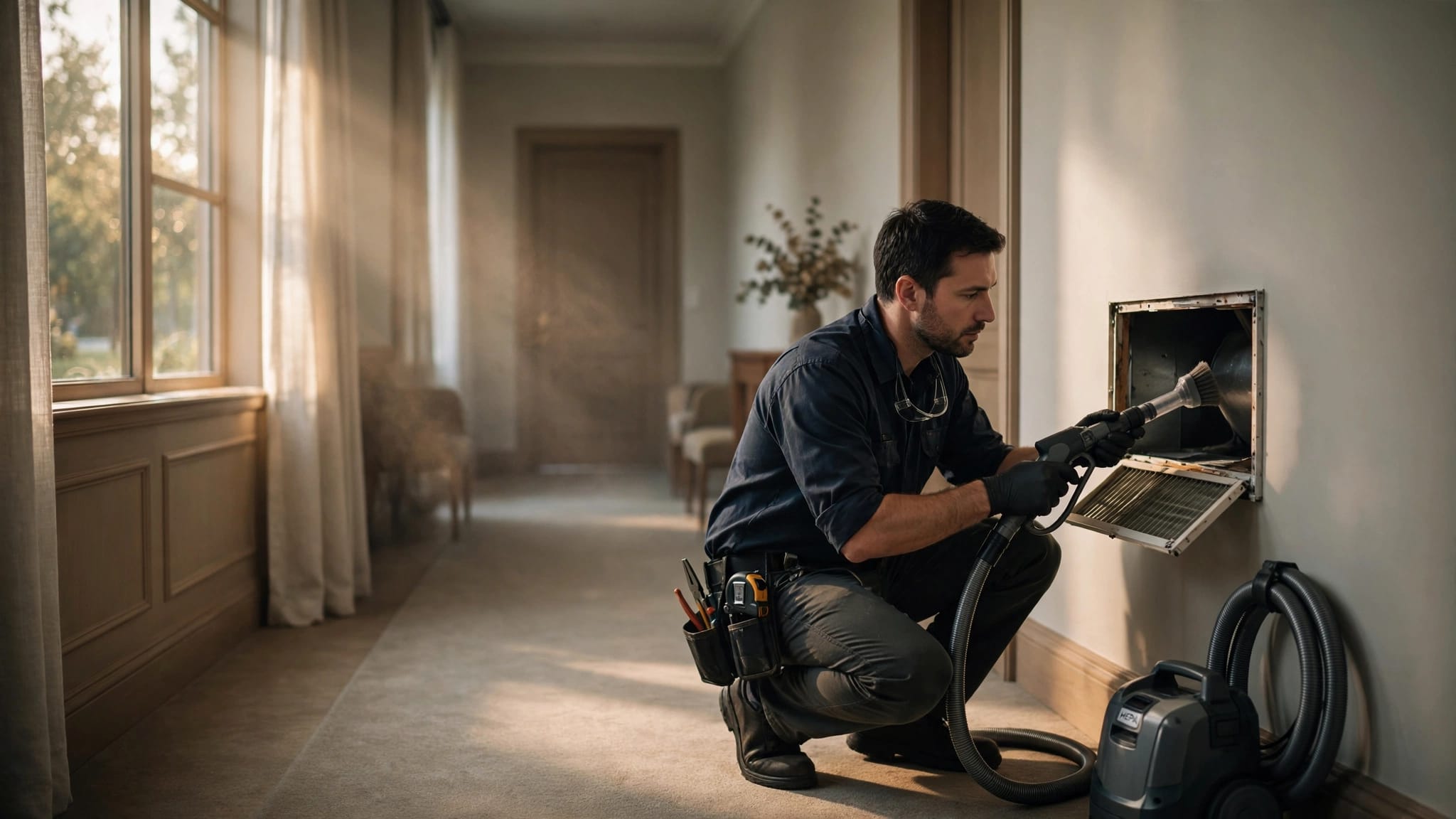
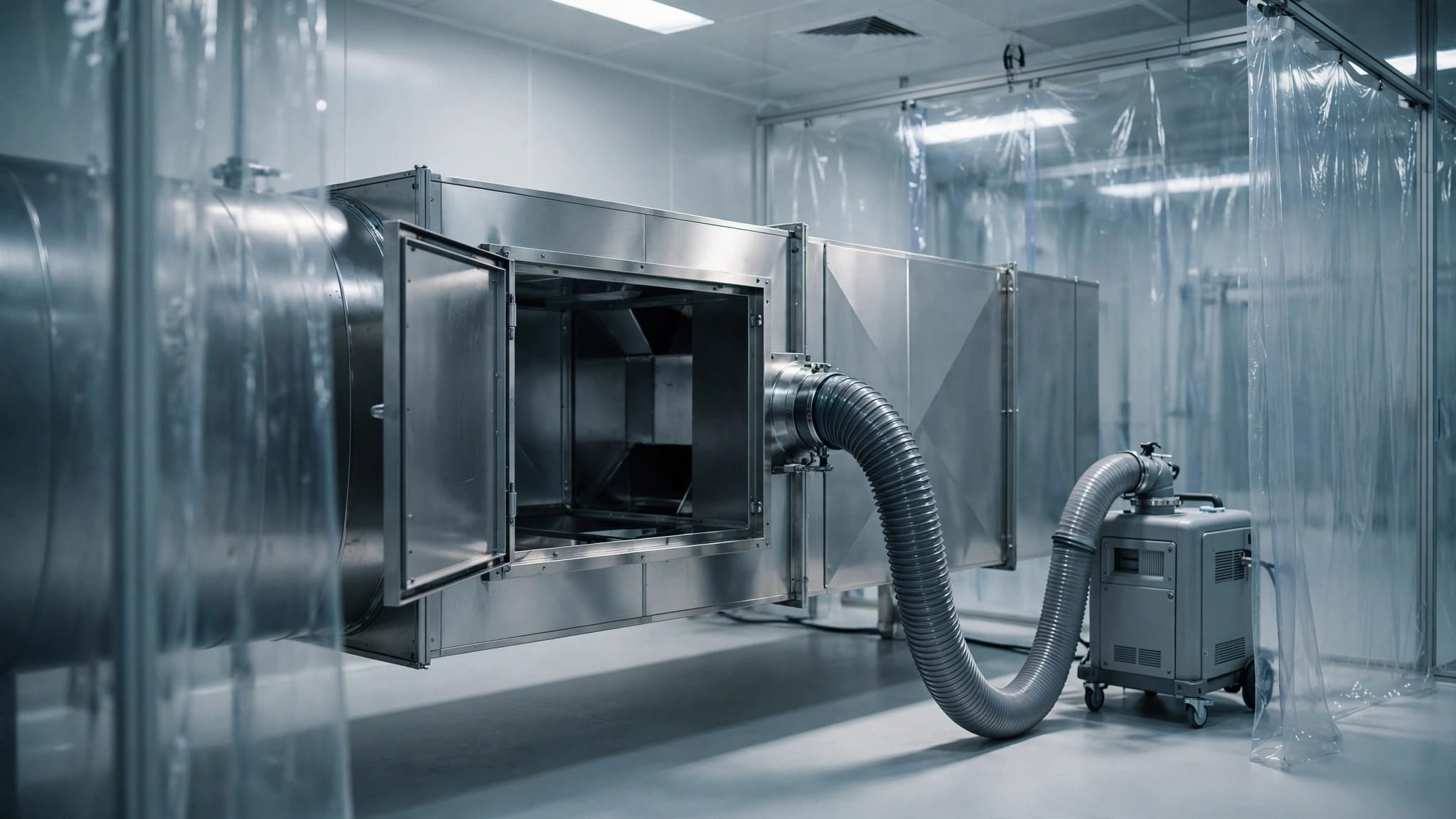
Professional cleaning generally uses a collection system to place the ductwork under negative pressure. Technicians loosen settled material inside accessible sections while the vacuum draws debris toward the collection equipment.
Tools vary with the duct material and condition. Sheet metal, flexible duct, and lined ductwork don't all tolerate the same handling. Fragile or damaged sections may need a gentler method or repair before cleaning.
Our explanation of negative-pressure duct cleaning methods covers how collection equipment helps contain loosened dust.
Areas beyond the visible vents
A useful scope identifies the supply and return pathways, main ducts, accessible branches, grilles, and registers. It should also describe any agreed work on the air handler, blower compartment, or nearby components.
Cleaning only a few supply openings can leave debris elsewhere in the system. On the other hand, a dirty coil or mechanical problem may need separate HVAC service. If a section can't be reached or safely cleaned, that limitation should be documented.
Afterward, the crew should reinstall grilles, close access panels, and remove protective coverings. Before-and-after photos of accessible areas can help show what the work covered.
Define the scope before approving service
A written scope makes it easier to coordinate the appointment and understand which parts of the system will receive attention. This matters in a commercial building with more than one air handler or a mix of shop and office areas.
Identify the system and access points
The estimate should identify the system or systems included, along with the ducts and components the crew can reach. It should also describe access needs, including ceiling areas, grilles, and the air handler.
Some locations may need a portable collection unit, while others can accommodate different equipment. The choice depends on access and the layout of the building. Our comparison of duct cleaning equipment options explains how those setups differ.
If duct insulation looks damaged or contains suspect material, work should pause until an appropriate professional assesses it. The cleaning plan can then address approved areas without disturbing an unsafe section.
Separate cleaning from repairs and treatments
The scope should make clear whether coil work, duct repairs, or replacement of damaged material is included or handled separately. A duct-cleaning visit doesn't automatically include a mechanical tune-up.
Sanitizers and other treatments also have separate purposes. They shouldn't be automatic additions to a dust-removal job. The product, intended use, application area, and any extra cost belong in the written scope.
Schedule around shop operations

A workable service window gives the crew access without leaving the shop guessing about interruptions. Discuss the HVAC layout and operating schedule before choosing a time.
Plan for system downtime
The HVAC system may need to remain off while technicians connect equipment and clean the affected ductwork. In Florida, that can influence comfort in offices and customer areas as well as the service bay.
A quiet period, such as before opening or after the day's work, may be easier to manage. Larger properties may need work divided by system or area. That plan should follow the actual HVAC layout, because several rooms can share one air handler.
Allow time for setup, cleaning, reassembly, and cleanup. The scope and condition of the system determine how much time the work needs.
Protect equipment and keep routes clear
Before the visit, move vehicles, carts, and other movable items away from agreed access points. Set aside a clear route for hoses and collection equipment, including the path to the air handler.
Nearby tools, work surfaces, and sensitive equipment should be covered or otherwise protected. Drop cloths and coverings also help protect floors and furnishings around grilles and access panels.
Keep staff informed about the work zone and any areas temporarily unavailable. Once the work is complete, the crew should leave access panels secure and the area ready for normal use.
Keep new dust out of the HVAC system
Duct cleaning removes material that has accumulated in the agreed areas. It doesn't stop new dust from entering through routine activity, open doors, leaks, or a poorly fitted filter.
Manage dust where it collects
Regular surface and floor cleaning can reduce the loose material available to become airborne again. Use cleaning methods suited to the material and the space, rather than pushing settled dust toward return grilles.
Pay attention to areas near returns and shared routes between the shop and office. If building work creates extra dust, isolate the work area and plan HVAC operation around it. After the work, inspect the nearby filter and accessible openings for debris.
These steps are part of a broader housekeeping plan. Cleaning a duct system without addressing continuing sources can leave it collecting the same material again.
Address leaks and equipment problems
Loose return connections or gaps around the filter housing can give dusty air a path around the filter. Crushed or disconnected ducts, meanwhile, call for repair rather than vacuuming alone.
An HVAC professional can assess those conditions along with airflow complaints. Our discussion of HVAC tune-ups and duct cleaning explains why maintenance and debris removal are related but separate services.
Maintain filters and track conditions
Filter care is one of the most practical ways to support a cleaner HVAC system between inspections. The right choice depends on the equipment, not simply on selecting the highest rating available.
Choose a compatible filter
MERV is a rating used to describe a filter's ability to capture particles. A filter in the MERV 8 to 13 range may be suitable when the HVAC equipment supports it. Higher-rated filters can also add resistance, so a more restrictive filter isn't automatically the right choice.
Use the manufacturer's guidance for filter selection and replacement. Make sure the filter fits its rack without obvious gaps. Stacking filters adds resistance and isn't a substitute for a properly fitted filter.
Use observations to set the next inspection
Follow the equipment's filter inspection schedule, and pay attention when conditions change. A shop with frequent open-door traffic or nearby building work may load filters differently than an enclosed office.
Keep a simple record of filter changes, visible buildup, airflow complaints, and cleaning photos. If debris returns quickly, that history gives an HVAC professional a starting point for finding the source. It also helps you judge future cleaning needs by conditions rather than by a blanket interval.
A cleaner system starts with a clear plan
Fine dust can reach an HVAC system, but the right response depends on where it has accumulated. Inspection, a defined cleaning scope, and protection for the work area help keep service focused on the conditions your shop faces.
After cleaning, filter care and dust control help limit new buildup. For a shop on Florida's Gulf Coast, you can Get a Free Estimate for air duct cleaning.