How to Tell If Your Home Has Duct Board
A quick look behind a vent can reveal whether your home has duct board , but the material isn't always easy to identify from the grille. Unlike sheet metal, this ductwork is made from compressed fiberglass with a foil or vinyl-facing material on the inside or outside.
Knowing what surrounds your air stream matters before cleaning or repairing the system. Fiberglass surfaces can tear, shed fibers, absorb moisture, or separate from their facing when handled with the wrong tools. These simple inspection steps can help you identify duct board and decide what to do next.
Key Takeaways
- Duct board is rigid fiberglass ductwork covered with foil or vinyl facing.
- It often appears as thick, flat-sided duct sections instead of round metal pipe.
- Delamination, moisture staining, exposed fiberglass, and sagging indicate possible damage.
- Don't poke, brush, or vacuum fragile fiberglass surfaces yourself.
- A professional inspection can confirm the material and recommend safe cleaning or replacement.
What Is Duct Board and Where Is It Used?
Duct board is a rigid panel made from fiberglass insulation. Manufacturers cut and fold these panels into supply ducts, return boxes, plenums, and other air distribution sections. The interior usually has a smooth foil or reinforced facing, while the exterior may look like a coarse, insulated board.
The facing creates a cleaner air path and helps protect the fiberglass core. Some products use foil, while others use a vinyl or similar reinforced surface. The facing also helps reduce air leakage when installers seal the joints correctly.
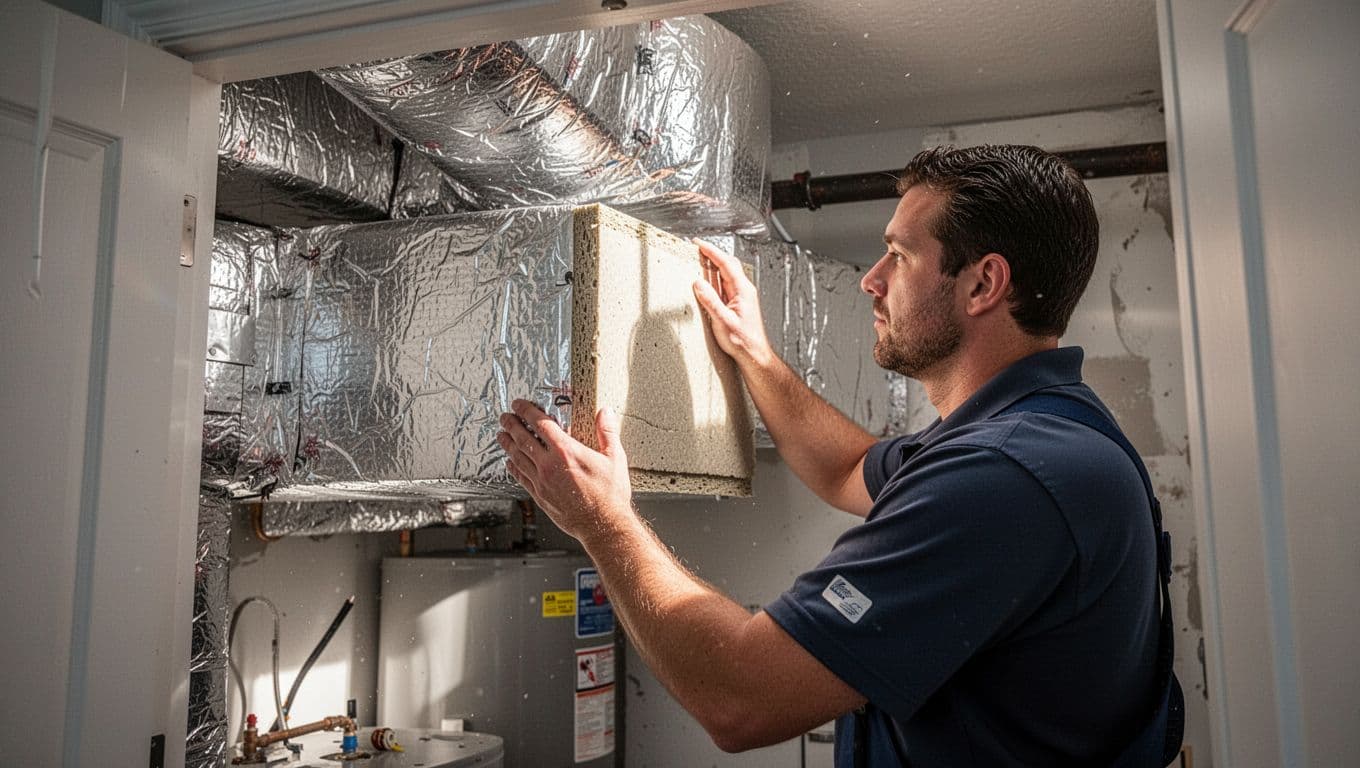
You may find this material in homes built with ductwork inside attic spaces, soffits, crawl spaces, or mechanical closets. It can also connect to metal components near the air handler. A system may contain both materials, so seeing one metal register boot doesn't prove that the entire duct system is metal.
Duct board is different from flexible duct. Flex duct has a wire-supported, flexible inner liner with insulation wrapped around it. Duct board has firm walls and usually keeps a rectangular or square shape.
The material also differs from metal ductwork in how it responds to cleaning tools. Sheet metal can tolerate controlled agitation when the equipment and access are appropriate. Fiberglass-faced surfaces need more care because aggressive brushing can damage the lining.
How to Check for Duct Board Safely
Start with the easiest access points, such as a removable supply register, return grille, attic access panel, or mechanical closet. Turn off the HVAC system before removing a grille. Use a screwdriver that fits the fasteners, and keep the screws in a small container.
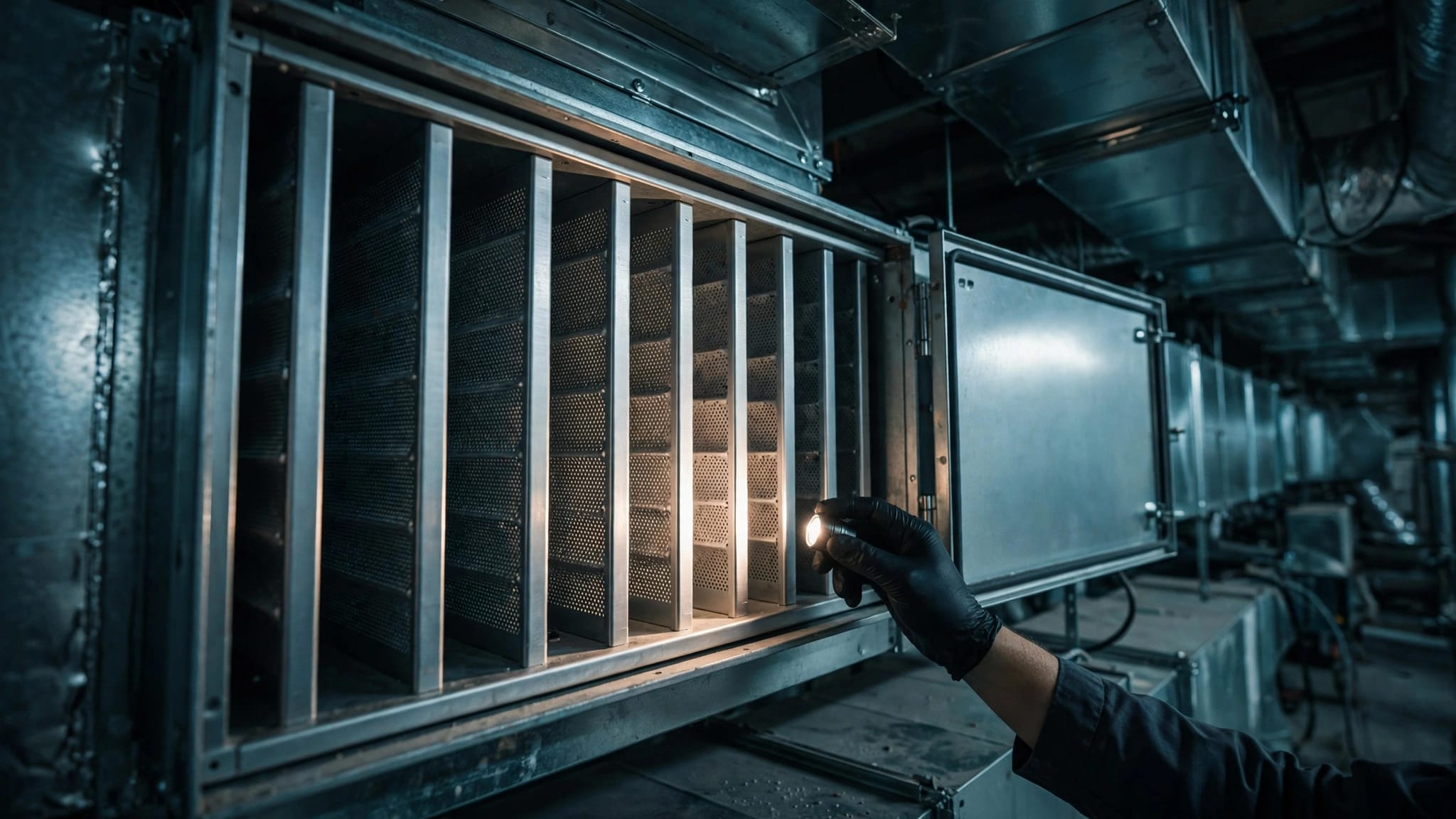
A flashlight helps you see the duct surface without touching it. Look for a flat, thick wall with a smooth silver, gray, or vinyl-like surface. The edge may show a tan or yellow fiberglass core where two panels meet.
Several signs point toward duct board:
- A rectangular shape : Duct board commonly forms square or rectangular runs.
- A thick wall : The material looks much thicker than sheet metal.
- A fibrous cut edge : An exposed edge may show compressed fiberglass.
- A foil or vinyl surface : The interior facing can look smooth and slightly reflective.
- Sealed panel joints : Tape, mastic, or reinforced seams often connect sections.
- A soft or insulated feel : Never press hard, but the surface may not feel rigid like metal.
You may also see duct board at the return plenum near the air handler. This large box connects the return air path to the indoor equipment. Because it is often accessible in a closet or attic, it can provide a better view than a small ceiling register.
Don't rely on color alone. Dust can make foil look dull, while old sealant can cover the original surface. A technician can identify the material by checking the panel edge, seam construction, and connection to nearby metal or flex duct.
If you see loose fibers, peeling facing, or water marks, stop the inspection. Touching the surface can make a small damaged area worse.
Duct Board vs. Metal and Flexible Ductwork
A basic comparison can help you recognize what you see during a home inspection.
| Feature | Duct board | Sheet metal | Flexible duct |
|---|---|---|---|
| Main material | Fiberglass panel | Galvanized steel or aluminum | Wire coil, inner liner, and insulation |
| Common shape | Rectangular or square | Rectangular, square, or round | Usually round |
| Surface | Foil or vinyl facing | Smooth metal | Plastic or fabric-like inner liner |
| Wall feel | Thick and firm, but softer than metal | Thin, hard, and rigid | Flexible and compressible |
| Typical concern | Damaged facing or moisture | Leaks, rust, or buildup | Kinks, tears, and loose insulation |
Metal ducts often reflect light sharply and make a clear tapping sound when lightly touched by a professional. Duct board looks more like a finished insulation panel. Flexible duct usually has a spiral or ribbed appearance and bends around obstacles.
A home can have several duct materials in one system. For example, the main supply plenum could use duct board, while short connections use sheet metal and the branch runs use flexible duct. Therefore, inspect more than one accessible area before making a final assumption.
The connection points deserve attention. A metal duct attached to a fiberglass plenum may have foil tape or mastic around the joint. If the joint is loose, conditioned air can escape into the attic or closet.
Signs of Damage in Fiberglass Ductwork
Identifying duct board is only the first step. Its condition determines whether cleaning makes sense or whether repairs should come first.
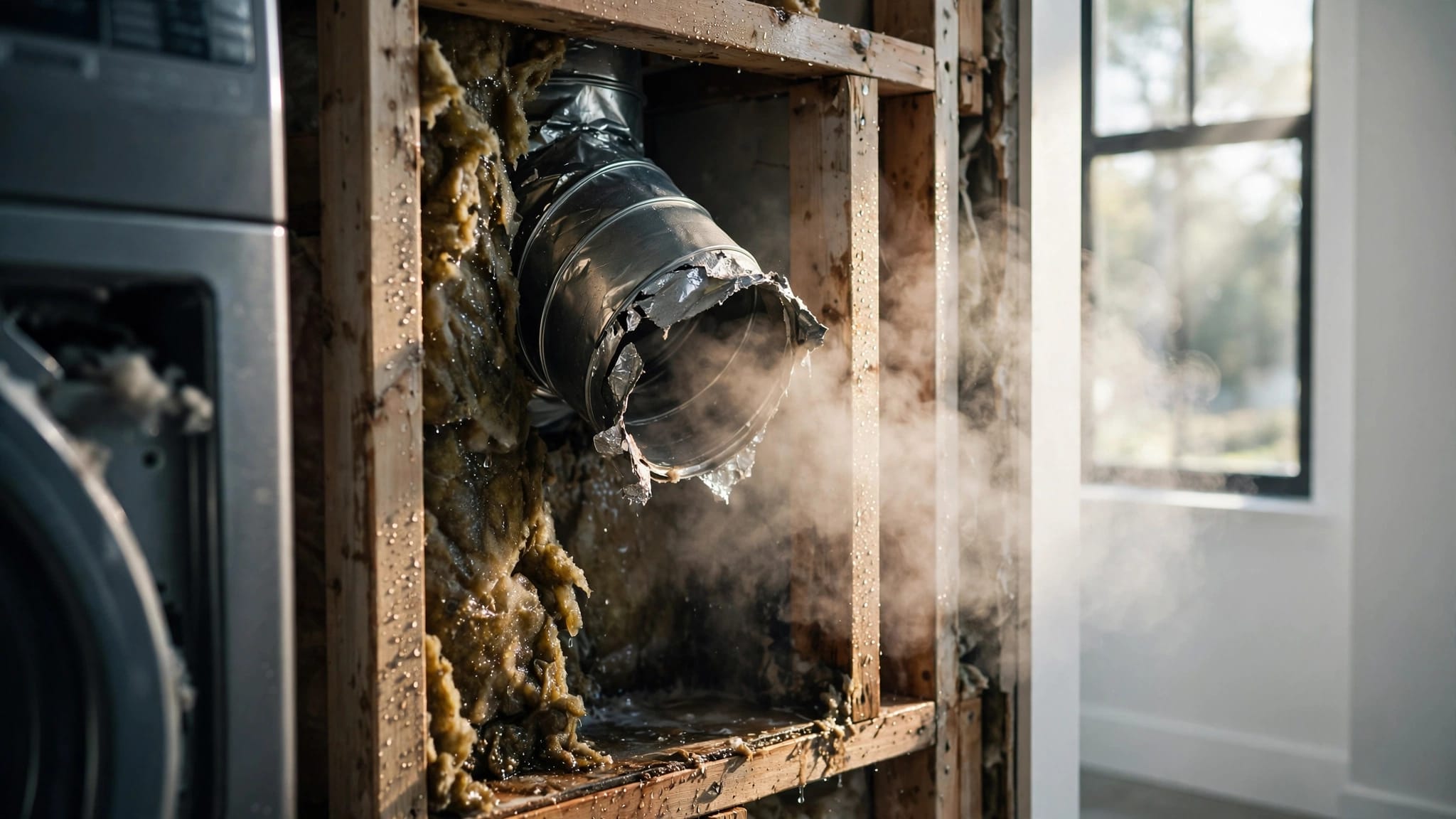
Delamination occurs when the facing separates from the fiberglass core. You may see bubbles, peeling sections, wrinkles, or a surface that pulls away around a seam. Delamination can occur after years of wear, repeated moisture exposure, or rough handling.
Moisture staining may appear as brown, yellow, gray, or dark marks. Stains can come from condensation, roof leaks, plumbing leaks, or high humidity. In Florida homes, warm humid air can make moisture problems worse when insulation or vapor barriers fail.
Exposed fiberglass is another warning sign. Look for fuzzy, tan, or yellow material where the foil or vinyl facing has torn. Small access cuts can expose the core, but large tears and loose fibers require professional assessment.
Sagging often means the panel has lost support or absorbed moisture. A drooping duct section may restrict airflow and place stress on nearby seams. It can also point to damaged hangers, poor installation, or deterioration.
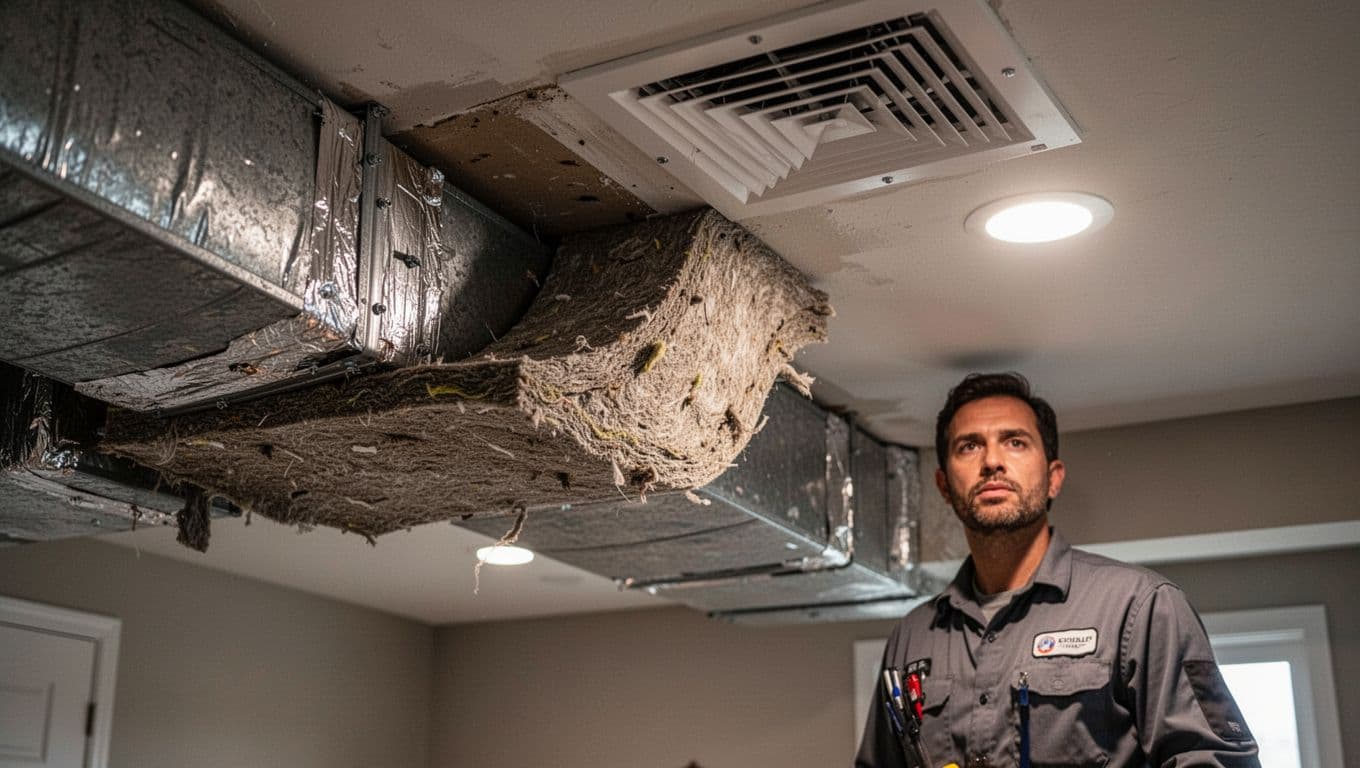
Other problems include crushed corners, open seams, heavy dust stuck to a rough surface, and visible mold-like growth. A dark spot alone doesn't prove mold. A qualified professional should evaluate the source of the staining and determine whether sampling or remediation is appropriate.
Don't scrape stains or brush exposed fibers. Those actions can spread debris through the air path and damage the facing. Take a photograph from a safe distance instead.
Should You Clean Duct Board?
Duct board can sometimes be cleaned, but the process must match the material and its condition. The goal is to remove loose debris without tearing the facing or driving dust into the fiberglass.
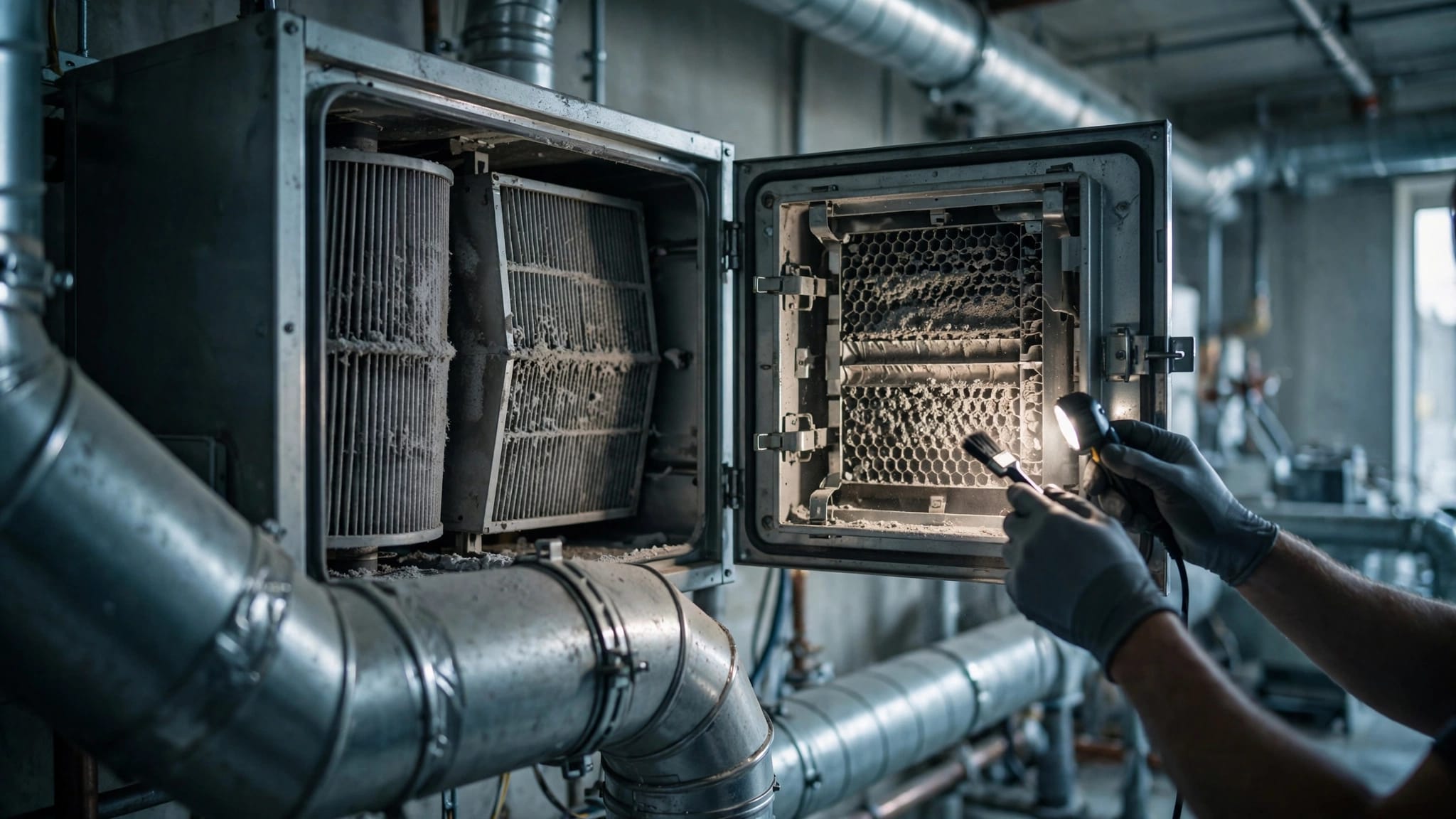
A technician may use controlled air tools, soft agitation, or carefully managed vacuum equipment. The exact method depends on access, the facing condition, the amount of buildup, and whether the surface remains intact. A rotary brush that works on sturdy metal may be unsuitable for a fragile lined or fiberglass section.
Before hiring a company, ask how it will protect duct board. The provider should inspect the system first and explain which sections it can clean safely. It should also identify any areas that need repair or replacement instead of promising that every surface can be restored.
You can review these questions to ask air duct cleaners before scheduling service. Look for clear answers about inspection, equipment, access, damaged materials, and the parts of the system included in the estimate.
Avoid anyone who plans to push a stiff brush into an unknown duct without checking the surface. Fiberglass ductwork needs a measured approach. If the facing has failed, cleaning may remove loose material but won't restore the panel.
Maintenance Tips for Homes With Duct Board
Regular maintenance starts with moisture control. Replace or clean the HVAC filter according to the equipment manufacturer's instructions. A clogged filter can reduce airflow and add strain to the system, while a poorly fitted filter can allow dust to bypass the filter entirely.
Check accessible duct sections after roof work, plumbing repairs, or air-conditioning problems. Look for new stains, damp insulation, soft spots, or changes in airflow. Keep stored items away from ductwork in the attic so panels aren't crushed or punctured.
Your indoor humidity also deserves attention. Air-conditioning systems remove moisture as they cool, but drainage problems, oversized equipment, or poor airflow can leave a home damp. Persistent condensation near the air handler or ducts should receive prompt attention.
Keep supply and return grilles open and unobstructed. Furniture, curtains, and boxes can block airflow and increase pressure in the duct system. Make sure registers sit firmly in place, but don't seal over them with household tape if the surrounding duct material is fragile.
Dryer vents are separate from HVAC ducts, but they still affect home safety and airflow. If a dryer takes longer to dry clothes, inspect the dryer vent system rather than assuming the problem is inside the air conditioning ductwork.
When to Call for an Inspection
Call a qualified HVAC or duct cleaning professional when you can't identify the material, when access requires entering a tight attic space, or when you see damage. An inspection is also sensible if your home has persistent dust, unusual odors, weak airflow, or visible debris around registers.
Ask the company to show you the affected areas with photographs when possible. A clear estimate should separate cleaning from repairs, replacement, microbial treatment, or odor services. You should know which ducts are accessible and which areas the crew cannot reach.
The cleaning method matters. What to expect during air duct cleaning includes an inspection, protected registers and nearby surfaces, controlled debris removal, and a final review. Those steps are especially important when a system contains fiberglass panels.
If you're in the Fort Myers area or elsewhere along Florida's Gulf Coast, you can Get a Free Estimate for air duct or dryer vent cleaning. Share any photographs of suspected damage before the appointment so the company can prepare for the right type of inspection.
Conclusion
You can often identify duct board by its thick rectangular panels, fiberglass edges, and foil or vinyl-facing surface. Still, the most important finding is its condition. Delamination, moisture staining, exposed fiberglass, and sagging call for professional attention before anyone cleans the system.
Use a flashlight, avoid disturbing damaged areas, and inspect the filter, grilles, and accessible duct sections regularly. Once you know what material your home has, you can choose a cleaning or repair method that protects the ductwork instead of adding to the problem.