Smart Thermostat Settings That Backfire in Florida Humidity
A smart thermostat in Florida can help, but the wrong settings can make a humid house feel worse. If your rooms feel sticky, the air smells stale, or the temperature seems fine while comfort still feels off, the thermostat may be part of the problem.
Florida heat comes with heavy moisture, so comfort depends on more than the number on the wall. Settings that save energy in a dry climate can backfire here by cutting short dehumidification, spreading damp air, or letting humidity climb while you're away. The fix usually starts with a steadier setup and a better read on what your HVAC system is doing.
Key Takeaways
- Big temperature setbacks can let humidity rise before the AC has a chance to dry the air.
- Running the fan on ON often spreads moisture and stale air instead of helping comfort.
- Aggressive eco settings can save a little power while making the home feel clammy.
- A steadier schedule, AUTO fan mode, and moderate humidity targets usually work better.
- If humidity stays high, the issue may be in the HVAC system, not the thermostat.
Why Florida humidity changes the thermostat's job
In Florida, your AC does two jobs at once. It cools the air and removes moisture from it. When the system runs long enough, the cold coil pulls water out of the air and sends it to the drain pan.
Short bursts do not always do that well. That is why a house can read 74 degrees and still feel sticky. The system may have reached the temperature setting before it had enough run time to dry the air.
A smart thermostat that chases small energy wins without thinking about moisture can make that cycle worse. The same is true when a home already has leaky ducts, a dirty filter, or a clogged condensate drain. In that case, the thermostat is only one piece of the comfort problem.
In a Florida home, temperature and humidity have to work together. If one improves while the other gets worse, the room still feels off.
Settings that often backfire in hot, sticky weather
The quickest way to spot trouble is to compare the setting with what it does to a Florida home.
| Setting | What it can do in humidity | Better approach |
|---|---|---|
| Large daytime setback | Lets indoor moisture rise while the house warms up | Use a smaller setback or a steady temp |
| Fan set to ON | Re-circulates damp air and stale odors | Use AUTO |
| Aggressive eco mode | Reduces runtime and dehumidification | Keep savings settings moderate |
| Constant schedule changes | Creates uneven comfort and short recovery cycles | Stick with one schedule for several days |
Those settings fail for the same reason. They reduce cooling time before the air has had a chance to dry out.
Large daytime setbacks
A 6 to 8 degree setback looks smart on paper. In practice, it can create a muggy house by late afternoon. The indoor temperature rises, the humidity creeps up, and the AC has to work harder when you return.
That rush to recover comfort often wastes more energy than a smaller setback would have saved. In a humid climate, many homes do better with a modest daytime change or a steady setpoint.
Fan set to ON
This is one of the most common mistakes. When the blower runs all day, it can move moisture back off the coil and spread stale air through the rooms. It can also push odors from damp ducts or a wet air handler into the living space.
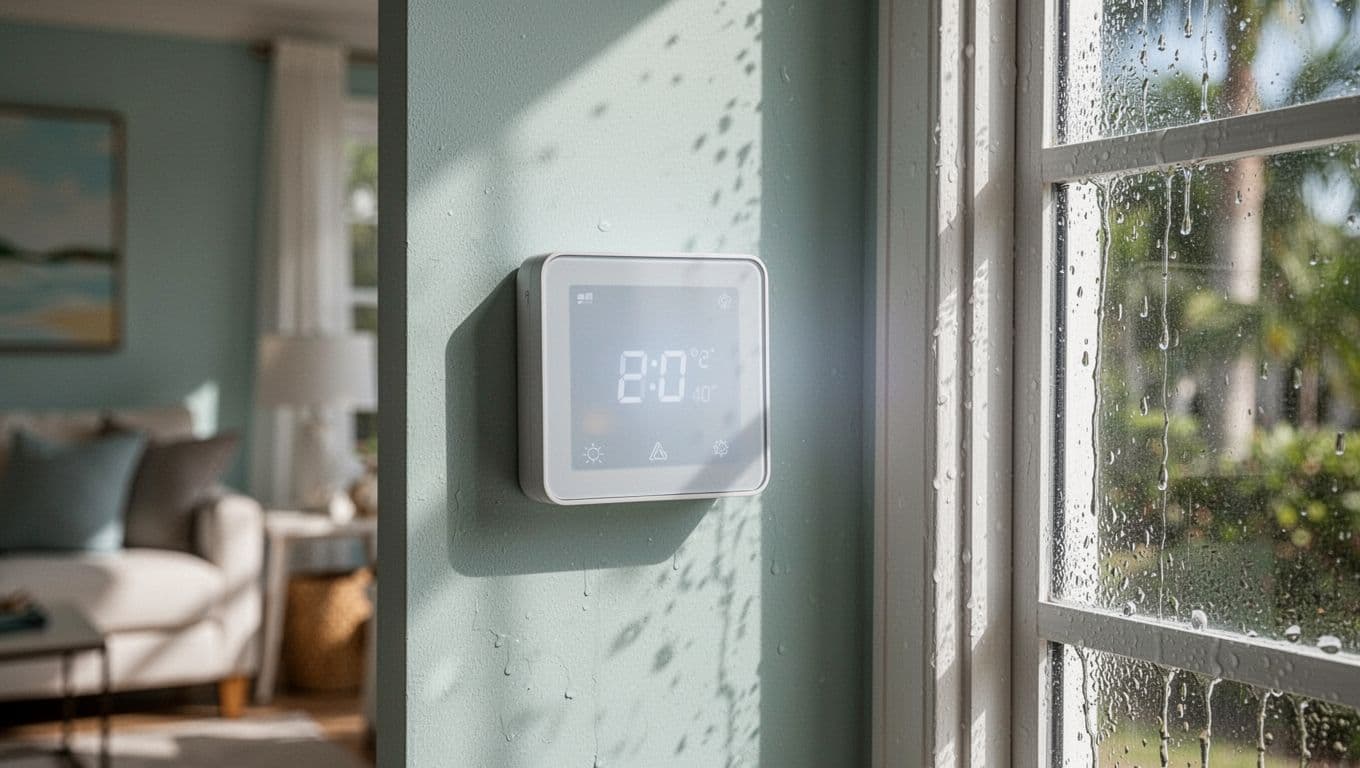
AUTO is usually the safer default. The fan stops after the cooling cycle, so the coil can drain and the air can stay drier.
Aggressive eco modes
Eco modes are appealing because they promise savings with less effort. The problem is that some of them let the temperature drift too far, especially during the day. That longer drift can mean higher humidity indoors, which makes the house feel heavier even when the thermostat says it is cool enough.
Fast recovery settings can also cause trouble. They may cool the air quickly, but they do not always run long enough to pull out moisture. The result is a room that feels cold and damp at the same time.
Frequent schedule changes
Smart thermostats make it easy to adjust settings every day. That convenience can work against you. Constant overrides, changing away times, and geofencing that jumps around can keep the system from settling into a stable pattern.
Florida homes usually do better with consistency. Pick one schedule, leave it alone for a week, and see how the house feels before making another change.
Better thermostat settings for humid homes
The right setup is usually simple. It just has to respect moisture, not temperature alone.
Keep the temperature swings modest
A small setback is often enough. Many Florida homeowners find that one to three degrees away from home is a safer starting point than a large daily drop. That gives the system a chance to keep humidity under control without long gaps in cooling.
If your thermostat shows indoor humidity, use that reading. A common comfort range is about 45 to 55 percent. Once humidity climbs past that, the home can feel sticky even if the air is cool.
Use AUTO fan mode most of the time
AUTO lets the system finish its cooling cycle and then stop. That matters because the coil needs time to drain after it pulls moisture from the air. A fan that runs constantly can undo some of that work.
There are exceptions, but most Florida homes do not need the blower running all day. If your thermostat has a circulation option, use it carefully and watch how the home feels after a few days.
Let the system run long enough to dry the air
Short cycles are hard on comfort. They cool the air fast, then shut off before humidity drops enough. Longer, steadier cycles usually do a better job of dehumidification.
That does not mean you should freeze the house. It means you should aim for stable operation, a clean filter, and settings that let the AC do a full cycle instead of quick bursts.
Keep the rest of the system in good shape
Thermostat settings can only do so much if the HVAC system is struggling. Dirty coils, clogged drains, low refrigerant, and leaky return ducts all make humidity control harder.
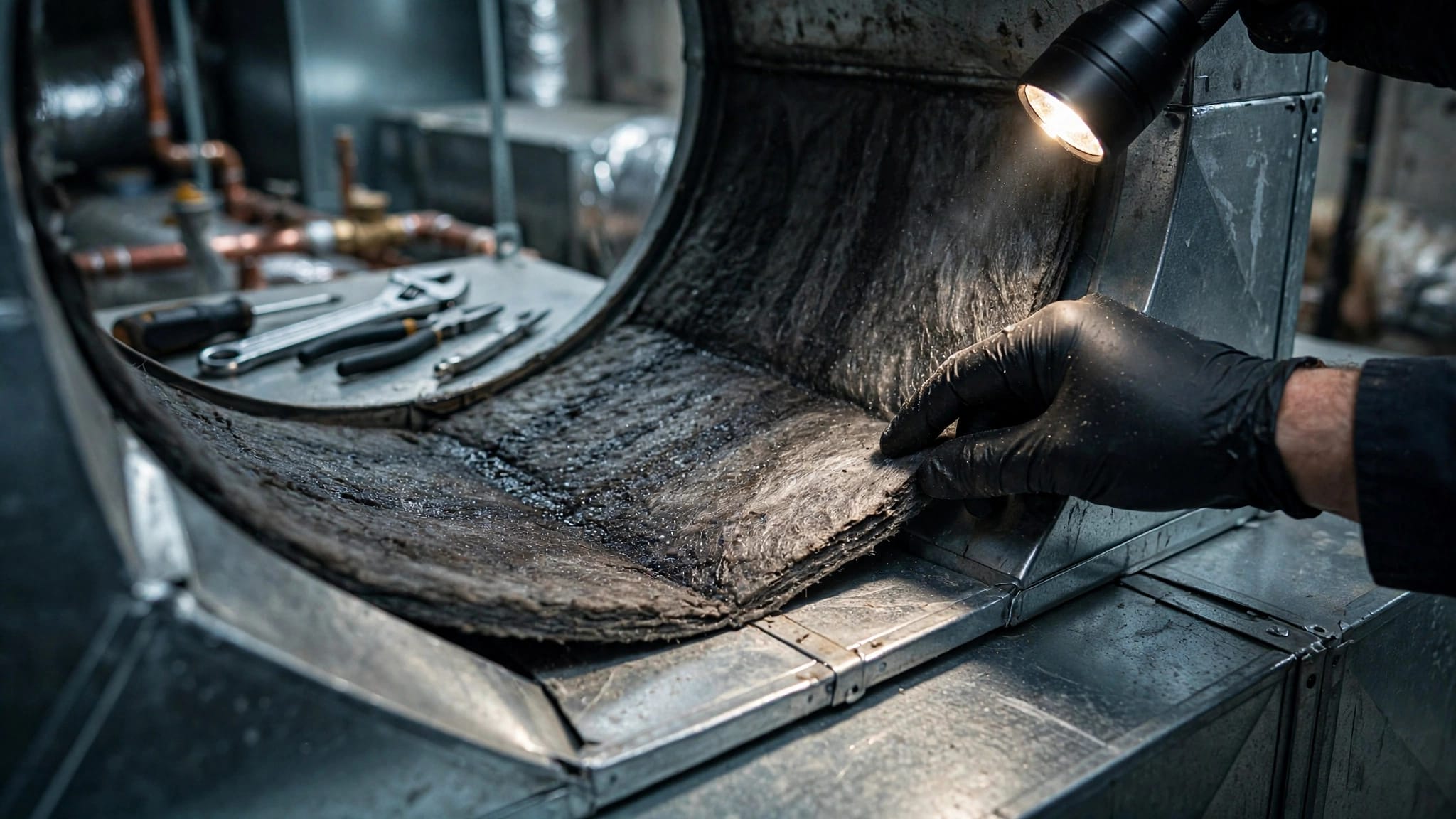
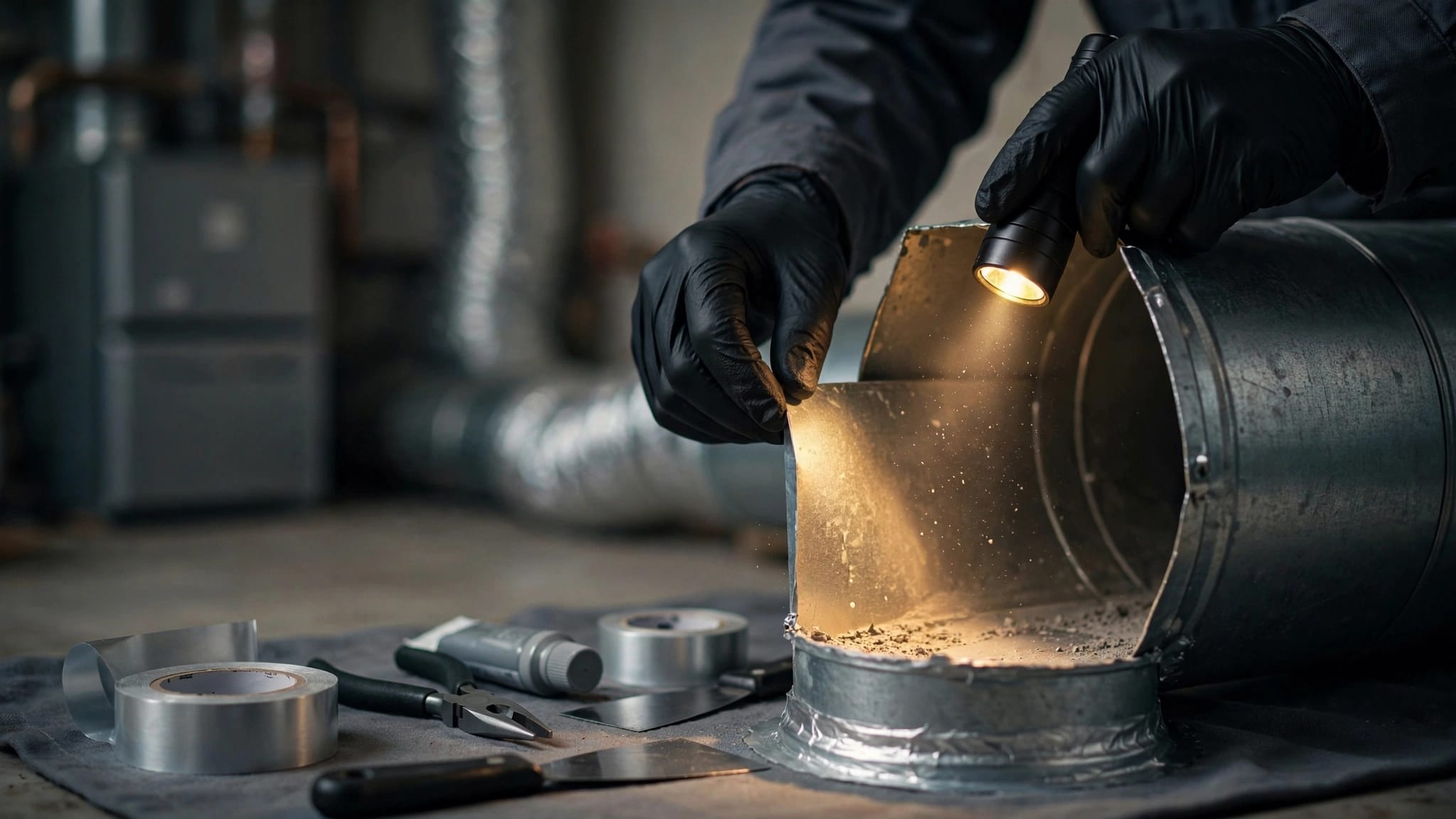
If you notice dust collecting fast or a musty smell when the AC starts, take a look at the ducts too. A helpful place to start is knowing when to clean air ducts, especially when moisture seems to make the smell worse.
Signs your home's humidity is too high
You do not need a meter to notice a problem, although a hygrometer helps. These signs often point to indoor humidity that needs attention:
- Condensation on windows or supply vents
- A sticky feel on skin, furniture, or bedding
- Musty odors when the system starts
- Bathrooms and bedrooms that stay clammy
- Visible spotting or mildew near returns, vents, or baseboards
If you are seeing several of those signs, the thermostat is probably not the only issue. A clogged condensate drain, a dirty evaporator coil, duct leaks, or an undersized system can all keep humidity high.
That is also the point where professional help makes sense. If the smell keeps returning, or if you suspect microbial growth, understanding air duct microbial treatment can help explain why cleaning, moisture control, and source removal all matter together. If you want a direct look at the system, Get a Free Estimate.
When thermostat changes are not enough
A thermostat problem and an HVAC problem can look similar at first. The difference shows up when you adjust the settings and the house still feels damp.
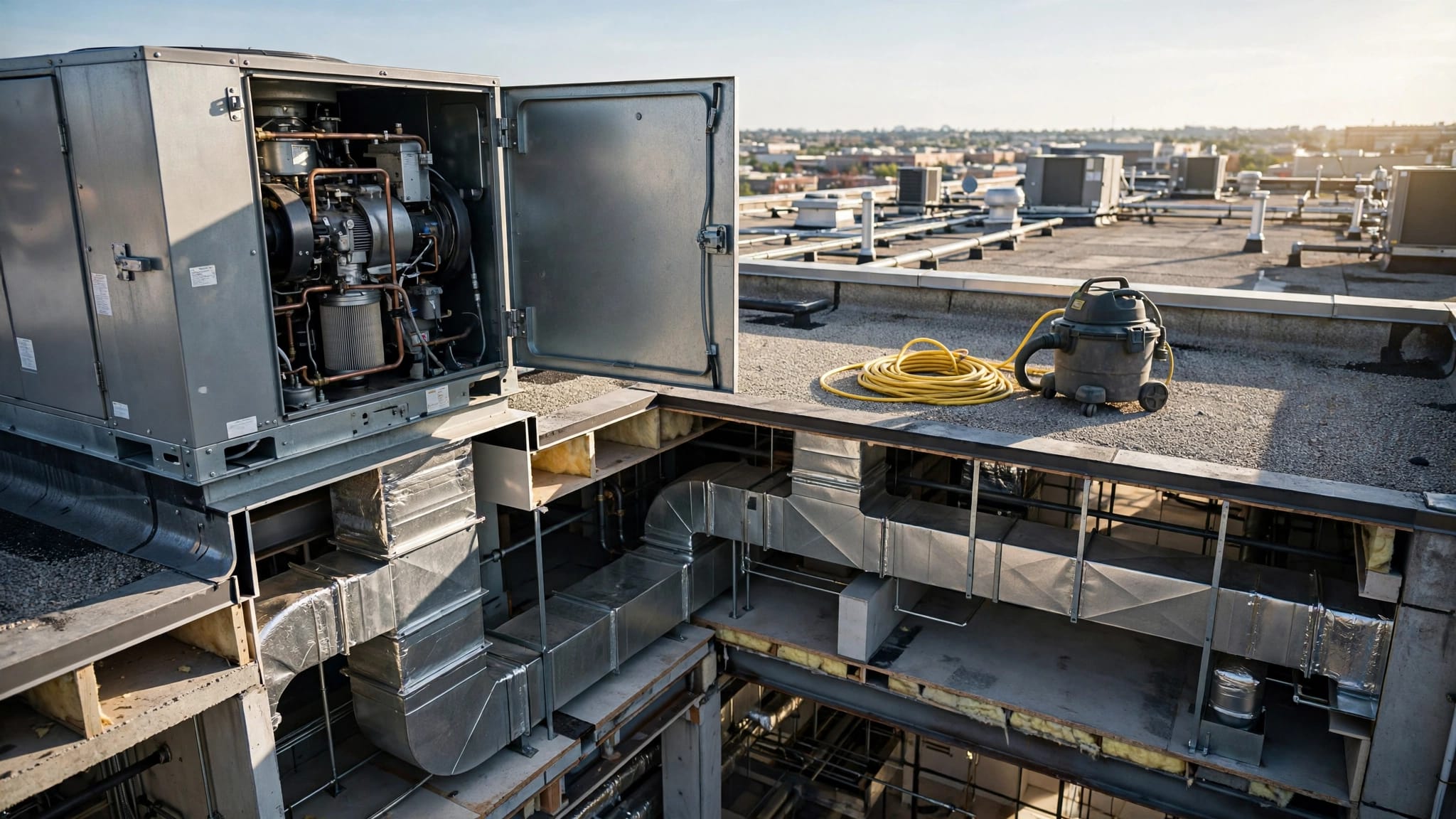
That usually means the system needs service, not another app tweak. Common causes include low refrigerant, a dirty evaporator coil, weak airflow, blocked drainage, or duct leakage in a hot attic. Any of those can keep the home from drying out properly.
If your AC short cycles, runs constantly, or leaves some rooms clammy while others feel fine, the equipment needs attention. A thermostat can guide the system, but it cannot repair the parts that move air and remove moisture.
Conclusion
Florida humidity changes the way a smart thermostat should work. Large setbacks, fan-on settings, and aggressive eco modes can all leave a home cooler on the screen but wetter in real life.
A steadier schedule, AUTO fan mode, and moderate humidity targets usually work better. If the house still feels sticky, the real problem may be inside the HVAC system, where airflow, drainage, ducts, and moisture control all matter. In a humid climate, comfort should feel dry as well as cool.