Two Dryers, One Vent: Is It Safe?
If you're searching for "two dryers one vent," you may be planning a laundry room upgrade or trying to understand an existing setup. The short answer is no, standard household dryers shouldn't share a single exhaust vent .
Each dryer needs its own duct that carries heated, lint-filled air outdoors. Combining the ducts can create back pressure, trap moisture, and increase fire risk. Before connecting anything, learn what a safe two-dryer layout requires and what to do if your home already has a shared vent.
Key Takeaways
- Two residential dryers should have separate exhaust ducts and outdoor termination points.
- A splitter, Y-connector, or homemade branch doesn't make a shared dryer vent safe.
- Running both appliances at once can increase pressure, heat, condensation, and lint buildup.
- A professional can inspect an existing setup, but cleaning alone won't correct an unsafe design.
- Gas dryers require extra care because their exhaust also contains combustion gases.
Why Two Dryers Shouldn't Share One Exhaust Duct
A clothes dryer removes moisture by pushing warm air through a duct. That air also carries lint that escapes the dryer's filter. The duct must move this mixture outside with as little resistance as possible.
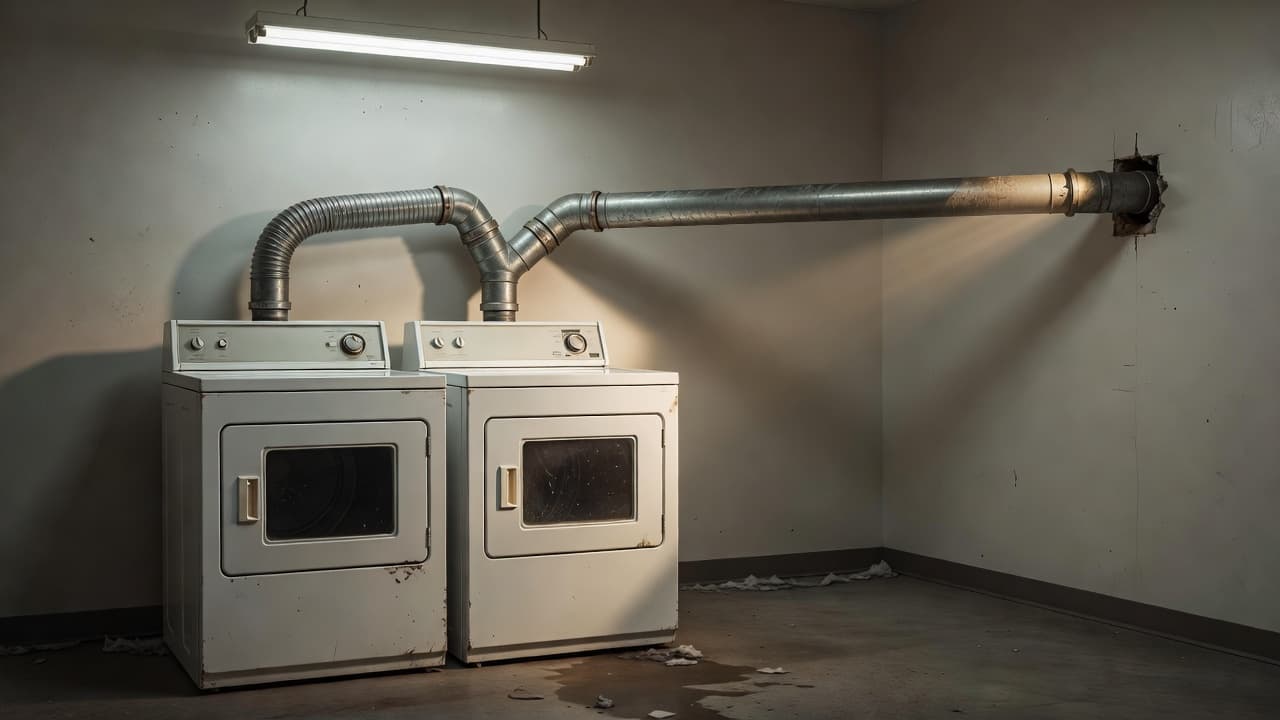
When two dryers connect to one duct, both appliances compete for the same exhaust path. If they run together, the shared section may not move enough air. Pressure can also push air backward through the other dryer or force warm, damp air into the laundry room, wall cavity, or connections.
Even if you plan to run only one dryer at a time, a shared duct remains a poor arrangement. Lint can collect at the branch point, and air from the operating dryer can travel into the inactive unit. A stuck flap or partial blockage makes the problem worse.
Most residential building codes and dryer manufacturers call for an independent exhaust system for each dryer. The exact requirements depend on the appliance instructions and local code, but a typical home installation uses a dedicated duct for each unit. A four-inch duct is common, although you should follow the dryer's installation manual instead of assuming every model uses the same specifications.
A basic Y-connector or vent splitter doesn't solve the underlying airflow problem. It may look tidy behind the machines, yet the shared section still has to handle the output of both dryers. The connector can also create ridges and corners where lint settles.
Engineered commercial laundry systems can use different designs, including controls and exhaust equipment selected for multiple machines. Those systems require proper sizing, installation, and maintenance. A residential homeowner shouldn't copy that arrangement with hardware from a home improvement store.
A clean vent can't compensate for a vent system that was designed incorrectly. Each household dryer needs a properly sized path to the outdoors.
What Can Go Wrong With a Shared Dryer Vent?
A shared duct can create several warning signs. Some appear gradually, while others show up as soon as both dryers operate.
Longer drying times are common because restricted airflow leaves moisture inside the drum. Clothes may need two or three cycles, and heavy items such as towels can stay damp. If a dryer that used to finish loads normally now struggles, check the exhaust system before replacing the appliance.
Heat is another concern. A blocked or undersized duct keeps hot air near the dryer. The laundry area may feel unusually warm, and the outside of the machine can become hotter than usual. Repeated overheating puts extra strain on components and can shorten the dryer's service life.
Moisture can collect inside a shared line, especially when warm exhaust meets a cooler section of duct. In Florida, humid outdoor air and air-conditioning can make condensation problems more noticeable. Damp lint sticks to duct walls and forms heavier restrictions over time.
A shared vent can also send lint where it shouldn't go. You may find lint around the dryer connection, near the wall, or at the exterior hood. Lint is combustible, so accumulated debris around a heated appliance deserves prompt attention.
Gas dryers add another concern. Their exhaust carries combustion byproducts along with moisture and lint. If the system develops serious back pressure or leaks, indoor air quality can suffer. Shut down a gas dryer if you smell gas, notice unusual exhaust, or suspect a damaged connection, then contact a qualified professional.
Watch for these signs of a clogged dryer vent:
- A burning-lint smell during or after a cycle
- A dryer that shuts off from overheating
- Clothes that remain damp after a normal cycle
- Little or no airflow at the exterior vent hood
- Excess lint around the back of the appliance
- A laundry room that becomes hot or humid
If you notice a burning smell, visible lint inside the wall area, or severe overheating, stop using the dryer until someone checks the system. Don't keep resetting the appliance and hoping the problem disappears.
What a Safe Two-Dryer Vent Setup Looks Like
A safe laundry room with two dryers needs two independent exhaust paths . Each path should connect to one dryer, travel through an approved duct, and terminate outdoors without joining the other path.
The best route is usually short, direct, and accessible. Smooth, rigid metal ducting creates less resistance than long runs of flexible plastic or foil. The installation should use as few bends as practical, because every turn slows airflow and creates another place for lint to collect.
Each dryer connection should fit tightly, and the duct should remain supported rather than sagging. A low spot can hold water and lint. Connections should also stay accessible enough for inspection and cleaning.
The exterior termination matters too. Each duct needs a suitable vent hood with a flap that opens during operation and closes when the dryer stops. Leaves, insects, nests, and outdoor debris can block the opening. Screens with fine mesh may catch lint and restrict airflow, so never add one unless the appliance and local requirements allow it.
Follow the appliance manufacturer's instructions for duct material, diameter, maximum equivalent length, clearances, and termination. Dryer models differ, and a route that works for one unit may exceed the allowed length for another.
Two dryers can sit side by side while using separate ducts. They can also occupy a stacked laundry area if the machines and installation support that arrangement. The shared wall or ceiling space doesn't matter as long as the exhaust paths remain independent.
Some homes have only one opening through an exterior wall. That doesn't automatically mean the dryers can share it. A qualified contractor may be able to create a second penetration or redesign the routes. The final plan should meet the appliance instructions and local building requirements.
Before installation, check:
- The dryer models and their venting requirements
- The planned duct length and number of bends
- The location of each exterior termination
- Access for future inspection and cleaning
- Local permit or code requirements
A proper setup may require construction work, but it avoids the airflow problems created by forcing two appliances into one undersized route.
What to Do If Your Home Already Has a Shared Vent
Don't start by buying a larger connector. First, stop running both dryers together and arrange an inspection of the entire exhaust path. A technician needs to examine the connections behind the appliances, the branch point, the concealed duct, and the outdoor termination.
The inspection should identify more than visible lint. It should look for crushed ducting, excessive bends, disconnected joints, moisture, damaged metal, and obstructions at the exterior hood. If the duct runs through a wall, attic, crawl space, or ceiling, the technician may need to inspect those areas as well.
Professional cleaning can remove accumulated lint and help restore airflow, but it doesn't make a shared duct acceptable. Cleaning is useful after the system is corrected and as part of ongoing maintenance. You can read about what happens during a dryer vent cleaning before scheduling service.
The permanent correction usually involves installing a separate duct for one dryer. Depending on the home, that may mean opening a wall, routing a new line through an attic or crawl space, or adding another exterior termination. A licensed HVAC contractor, appliance installer, or building professional can determine which option fits the structure and local rules.
Avoid using improvised fixes such as:
- A plastic vent hose hidden inside a wall
- A reducer that makes the duct smaller
- A loose Y-connector without an approved design
- A screen placed over the exterior dryer hood
- A booster fan added without checking the appliance requirements
Keep lint screens clean after every load, and remove visible lint from the accessible connection area. Those steps help, but they don't replace a proper exhaust route.
After correction, monitor performance. Loads should dry within the normal cycle range for the machine, the exterior flap should open while the dryer runs, and the laundry area shouldn't become excessively hot or damp.
How Often Should Separate Dryer Vents Be Cleaned?
A separate duct still needs regular maintenance. Lint collects even when the dryer filter works correctly, and long or winding routes usually need more attention than short, direct runs.
Most Florida homes benefit from professional dryer vent cleaning about once a year. Homes with frequent laundry, multiple occupants, pets, or long duct paths may need service every six to nine months. If drying times increase or you smell burning lint, schedule an inspection sooner.
The cleaning process should cover the full route, not only the first few feet behind the dryer. A professional service may inspect the duct, use specialized brushes and vacuum equipment, clear the exterior hood, and test airflow after removing the buildup. You can review a recommended dryer vent service schedule for more guidance.
Cleaning is also a good time to check whether a recent appliance replacement changed the vent requirements. Newer dryers may have different airflow needs, and a duct that was marginal before may perform poorly with a different model.
If you need an inspection or want to discuss a safer setup, Get a Free Estimate for dryer vent cleaning service.
Conclusion
Two dryers should not discharge through one standard residential vent. A shared duct can restrict airflow, hold moisture, collect lint, and create unsafe heat, especially when both machines run together.
The reliable solution is simple in principle: one dryer, one properly sized exhaust path, one outdoor termination . If your home has a shared setup, stop simultaneous use and have the system inspected before relying on cleaning or a homemade connector.