Dryer Vent Inspection: Check the Wall Connection Safely
A dryer can run even when its vent connection has slipped loose behind it. If your laundry room feels hotter than usual or lint appears near the wall, a visual check can help you spot a problem before the next load.
A safe dryer vent inspection starts with what you can see without moving the appliance. The goal is to identify warning signs, then leave hidden connections and repairs to someone equipped to reach them safely.
Prepare for a safe dryer vent inspection
The wall connection is where the dryer's short transition duct meets the vent opening in the wall. It may be partly visible beside or above the machine. In a tight laundry closet, you might not see it at all.
Turn the dryer off before looking closely
Stop the cycle and let the dryer cool. If you plan any hands-on work, unplug the dryer first , but only if the plug is easy to reach without moving the appliance or touching the vent. Unplugging a gas dryer does not shut off its gas supply.
You can use a flashlight or your phone's camera to look through an existing gap. Keep the device outside the gap and your hands away from the duct. Don't lean on the dryer or pull it forward for a better angle. That movement could crush the connector, strain an electrical cord, or disturb a gas line.
Set a firm limit on the check
A visual inspection means observing the connection as it sits. It doesn't include loosening a clamp, pulling off the duct, scraping away lint, or testing whether a fitting will move. Even a gentle tug can separate a joint you can't see.
If the connection is inaccessible, leave it that way. The same applies if you find damaged ducting, a loose electrical outlet, a strained cord, or any concern around a gas line. A qualified professional can make room to inspect the vent without turning a small concern into a damaged connection.
What the wall connection should look like
Look for a continuous path between the dryer's exhaust outlet and the wall opening. You don't need to identify every fitting. The useful question is whether the visible duct appears attached and intact.
Check the joint and nearby duct
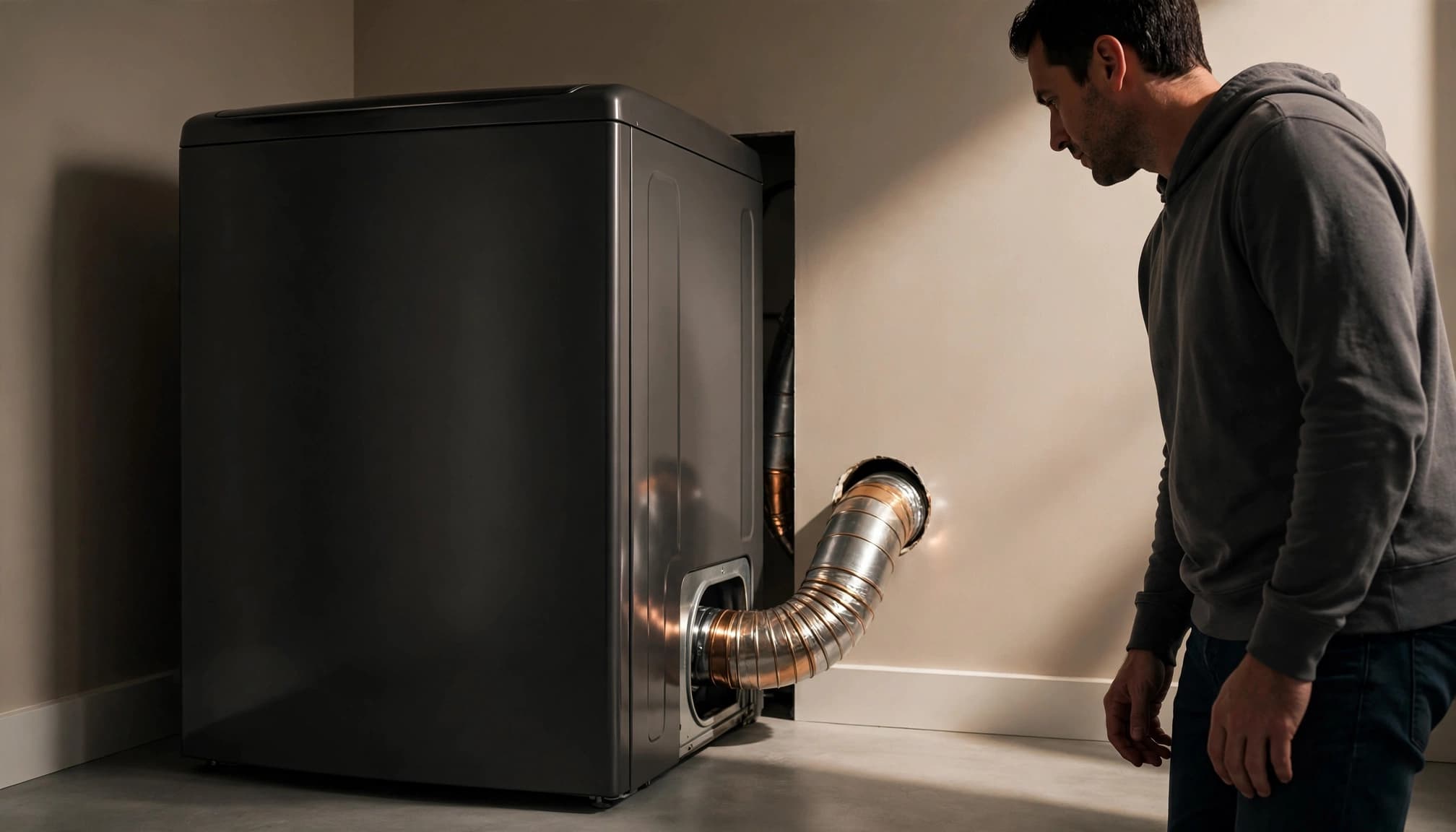
If you can see the wall end, look for a duct seated over the wall fitting rather than hanging beside it. A visible clamp should appear in place. Then scan the connector for a flattened section, sharp kink, split seam, or crushed bend where the dryer sits close to the wall.
Don't assume a clamp is secure because it looks present. Likewise, a neat wall opening doesn't prove the fitting behind it is sound. This check identifies visible concerns; it cannot confirm how well an out-of-sight joint holds.
Look for clues around the opening
Lint on the floor behind the dryer or gathered at the wall opening deserves attention. So do damp marks on nearby trim or staining that seems to begin behind the appliance. Warm, moist exhaust may escape if the duct has separated, although those clues alone don't establish the cause.
A visible gap is a stronger warning. Stop using the dryer and arrange an inspection rather than pushing the duct back into place. These dryer vent connection warning signs can help you describe what you noticed when you call for service.
Match visible clues with dryer performance
A wall connection can look ordinary while airflow is restricted elsewhere. Pay attention to changes during normal laundry use, then turn the machine off before taking a closer look.
Notice changes in heat and drying time
Clothes that need another cycle, a dryer cabinet that feels unusually hot, or a laundry room that grows muggy are reasons to investigate. A musty smell or lint appearing repeatedly near the dryer also merits attention.
These signs don't tell you whether the problem is the wall connection, a hidden duct section, or the dryer itself. For example, a long run with several bends can collect lint beyond your view. A damaged connector may cause different trouble by allowing exhaust to leak before it reaches the outdoors.
A clear-looking wall connection cannot confirm that the concealed duct is clear or that every joint is sealed.
Treat burning and gas concerns differently
If you smell burning, see scorching, or notice smoke, stop using the dryer. Unplug it only if you can reach the plug safely. If there is smoke or fire, leave the area and call emergency services.
If you smell gas, don't operate the dryer, unplug it, touch a switch, or attempt to inspect behind it. Leave the area and contact your gas utility or emergency services from a safe location. Even without a gas odor, leave any work near a gas line to a qualified professional.
Check the outside exhaust hood from a safe spot
The exterior hood is another visible part of the exhaust path. If you know where yours is and can view it from the ground, check whether lint has collected around the opening or the flap appears damaged. Don't climb a ladder, reach across landscaping, or remove a cover for this inspection.
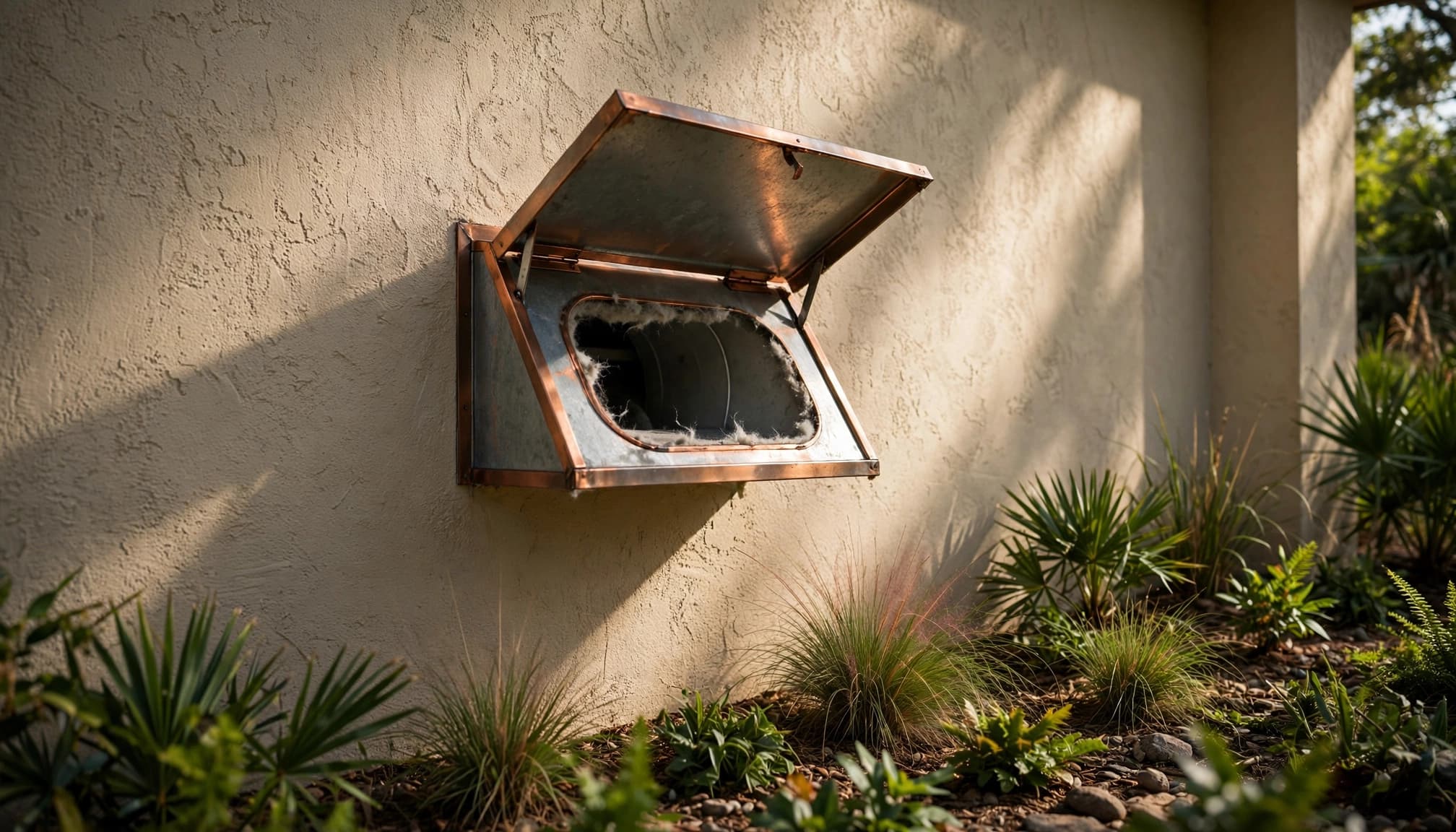
You can also observe the flap during a normal cycle from a safe location. It should open as exhaust leaves the home. If it barely moves, sticks, or has lint around its edges, note what you see and stop the cycle before looking more closely. Keep your hands clear while the dryer runs.
An open flap doesn't guarantee a sound connection indoors. Air may still reach the hood while some warm, damp exhaust leaks from a loose joint. That's why a fuller dryer vent inspection considers the connection, accessible duct, and outside termination together.
Know what a visual check cannot tell you
Most of the vent route may disappear into a wall, ceiling, attic, or crawl space. A quick look at the wall fitting cannot reveal packed lint farther along that route or confirm the condition of concealed joints.
A clean-looking connection may hide a restriction
The lint screen catches debris, but some lint still travels into the exhaust duct. If clothes stay damp or the outside flap opens weakly, a technician can inspect accessible sections and assess airflow. Depending on the layout, that may involve a mirror, camera, or airflow test.
Airflow readings need context. Dryer models, duct layouts, test locations, and exterior hoods affect the result. A comparison before and after cleaning may be more useful than treating one reading as a universal pass or fail. Dryer vent airflow testing can help separate a possible blockage from other causes of slow drying.
Cleaning and repair solve different problems
Lint buildup in sound ductwork may call for cleaning. A torn connector, disconnected joint, or crushed section needs repair or replacement, even if lint is also present. Cleaning cannot restore a damaged fitting.
Don't insert a brush or vacuum hose into an unknown wall opening. A tool can snag a flexible section or push debris farther into the route. Note the symptoms instead: when drying time changed, where you saw lint, and whether the outside flap moved. Those details give a technician a useful starting point.
When to bring in a dryer vent professional
Call for service if the wall connection is hidden, visibly loose, crushed, torn, or surrounded by recurring lint. Also get help when drying takes longer, the laundry room overheats, or the exterior hood shows weak exhaust. Stop using the dryer until a qualified professional checks a visible separation or damage.
A service visit should assess more than the short connector behind the appliance. Ask whether the technician will check the accessible exhaust path and exterior hood, explain any damaged section, and confirm airflow after cleaning when appropriate. What to expect during dryer vent service offers a closer look at that process.
Before booking, describe the dryer type and where the vent exits the home. Mention a tight alcove, an inaccessible plug, or a suspected gas-line concern so the technician can plan safe access. You can Get a Free Estimate for dryer vent cleaning and an assessment of the connection.
Key takeaways
- Keep the dryer in place. Inspect only the parts you can see without straining the cord, gas line, or vent.
- Turn it off before looking closely, and unplug it before hands-on work if the plug is safely accessible.
- Watch for visible gaps, crushed ducting, nearby lint, longer drying times, and excess heat.
- A visual check doesn't replace cleaning, airflow testing, or repair of a damaged connection.
Common questions about the wall connection
Should I pull out the dryer to inspect the vent?
Don't pull it out solely for a homeowner visual check. You could damage the transition duct or strain a connection behind the machine. If you cannot see the wall fitting through an existing gap, have a qualified professional access it. This matters most in a tight space or when a gas line is nearby.
Does lint behind the dryer mean the wall joint is loose?
It can be a clue, especially when lint gathers near the wall opening, but it doesn't prove where the problem sits. Check for other signs without disturbing the duct. Recurring lint, unusual heat, or slow drying calls for a closer inspection of the exhaust path.
Can I keep using the dryer if the outside flap opens?
Flap movement shows that some air is reaching the outdoors. It does not confirm that the wall connection is sealed or the full duct is clear. If you see a gap, damage, scorching, or other concerning signs, stop using the dryer and have the problem assessed.
A safe inspection has a clear stopping point
You don't need to reach behind the dryer to learn something useful. An accessible view of the wall joint, the surrounding floor, and the outside hood can reveal signs worth reporting.
The stopping point matters as much as the check. If seeing more requires moving the appliance or touching the vent, leave the connection alone and arrange a qualified inspection.