How to Clean a Return Plenum Without Damaging Insulation
Dust inside a return plenum can look easy to remove, until you notice the insulation beside it. A clean return plenum depends on knowing which surfaces you can safely touch and which ones you should leave alone.
If the lining is dry and intact, you may be able to remove loose debris from accessible bare metal without disturbing it. If the insulation is torn, damp, or shedding, stop before cleaning makes the problem worse. Start by checking what your return plenum is made of and how you can reach it.
Find the plenum and identify its insulation
The return plenum is the chamber where return air travels toward the air handler. Depending on your system, it may be a metal box beside the unit, an insulated return box, or part of a larger return-air pathway.
Its construction determines what you can clean. Some plenums have bare metal interiors with insulation outside. Others have insulation or a liner on the inside. A foil-facing layer may cover some surfaces, but a foil-covered surface still needs gentler handling than bare metal.
Look through an existing, accessible opening rather than cutting a new one. Note where the filter sits and whether you can reach accumulated dust without touching the liner, wiring, blower, or other equipment. If you can't see the surface clearly, don't clean by feel.
A vacuum attachment that catches an insulation edge can pull the lining apart, even when the dust beside it looks harmless.
Inspect before you disturb any dust
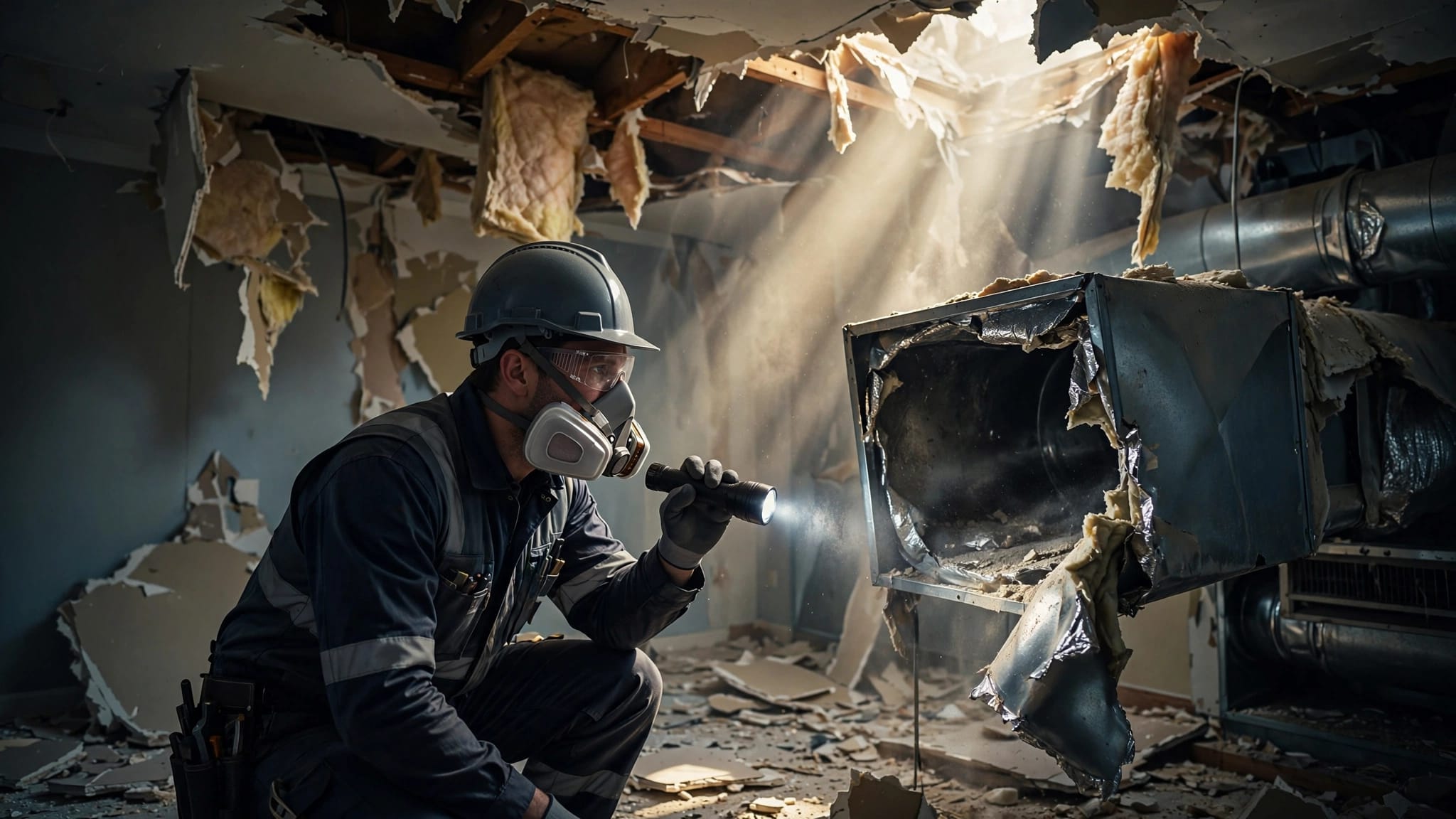
Use a flashlight to look into the accessible opening while the equipment is off. A light coating of dry household dust on exposed metal is different from debris embedded in insulation or packed deep inside the return system.
Check for damage and moisture
Look for loose fibers, torn foil facing, sagging lining, stains, condensation, and wet or flattened material. A musty odor or dark, patchy growth also calls for a closer assessment. In a humid Gulf Coast home, cleaning without finding the moisture source can leave the underlying problem in place.
Don't press on questionable insulation to test it. You can learn more about what a professional ductwork inspection can uncover before deciding whether the plenum needs cleaning, repair, or both.
Separate insulation damage from an air leak
Insulation damage and duct leaks can occur together, but they need different fixes. Loose wrap or crumbling fibers point toward insulation trouble. Dust streaks at a joint, a visible gap, or whistling while the system runs may point toward a leaking connection.
Note what you see without probing the joint. Cleaning won't seal an opening that keeps drawing dust into the return.
Prepare the area and shut off the HVAC system
A safe setup keeps the blower from moving loosened dust and gives you room to work without scraping the lining.
Isolate power before opening anything
Set the thermostat to off. Then turn off power to the air handler at its designated disconnect or breaker before removing an accessible service cover or return grille. Follow your equipment's instructions. If you're unsure which switch controls the unit, leave the cover closed and call an HVAC professional.
Don't reach into an electrical compartment or remove a panel that exposes wiring. Also, don't switch the system back on while a cover is open or the filter is out.
Protect yourself and nearby surfaces
For ordinary dry dust, wear safety glasses, gloves, long sleeves, and a well-fitting N95 respirator. These precautions don't make suspected mold, pest waste, or unidentified insulation safe to handle.
Clear space around the opening and protect nearby flooring if debris could fall. Have a flashlight, a dry microfiber cloth, and a vacuum with a soft brush attachment ready. A HEPA-filtered vacuum can help contain fine household dust, but its nozzle must stay away from fragile lining. Skip the job if safe access would require leaning on attic ductwork or stepping beyond a stable walking surface.
How to clean return plenum surfaces gently
Limit DIY work to visible, accessible, dry debris on sound, nonporous surfaces . Don't treat the interior insulation as another surface to scrub. If dust covers the lining, leave it for assessment.
Collect loose debris from bare metal
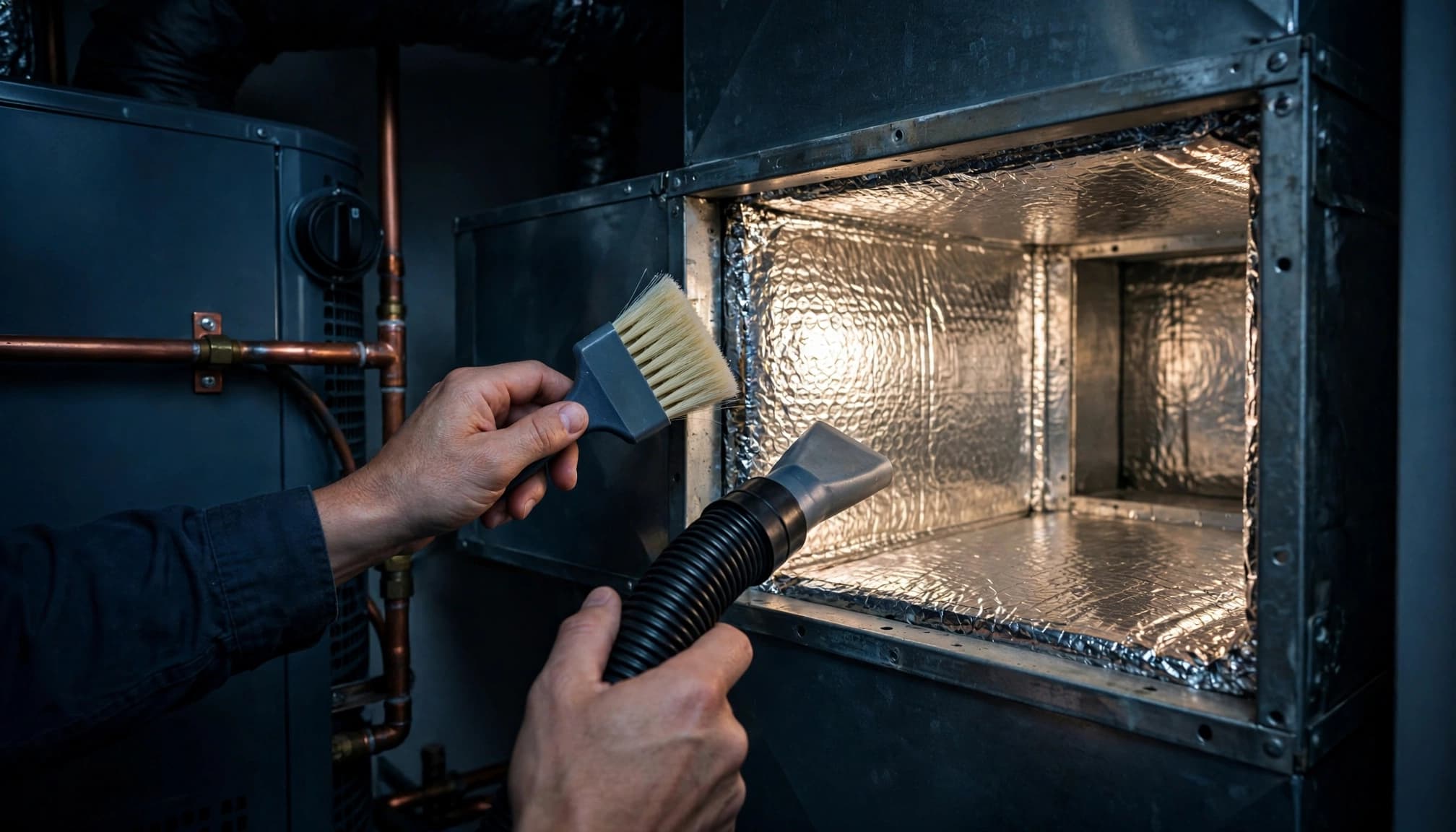
Hold the vacuum attachment close to loose dust on exposed metal and move slowly so you can see where the nozzle goes. Keep the attachment clear of insulation seams, foil facing, and unsupported edges. If the hose can't reach the dust without touching those areas, leave it there.
For residue remaining on bare metal, use a soft brush or dry microfiber cloth with light pressure. Work toward the vacuum opening rather than pushing debris into the air handler. Don't brush insulated surfaces, even if their facing appears intact.
Close the system before restarting it
Check that you haven't left a cloth, tool, or loose debris inside. Return the filter to its proper position, and secure any cover or grille you removed through an existing access point. Restore power only after the system is closed.
If the filter is loaded, replace it with the correct size and type for your equipment. Watch for an unusual sound or loose cover when the system restarts. A clean return plenum won't stay clean if a filter gap or open return joint keeps admitting dust.
Keep water and aggressive tools out of the plenum
It may be tempting to spray a cleaner onto visible dust, particularly when there's an odor. Don't spray cleaners, sanitizers, water, or disinfectants into the return plenum. Liquid can soak insulation, reach electrical components, or carry dirt into places you cannot inspect.
Avoid stiff brushes, scraping tools, abrasive pads, and high-pressure air on insulated or flexible surfaces. A forceful blast can scatter debris and damage fragile material. Even professional agitation tools need to match the duct's construction and condition; rotary brushes and air whips aren't interchangeable solutions for every duct.
Don't seal over a torn liner, apply an odor treatment, or coat a suspect surface as a substitute for an inspection. First identify whether the material is damaged and why.
Stop when the material or contamination is uncertain
Some findings change the job from ordinary dust removal to repair or contamination work. Continuing to vacuum can spread material through the home or make damaged insulation harder to restore.
Damaged or damp insulation needs assessment
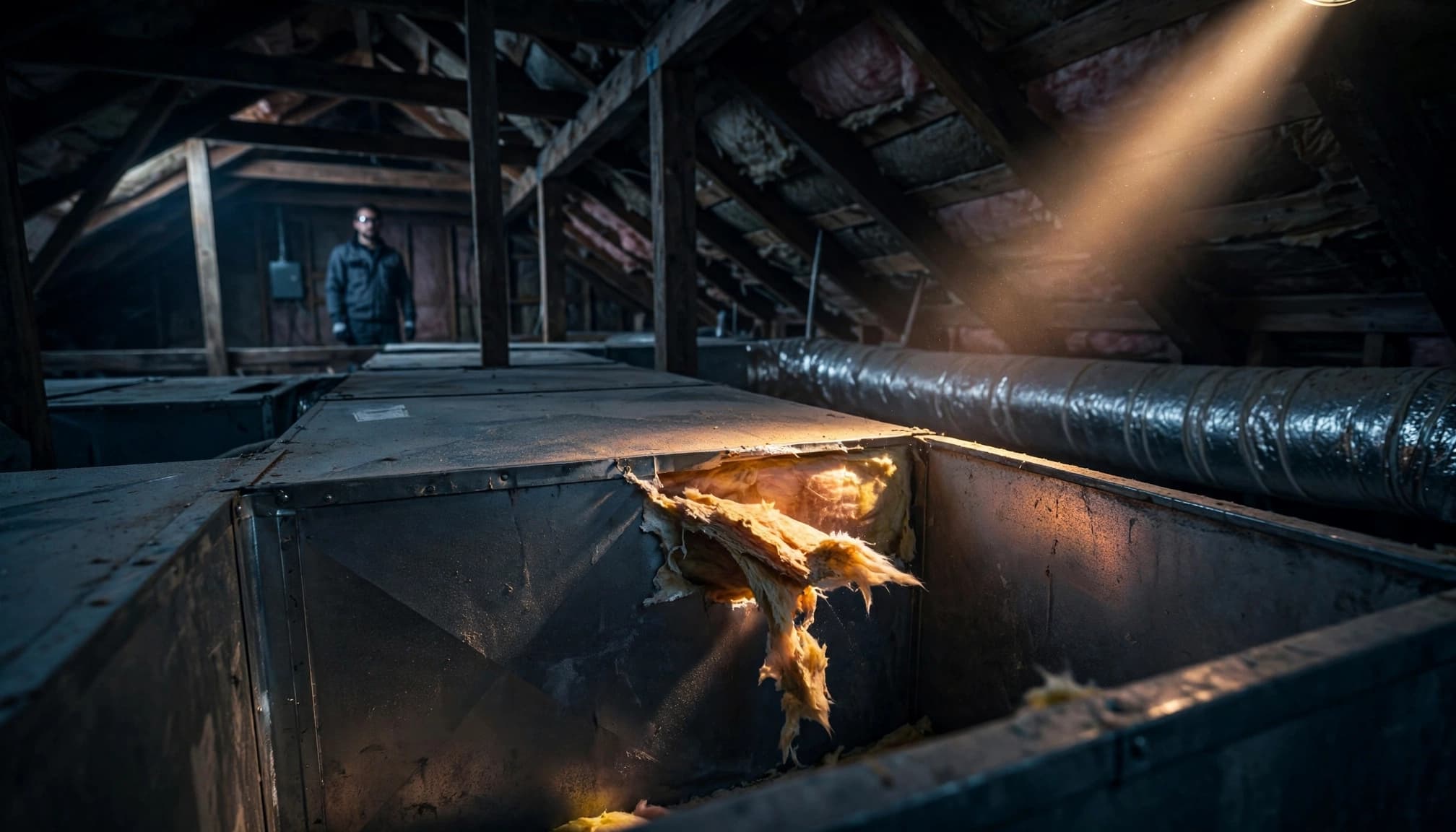
Stop if you find exposed fibers, a loose liner, peeling facing, wet spots, or visible growth. An HVAC professional can inspect the duct and identify moisture or air leaks that need attention. Porous material that is wet or contaminated may need replacement rather than another cleaning pass.
Leave suspected hazardous material undisturbed. You cannot confirm whether older insulation contains asbestos by looking at it. Ask a qualified professional about appropriate identification and handling before anyone cuts, brushes, or vacuums it.
Pest evidence needs a separate response
Droppings, nesting material, or an animal odor inside the return call for more than routine dust removal. Avoid sweeping or vacuuming suspected waste yourself. If pests may still be present, arrange pest inspection and exclusion first. Then have a qualified provider assess the affected duct materials and cleanup needs.
A technician should also evaluate heavy renovation debris or contamination that extends beyond the opening. Surface cleaning cannot tell you what remains farther along the return.
Decide whether the job needs full-system cleaning
A dusty plenum doesn't automatically mean every duct needs cleaning. First check the filter, its fit, and accessible return openings. If significant debris sits deeper in the system, the work requires better access and controlled collection than a household vacuum can provide.
Ask what the estimate covers
A professional visit should start with an inspection and a clear scope. Ask whether it includes the return grille, branches, trunk, accessible plenum, and nearby air-handler components. Supply ducts and other components should be identified separately rather than assumed. Register cleaning versus full-system service explains why the quoted scope matters.
Also ask how the crew will protect insulated surfaces, what access points they'll use, and what happens if they find wet or damaged material. Professional crews may use negative-pressure equipment to collect loosened debris, but the tools still need to suit the material. You can review what to expect during air duct cleaning before comparing proposals.
If your plenum needs an inspection and cleaning plan, Get a Free Estimate for the affected air-duct system. Describe any insulation damage, moisture, or pest evidence when you make the request.
Key takeaways
- Turn off the thermostat and air-handler power before opening an accessible return area.
- Remove ordinary dry dust only where you can reach sound, bare metal without contacting insulation.
- Keep sprays, water, abrasive tools, and forceful air out of the plenum.
- Stop for damaged or damp insulation, suspected hazardous material, visible growth, or pest waste.
- If dust extends beyond safe reach, ask for an inspection and a written cleaning scope.
Frequently asked questions
Can I vacuum dust directly off return plenum insulation?
Don't make direct contact with the lining during a DIY cleaning. Vacuum suction can catch loose fibers or lift a facing edge. Leave dust attached to insulated surfaces for a professional to assess.
Should I clean the return plenum whenever I change the filter?
No. A filter change is a good time to look at accessible areas, but cleaning should follow what you find. If the opening is clean and dry, normal filter care may be enough.
Will duct cleaning fix a musty return-air smell?
Cleaning alone may not solve it. Moisture, a damp liner, or another source can keep producing the odor. Have the cause checked before approving cleaning or a treatment.
Conclusion
The safest way to clean a return plenum is to respect the boundary between accessible bare metal and fragile insulation. Power down first, collect only loose dry debris you can reach without contact, and close the system before restarting it.
When the lining is damaged, damp, or contaminated, stop cleaning and inspect the cause . Protecting the material matters more than removing every visible speck of dust.