Should You Clean HVAC Ducts After a Ceiling Collapse?
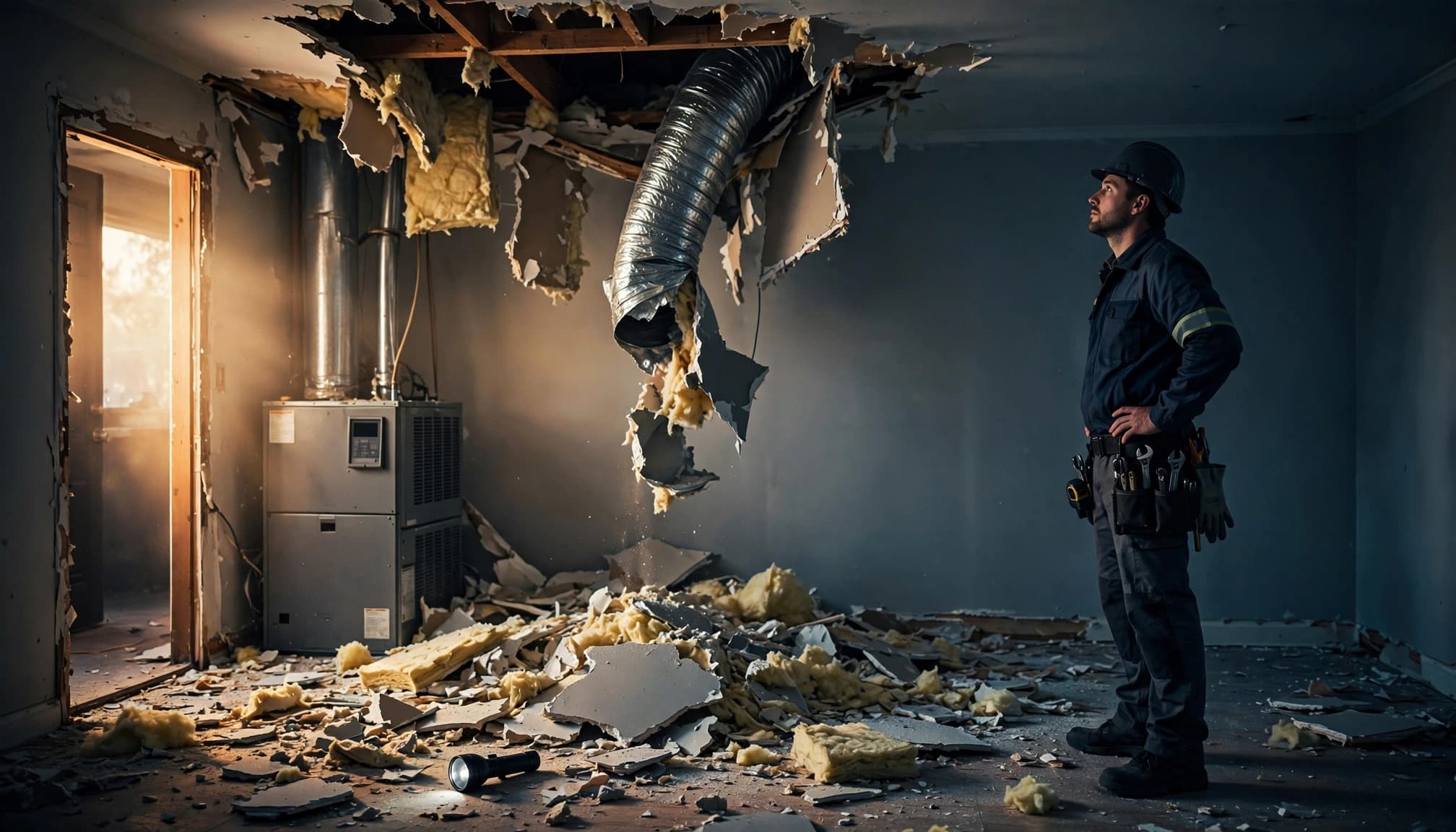
A ceiling collapse can send drywall, insulation, dust, and water into the air path. HVAC duct cleaning may be necessary, but cleaning should never be the first response.
Turn off the HVAC system and keep it off until a qualified professional inspects the equipment and ductwork. The right solution may involve cleaning, repair, mold assessment, asbestos evaluation, or component replacement. The damage determines the order.
Start with an HVAC inspection, not duct cleaning
Why the system should stay off
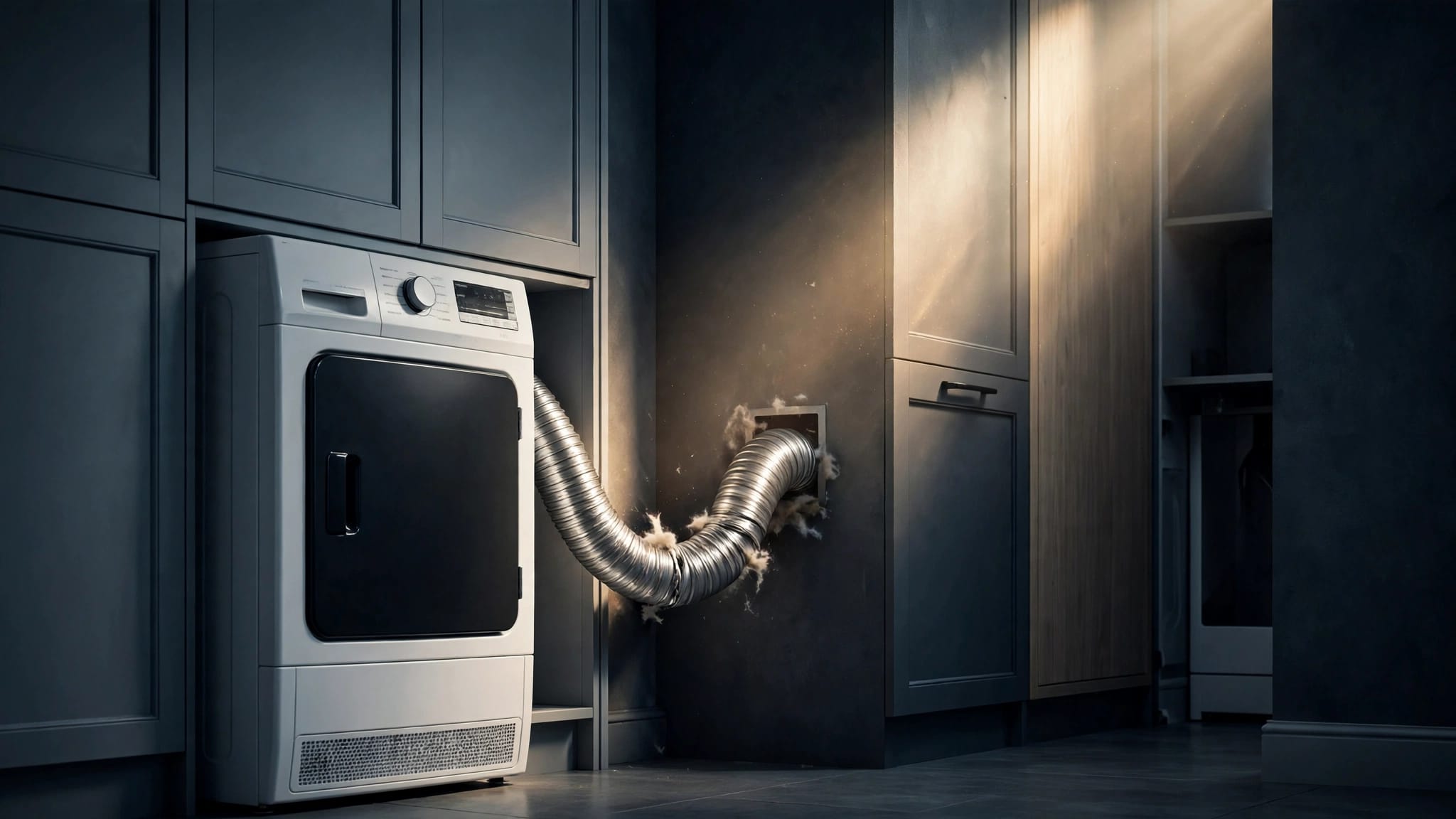
Running the system can pull loose debris into the blower, coil area, return ducts, and other components. It can also spread suspected mold or insulation fibers through the home.
The CDC recommends professional inspection of potentially damaged HVAC systems. Repairs and necessary cleaning should happen before the system restarts. Disconnect power at the equipment only if you can do so safely. Otherwise, ask an HVAC professional or electrician to handle it.
Watch for burned smells, buzzing, tripped breakers, exposed wiring, water near electrical parts, weak airflow, or a blower that struggles to start. These signs call for an HVAC contractor, not a standard cleaning appointment.
When HVAC duct cleaning is appropriate after a collapse
Cleaning makes sense when inspection shows loose drywall dust, insulation fibers, water-related debris, or other contamination inside accessible ducts and HVAC components. It may also help when dust blows from supply registers or the system develops a persistent odor after the collapse.
The EPA does not recommend routine duct cleaning for every home. A clear source of contamination provides a stronger reason for service. A technician should show you what entered the system and explain which parts need cleaning.
A useful HVAC ductwork inspection can reveal disconnected runs, wet insulation, debris, pest material, and damage that a visible vent inspection may miss.
What professionals should inspect
Ducts, registers, and air-handler components
The inspection should cover supply and return ducts, registers, grilles, accessible plenums, the filter, blower compartment, drain pan, and air-handler cabinet. Each separate HVAC system has its own air path, so inspecting only the easiest unit may leave contamination behind.
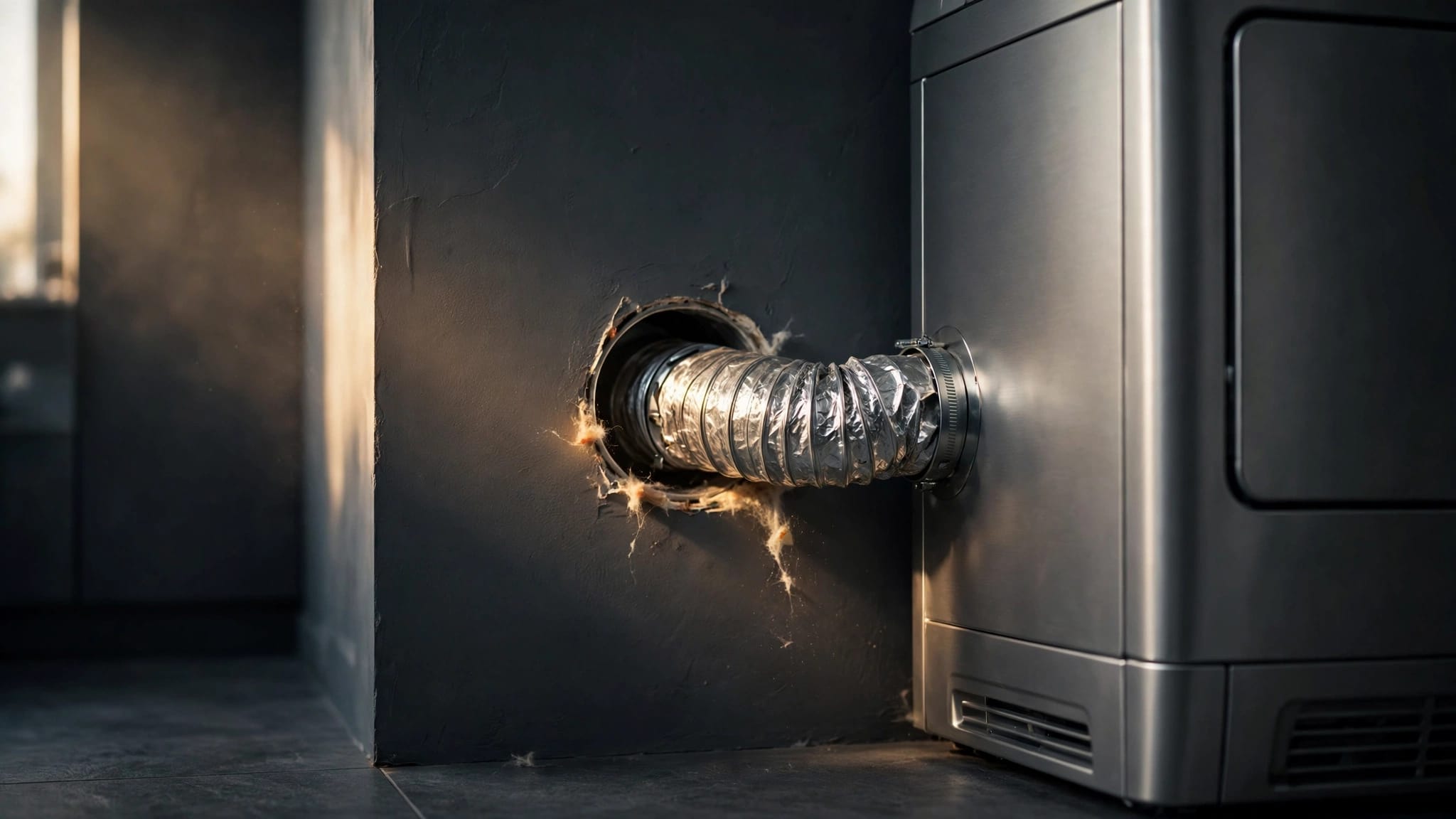
A technician should check whether flex ducts were crushed, torn, disconnected, or shifted during the collapse. They should also look for gaps around boots and return connections. A damaged duct can continue pulling attic or wall-cavity debris into the system after cleaning.
If a camera is used, remember that dark spots do not automatically confirm mold. Dust, soot, adhesive residue, and water staining can look similar. A duct camera inspection may show where to investigate, but it cannot always identify the material.
Water, insulation, and visible contamination
Water damage changes the decision. Wet filters should be discarded and replaced. Wet or moldy porous duct insulation may not be restorable through vacuuming, and the EPA advises replacing affected fiberglass duct material rather than relying on surface cleaning.
If the collapse involved a roof leak, plumbing failure, or standing water, correct the moisture source first. Drying should begin quickly. The EPA recommends drying water-damaged areas within 24 to 48 hours when possible to help limit mold growth.
Cleaning is different from repair or replacement
What duct cleaning can do
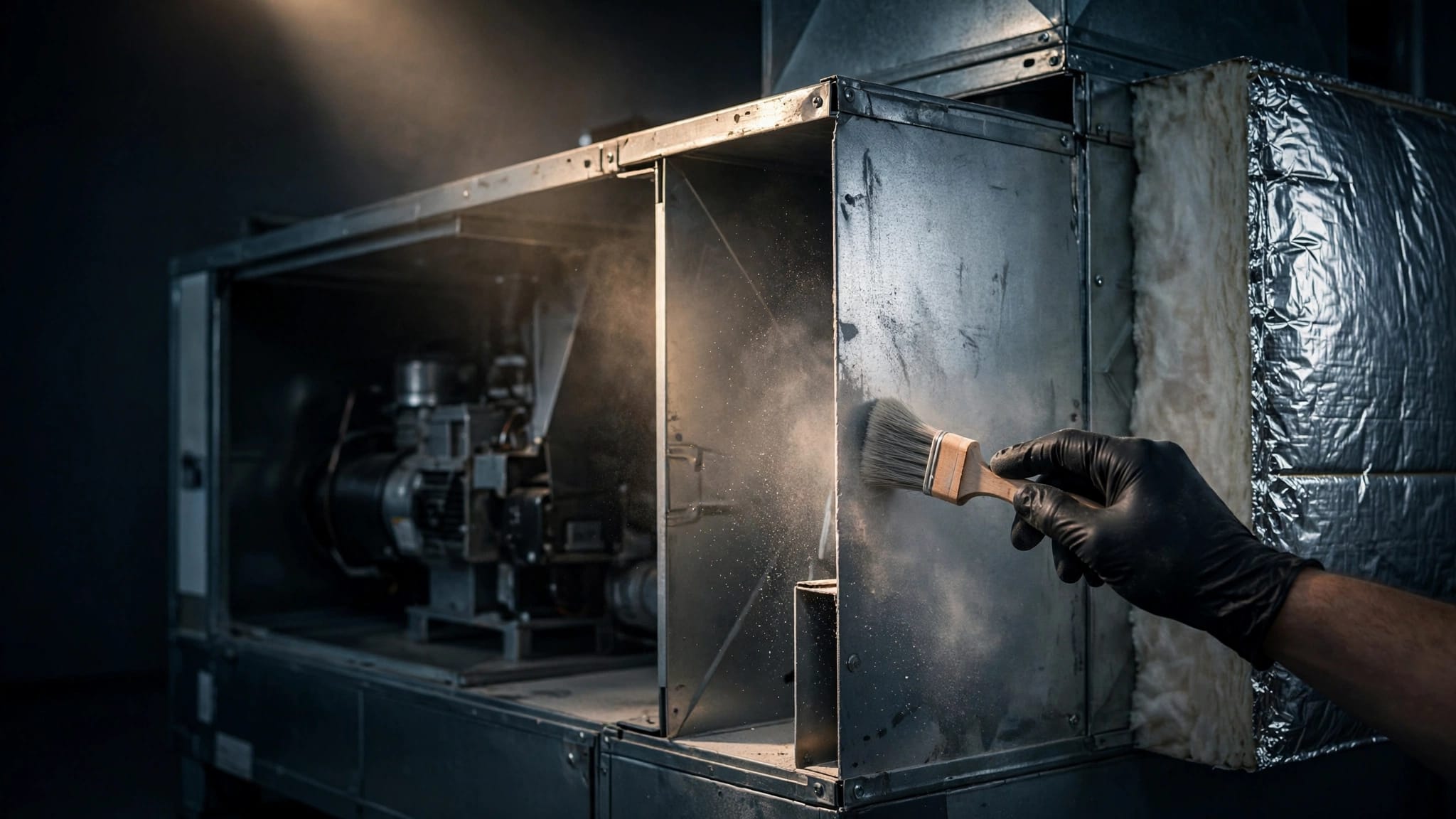
Professional cleaning removes loose dust, drywall particles, insulation fibers, and other accessible debris. Proper work usually protects the home, covers registers, and uses controlled negative pressure so loosened material moves into collection equipment rather than living spaces.
Cleaning can reduce recirculating dust and some odor residue. It cannot restore airflow through a crushed duct, close a separated joint, repair a leaking return, or fix a damaged blower.
A sanitizer or antimicrobial product also has limits. It should never cover up wet material or replace source removal. Review what microbial treatment does in air ducts before approving an added treatment.
When repair or replacement comes first
Repair comes before cleaning when ductwork has collapsed, torn, disconnected, or leaked. An HVAC contractor should handle affected electrical components, motors, coils, and other mechanical parts.
Replacement becomes more likely when flexible duct liners are badly damaged, insulation has absorbed water, or porous material contains extensive contamination. If the air handler suffered flood damage, ordinary duct cleaning is not enough. A qualified restoration or HVAC professional should evaluate the affected equipment.
Safety hazards to take seriously
Mold and contaminated water
Mold requires moisture control. Cleaning visible growth without fixing the leak allows the problem to return. The EPA also advises against operating an HVAC system when mold contamination is known or suspected because airflow can spread contamination.
Sewage or heavily contaminated water requires a restoration company with appropriate experience. Animal waste, nesting material, and urine-soaked insulation may also require containment and removal before duct cleaning begins.
Possible asbestos in older materials
Older homes may contain asbestos in ceiling materials, duct wrap, insulation, or mastic. You cannot confirm asbestos by appearance. Do not disturb suspect material with a brush, vacuum, or air pressure.
Stop work and arrange qualified asbestos assessment when damaged materials could contain it. The same precaution applies to contractors working above the ceiling. Asbestos risk depends on the material and condition, but unnecessary disturbance can spread hazardous fibers.
Review the contractor's scope before booking
Ask for a written estimate that separates inspection, cleaning, HVAC repair, restoration, microbial treatment, and replacement. The document should identify the systems, supply and return sides, air-handler components, access limits, and any extra charges.
Ask the company to show contamination with photographs when possible. Also ask whether technicians are insured, trained, and prepared to stop if they find wet insulation, significant mold-like growth, damaged liners, or disconnected ducts.
These questions to ask an air duct cleaning company can help you compare the scope instead of choosing on price alone. You can also review how to read an air duct cleaning estimate before approving optional treatments.
Key Takeaways
- Keep the HVAC system off until inspection and necessary repairs are complete.
- Clean only after professionals identify contamination and confirm the system can be safely serviced.
- Repair crushed, leaking, disconnected, or electrically damaged components before cleaning.
- Replace wet or moldy porous duct materials when they cannot be restored.
- Correct moisture and address possible asbestos before disturbing damaged areas.
FAQ
Can I turn the HVAC back on after removing the fallen ceiling?
No. Dust or insulation may have entered hidden duct sections and equipment. Have the system inspected first, especially if water, mold-like material, or electrical damage is present.
Does duct cleaning remove mold?
Cleaning may remove accessible contamination, but it does not fix moisture or guarantee complete mold removal. Moisture correction and professional remediation may be necessary.
Should I hire an HVAC company or a duct cleaner?
Use an HVAC contractor for electrical, mechanical, airflow, or equipment damage. Use a restoration or environmental professional for extensive water, sewage, mold, or asbestos concerns. A qualified duct-cleaning company can address confirmed debris after the system is safe.
Conclusion
A ceiling collapse does not automatically mean the entire duct system needs cleaning. It does mean the HVAC system deserves inspection before operation.
The safest sequence is to shut the system down, identify what entered it, correct water or structural problems, and then choose cleaning, repair, remediation, or replacement. When the condition fits professional cleaning, Get a Free Estimate for a clear service scope.