HEPA Vacuuming HVAC Systems vs Standard Vacuuming
A vacuum can remove dust from a vent, but that doesn't make it suitable for cleaning an entire HVAC system. Vacuuming HVAC systems with HEPA equipment requires more than a strong motor. It depends on sealed filtration, controlled containment, negative pressure, and tools that match the duct material.
Standard vacuuming still has a place for surface dust around accessible registers. However, ordinary household equipment may send fine particles through its exhaust or back into the room. The right method depends on what is inside the system, where the contamination is located, and whether the goal is surface cleaning or complete source removal.
HEPA Vacuuming HVAC Systems: What Makes It Different?
The main difference is containment , not simply suction power. A professional system must capture loosened debris and prevent it from returning to the home or business.
True HEPA filtration is only one part
A true HEPA filter is commonly rated to capture 99.97% of particles measuring 0.3 microns under standardized test conditions. That rating applies to the filter, not automatically to the entire vacuum system.
A suitable HVAC vacuum should also have a sealed housing, secure connections, and a collection setup that limits leakage. If air bypasses the filter through a loose lid, cracked hose, or poor connection, the filter rating doesn't describe the system's real-world performance.
When vacuum exhaust remains indoors, high-efficiency filtration becomes especially important. Equipment that exhausts outdoors can reduce the amount of filtered air released into occupied spaces, but the ductwork still needs proper sealing and containment during cleaning.
Negative pressure keeps loosened debris moving the right way
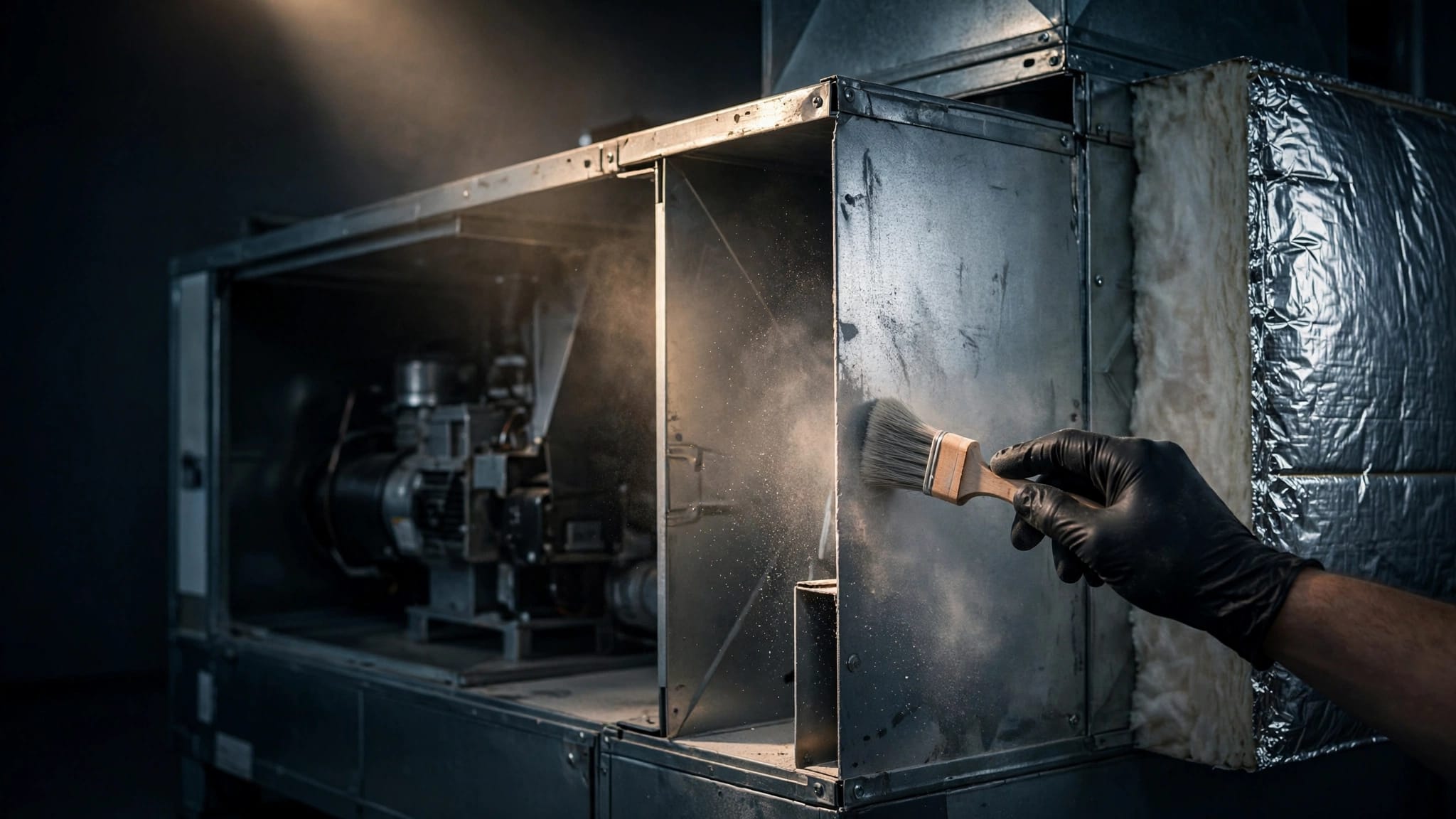
Professional crews connect collection equipment to an appropriate access point and keep the duct system under continuous negative pressure. Agitation tools then loosen settled material while the vacuum pulls it toward the collection unit.
NADCA guidance emphasizes source removal rather than blowing dust through the system. This approach helps keep debris from escaping through open registers, wall cavities, or nearby rooms.
Why Standard Vacuuming Can Redistribute Fine Dust
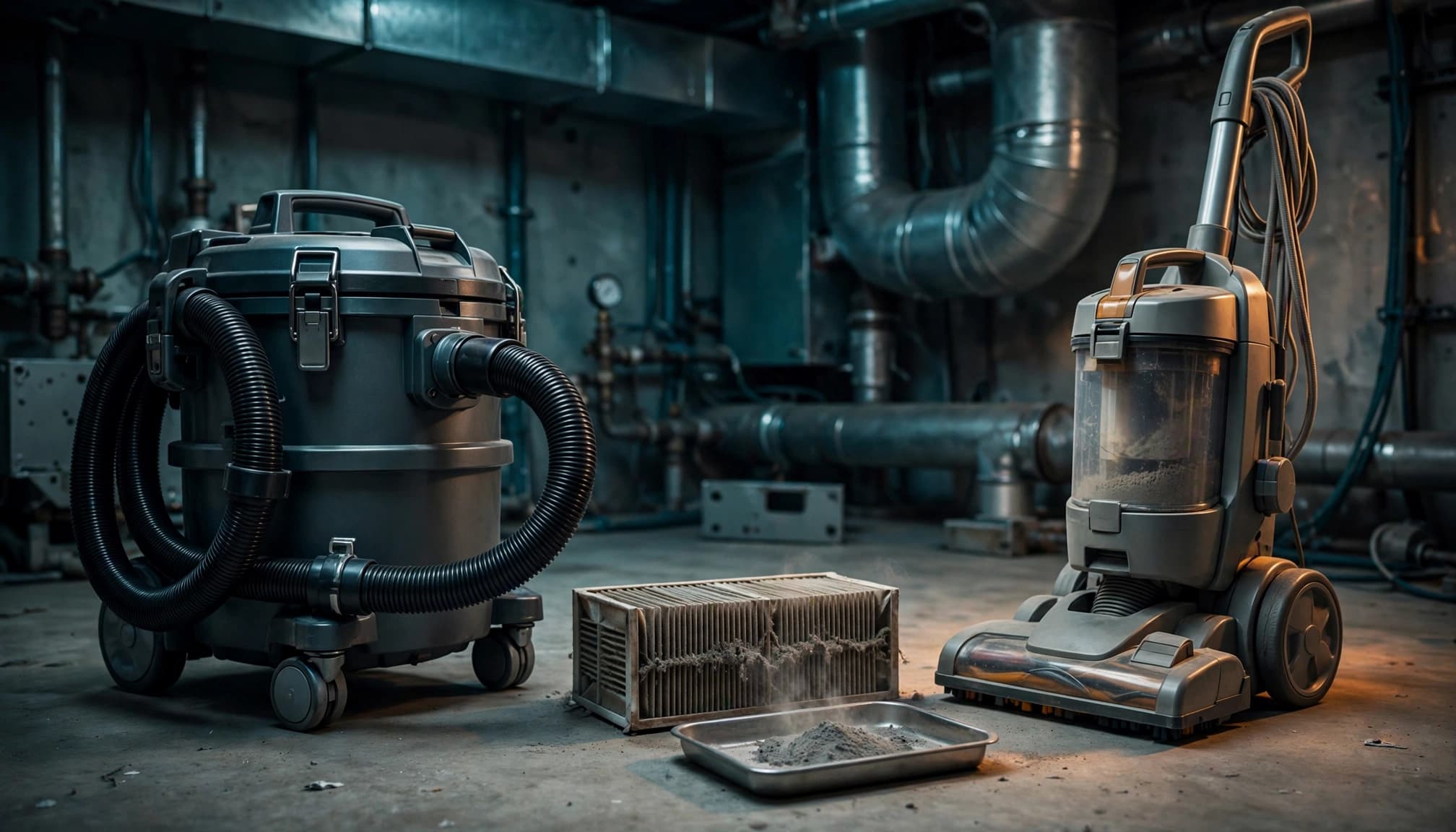
An ordinary vacuum may remove visible material, but it may not contain the smallest particles well enough for duct cleaning. The risk increases when the machine has a basic filter, a loose collection chamber, or an exhaust outlet that points into the room.
Indoor exhaust can return particles to the air
Vacuuming often stirs up dust before it captures it. If the vacuum cannot filter and seal properly, some fine particles may pass through the exhaust or escape during emptying.
That doesn't mean every household vacuum is unsafe for every task. A homeowner can use a brush attachment to remove loose dust from a vent cover or the short, visible area behind a grille. The limitation is that this work doesn't provide controlled extraction from the full duct system.
For routine dust removal elsewhere in the home, the EPA recommends a high-efficiency HEPA cleaner or the highest-efficiency bags the vacuum can accept. The same principle matters even more when dust may contain concentrated debris from an HVAC system.
A floor vacuum cannot perform source removal
A household vacuum usually cannot connect to the main supply and return trunks, maintain negative pressure across the system, or reach accessible air-handler components. Long attachments can also damage flexible ducts, lined ductwork, or fragile insulation.
Blowing compressed air into a duct without an attached collection system can make conditions worse. It may push dust into occupied rooms instead of removing it.
Surface cleaning is useful maintenance. It is not a substitute for professional HVAC cleaning when debris is inside the system, visible at supply registers, or connected to a contamination event.
What HVAC Vacuuming Can and Cannot Do
A proper cleaning can remove loose dust and debris from accessible parts of the system. It cannot correct every cause of poor airflow, odor, or indoor air quality.
Cleaning can remove settled material
HVAC cleaning may collect household dust, pet hair, dander, pollen, construction debris, and other loose material that settled inside return paths, supply branches, plenums, registers, or accessible equipment.
Return ducts often collect heavier buildup because they pull air from occupied rooms back toward the air handler. A complete service may therefore address return grilles, return trunks, supply branches, main trunks, and accessible air-handler areas.
Cleaning can reduce the amount of settled material available for the blower to move. It cannot remove every airborne particle entering the home. Filters, housekeeping, pets, smoking, outdoor air, and open doors continue to affect indoor dust levels.
Some problems require repair or replacement
Vacuuming does not repair a disconnected, crushed, leaking, or poorly insulated duct. It also does not correct excessive humidity, a leaking drain pan, a malfunctioning blower, or a dirty coil that needs specialized HVAC service.
Wet insulation, extensive microbial growth, animal waste, and deteriorated duct liner may require removal or replacement rather than repeated vacuuming. Chemicals, sanitizers, and odor treatments should never replace physical source removal or repair of the moisture problem.
If a crew finds unsafe wiring, wet equipment, damaged insulation, or active pest contamination, work should pause until the appropriate professional evaluates the condition.
When Professional Duct Cleaning Makes Sense
The EPA does not recommend routine duct cleaning for every home. A condition-based inspection is more useful than an automatic annual schedule.
Visible contamination deserves an inspection
Professional service may make sense when you see substantial dust or debris released from supply registers, visible mold-like growth, evidence of vermin, water damage, or heavy contamination after remodeling.
Persistent musty odors, unusual dust after insulation work, and a filter that loads much faster than usual also deserve attention. None of these signs proves that the entire system needs cleaning, but each gives a technician a reason to inspect the ducts and air handler.
A dirty register cover alone may need only washing. Debris deeper inside the boot, return path, or blower compartment requires a more careful evaluation.
A complete system matters
Cleaning only the visible vents can leave the main source untouched. Depending on access and the written scope, a complete service may include:
- Supply and return branch ducts
- Main supply and return trunks
- Registers, grilles, and diffusers
- Accessible plenums and duct connections
- The air-handler housing and blower compartment
- Accessible coil areas, drain pans, and filter housings
Not every component receives the same treatment. A coil, drain pan, or blower wheel may require separate access and HVAC service. Review what to look for in a duct service quote before approving a vague "whole house" package.
What a Proper HVAC Vacuuming Service Includes
A professional visit should begin with inspection, not immediate equipment setup. The technician should identify the duct material, access points, visible buildup, moisture concerns, and any sections that cannot be safely reached.
The crew may protect floors and furniture, cover registers that are not being cleaned, and isolate work areas. Depending on the system, technicians may use air whips, rotary brushes, compressed air tools, or other agitation equipment. Flexible and insulated ducts require more careful handling than rigid sheet-metal sections.
The collection vacuum should stay connected while debris is loosened. A technician should explain where the vacuum attaches and how the system will remain under negative pressure. You can review what happens during professional air duct cleaning for a clearer picture of the process.
Afterward, access panels and registers should be restored. The company should identify areas that were inaccessible, damaged, wet, or unsuitable for cleaning. Before-and-after photos can help document areas that are difficult to see.
How to Choose Between HEPA and Standard Vacuuming
Use the simplest method that fits the task, but don't use surface equipment for a contamination problem it cannot contain.
| Situation | More suitable approach | Main reason |
|---|---|---|
| Dust on a removable register cover | Household vacuum and mild washing | The work is limited to an accessible surface |
| Light dust near a floor vent | Brush attachment with careful surface cleaning | It avoids opening or disturbing the duct system |
| Dust blowing from supply registers | Professional HVAC vacuuming | The source may be deeper in the ductwork |
| Remodeling debris inside ducts | Negative-pressure source removal | Loose material needs controlled collection |
| Mold-like growth, wet insulation, or pests | Qualified inspection first | Cleaning may spread contamination or miss the source |
| Full supply, return, and air-handler cleaning | Professional sealed collection equipment | The system needs containment and proper access |
Ask whether the vacuum exhausts indoors or outdoors, whether the collection system is sealed, and whether HEPA filtration is used where indoor exhaust is possible. Also ask how the company handles flex duct, lined duct, microbial concerns, and damaged sections.
Equipment size alone does not prove quality. A large truck-mounted unit can provide strong airflow and outdoor collection, while portable equipment can be appropriate when access or building layout requires it. The method and scope matter more than a machine's appearance. This comparison of truck-mounted and portable duct cleaning equipment can help you evaluate the proposal.
Key Takeaways for Homeowners and Facility Managers
- Standard vacuuming is suitable for removable vent covers and limited surface dust.
- HEPA filtration should be paired with sealed equipment, secure connections, and appropriate containment.
- True HEPA filtration does not guarantee that every part of a vacuum system is leak-free.
- Negative pressure and source removal help keep loosened debris out of occupied areas.
- Duct cleaning is different from changing an HVAC filter.
- Cleaning removes loose contamination, but it does not repair leaks, moisture problems, damaged insulation, or defective equipment.
- Visible debris, pest activity, water damage, and post-remodeling contamination are stronger reasons for service than a calendar reminder.
- A written scope should identify supply ducts, return ducts, trunks, registers, air-handler areas, and exclusions.
- Sanitizers, microbial treatments, odor products, UV lights, and air purifiers are separate services that need a specific reason.
- Never disturb suspected asbestos, active pests, extensive mold, or unsafe mechanical components without qualified help.
FAQ About HEPA and Standard HVAC Vacuuming
Can I use my household vacuum on an air vent?
Yes, for limited surface dust on a removable grille or the visible area near an opening. Turn off the HVAC system first, use a brush attachment, and avoid pushing a hose deep into the duct. A household vacuum cannot replace negative-pressure cleaning of the full system.
Is a HEPA vacuum enough to clean ductwork?
No. The vacuum also needs appropriate containment, sealed connections, a suitable access point, and tools that match the duct material. HEPA filtration helps control fine particles, but it does not repair damaged ducts or remove moisture sources.
Does changing the filter replace duct cleaning?
No. A filter helps reduce new particles entering the HVAC equipment. It does not remove dust already settled inside ducts, plenums, or air-handler components. Conversely, duct cleaning does not replace regular filter changes.
Should I clean ducts every year?
Not automatically. The EPA takes a condition-based approach. Have the system inspected when you find substantial debris, visible mold-like growth, pest evidence, water damage, or contamination released into rooms. A clean system with no related symptoms may only need normal filter and HVAC maintenance.
What should I ask before hiring a duct-cleaning company?
Ask what parts of the system are included, how the company controls debris, whether it uses negative pressure, where the vacuum exhausts, and how it handles damaged or fragile ducts. Confirm insurance, access requirements, exclusions, and separate charges for treatments. These questions to ask an air duct cleaning company can help you compare quotes based on actual work.
Conclusion
HEPA vacuuming HVAC systems is a controlled source-removal process, not simply a household vacuum with a better filter. Sealed equipment, negative pressure, appropriate agitation, and careful containment all matter.
Use standard vacuuming for accessible surface dust, and seek professional evaluation when debris is inside the system or connected to moisture, pests, remodeling, or visible contamination. A clear inspection and written scope will help you choose the right service without paying for work your HVAC system doesn't need. When the evidence supports cleaning, you can Get a Free Estimate for air duct or dryer vent service.