Floor Return Air Grilles: What Duct Cleaning Can Reach
A dusty grille in the floor can make you wonder what's collecting beneath it. Because floor return air grilles sit where shoes, pet hair, and cleaning debris can reach them, the visible mess may build up quickly. That dust alone doesn't tell you whether the duct system needs cleaning.
You can usually clean the grille yourself. Deciding whether the hidden return pathway needs professional attention takes a closer look at what's behind the opening.
Return grille or supply register: which is on the floor?
Floor openings can look alike, but air moves through them in opposite directions.
| Opening | Direction of airflow | What it does |
|---|---|---|
| Return-air grille | Pulls room air in | Sends air back toward the HVAC equipment |
| Supply register | Blows conditioned air out | Delivers heated or cooled air into the room |
A supply register often has an adjustable damper, while a return grille usually has fixed slats and a larger opening. Appearance isn't a reliable test for every home, though. If you're unsure, hold a light tissue near the grille while the system runs. Keep the tissue outside the opening and away from the slats.
Some return openings contain a filter immediately behind the grille; others lead toward a filter at the air handler. Check your system's filter location before reaching past a cover. That difference matters because loose material on the room side of a filter tells you little about conditions farther inside the ductwork.
Why a floor-level return collects visible debris
Floor placement puts a return grille in the path of ordinary household activity. The grille can catch debris even when the connected ductwork is in reasonable condition.
Sweeping and foot traffic affect the opening
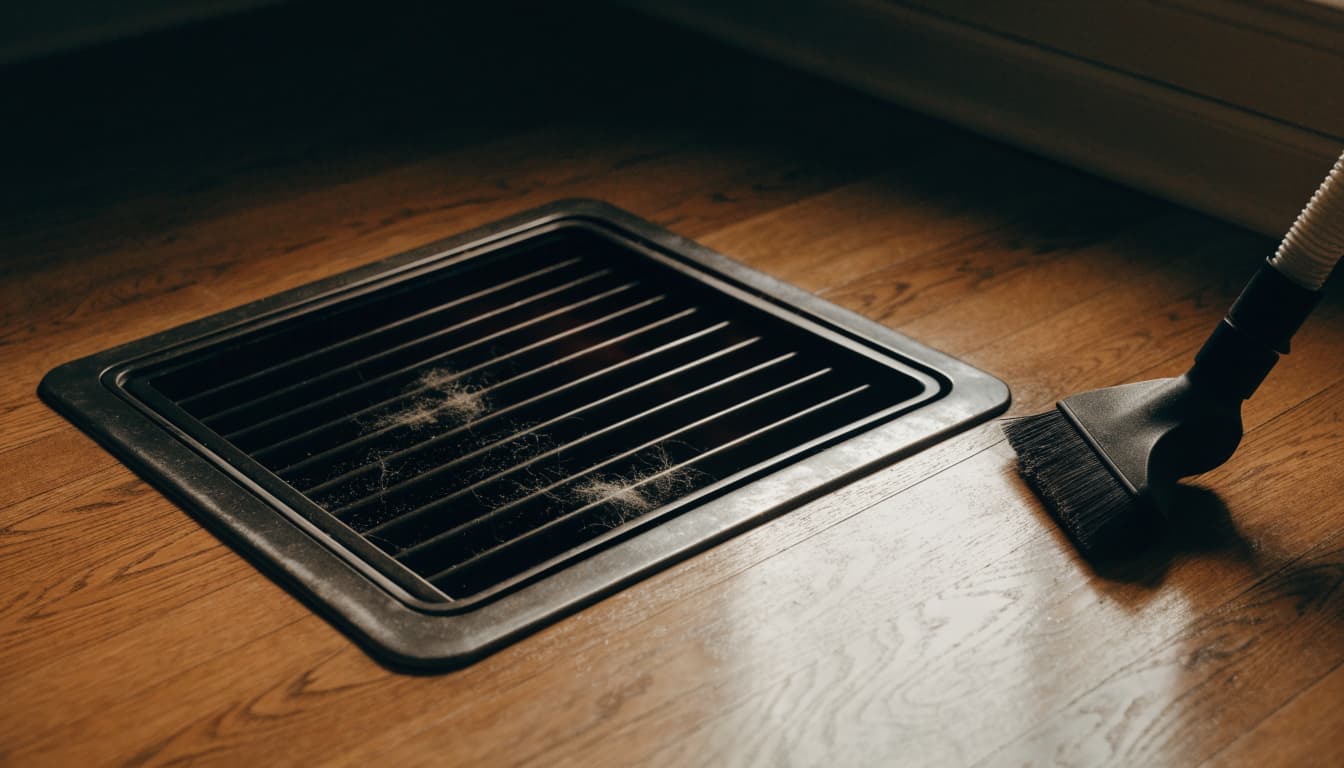
Pet hair, crumbs, sand, and grit move across floors before they reach the return. Sweeping toward the grille can push larger pieces against its slats or through them. In Gulf Coast homes, sand brought indoors on shoes is one more reason to watch the floor around an opening.
A grille near a hallway or doorway may need surface cleaning more often than one in a low-traffic room. That describes the exposed cover , not necessarily the amount of buildup farther down the return.
Spills and blocked openings need different responses
Don't wash floor debris into a return while mopping. If liquid enters the opening, switch off the system and check for accessible moisture. A significant spill warrants an HVAC inspection, especially if it may have reached insulation or duct material you can't see.
Furniture and rugs also deserve attention. A covered return can restrict the airflow the system needs, so leave the opening clear even when the grille looks clean.
Grille cleaning is different from duct cleaning
Taking off a cover reveals only the beginning of an air pathway. The return may connect to a boot, a branch duct, a larger trunk, or a concealed chase, depending on the house.
What a homeowner can reach
Vacuuming the slats and the visible edge of the opening removes accessible dust. If the cover lifts out safely, you may be able to clean its underside and inspect the first visible section with a flashlight. That is useful maintenance, but it doesn't reach hidden bends, the return plenum, or other connected components.
The distinction between register cleaning and full-system duct cleaning matters when comparing quotes. A service that wipes every visible cover may still leave the duct interiors untouched.
What the opening cannot show
A spotless cover doesn't prove that the pathway is clean. Likewise, a dusty cover doesn't prove the duct needs professional cleaning. Construction debris, damaged duct liner, and gaps at connections may lie beyond the section you can see.
Some homes use a concealed return chase rather than an easily accessible duct directly below the grille. In that case, return air chase and grille maintenance require particular care: forcing a brush into an unseen passage can damage materials without reaching the source of the problem.
How floor return air grilles affect professional cleaning
A floor opening can give a technician a useful inspection point. It doesn't automatically provide access to every connected section. Duct layout, material, and condition determine the cleaning method.
Access starts with an inspection
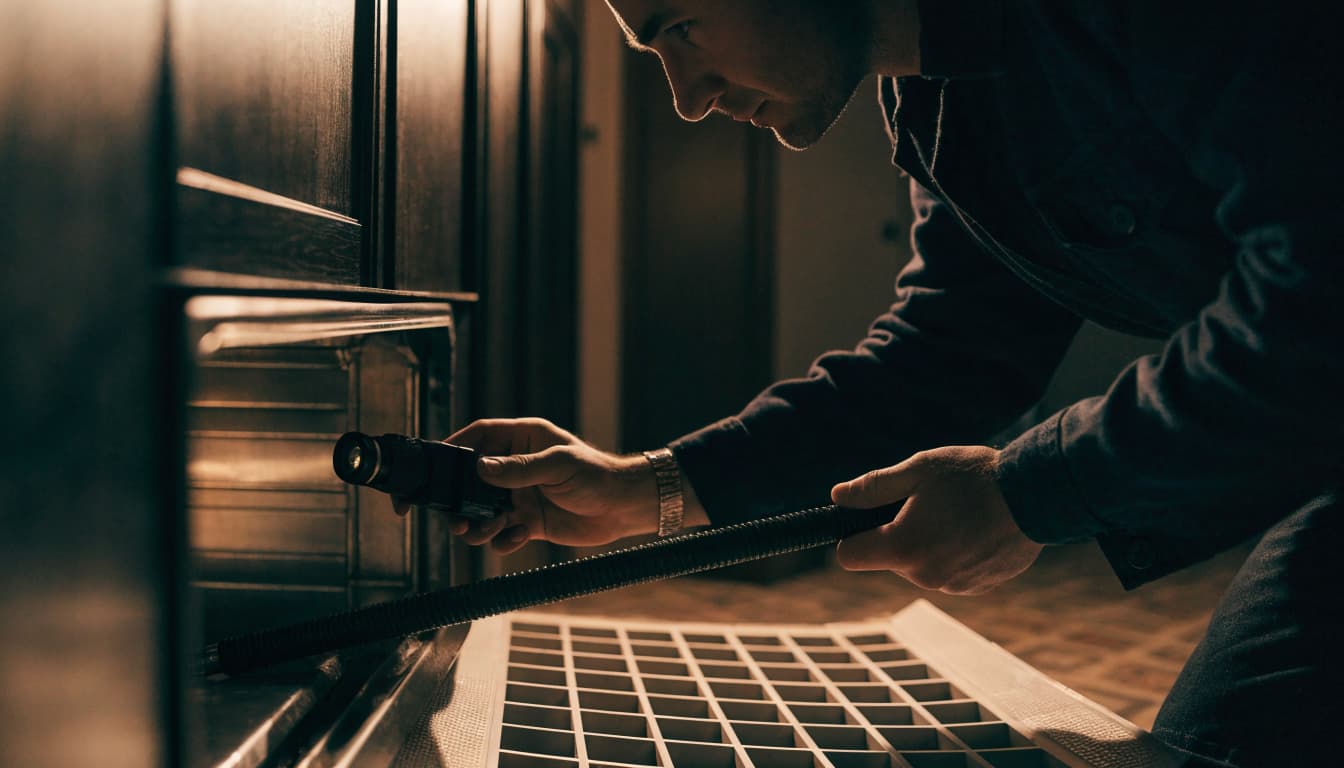
Before recommending a full service, a technician should inspect the visible opening, filter, accessible return path, supply side, and air-handler area. They can look for heavy debris, loose connections, damaged insulation, moisture, or evidence of pests. Photos of accessible areas can help you see what prompted a recommendation.
The grille may lift out, have screws, or sit tightly against finished flooring. A crew should protect the surrounding floor and remove the cover without damaging it. If parts of the return are concealed, ask how the crew will reach them and which areas remain outside the proposed work.
Collection must reach beyond the cover
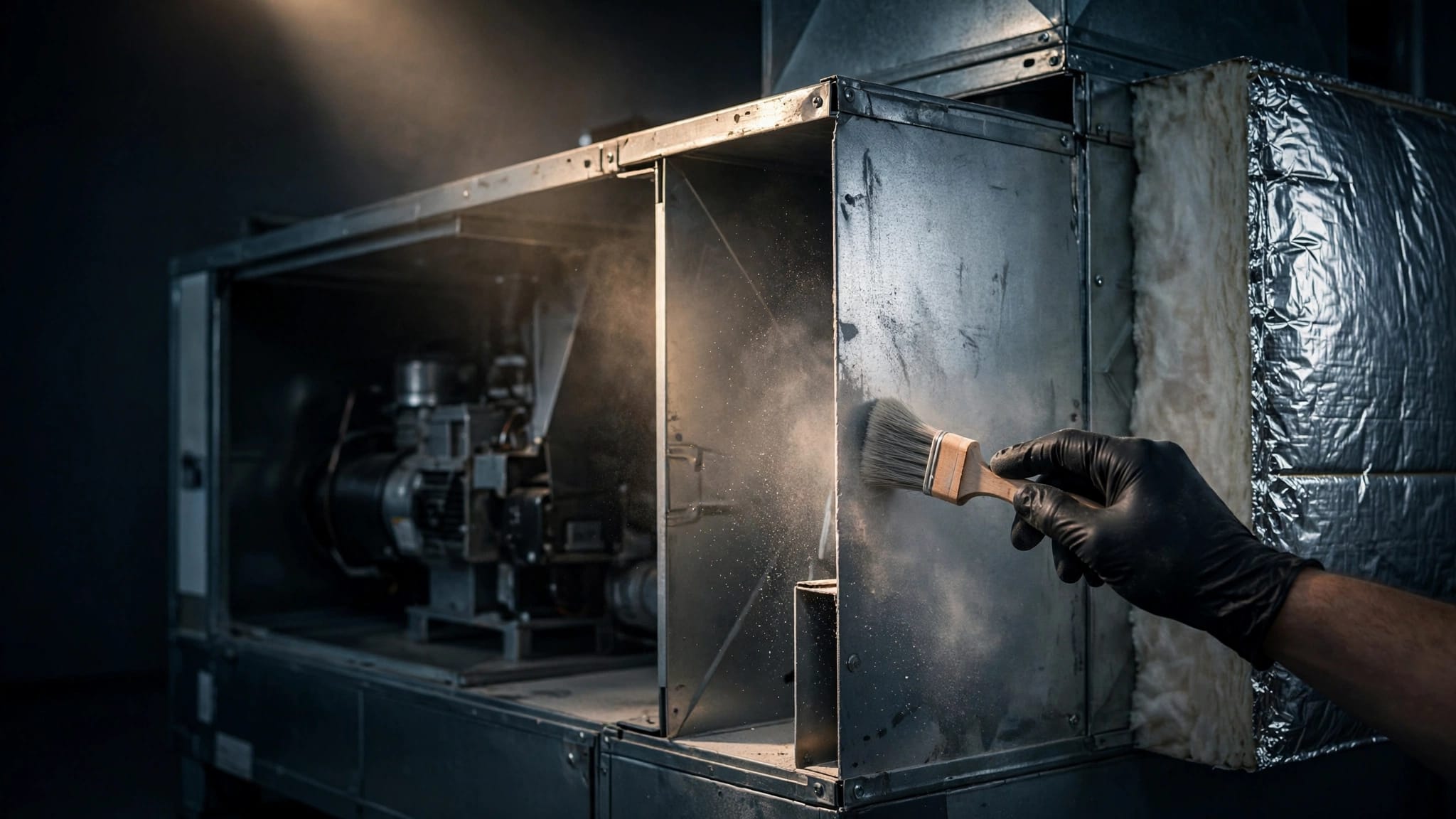
When duct cleaning is justified, a professional process typically uses a powerful vacuum to create negative pressure in the ductwork. Controlled agitation then loosens debris so the vacuum can collect it. Tools may include air whips or brushes, chosen for the duct material; flexible or lined ducts need gentler handling than rigid metal.
The crew should protect nearby surfaces, control openings while working, and securely reinstall the grille afterward. The air duct cleaning process in Florida homes covers more than a pass with a vacuum at each vent. Ask whether the quoted work includes return branches, trunks, supply ducts, plenums, and accessible air-handler areas. Coil cleaning and repairs may require separate work.
Safe upkeep for a floor return grille
Most homes need straightforward surface care between HVAC service visits. Work only where you can see and reach without pushing tools into the duct.
Clean the cover without spreading debris
Turn the system off at the thermostat and wait for the blower to stop. Then vacuum the grille face with a soft brush attachment. Keep the vacuum hose outside the duct opening.
If the cover is easy to remove, lift it carefully and note how it fits. Vacuum both sides, then wipe the cover with a lightly damp cloth and dry it before reinstalling it. Watch for sharp metal edges. Keep children and pets away from the uncovered opening, and replace the grille securely before restarting the system.
Check the filter while you're there if that return holds one. Use the correct size and follow the HVAC manufacturer's filter guidance. A filter that bends, whistles, or fits poorly needs attention rather than a tighter push into place.
Leave deeper work and chemicals alone
Don't feed a household vacuum hose, rotary brush, or long rod into an unseen return. Flexible ducts and internal liners can tear, and a household vacuum won't contain debris throughout the system. Also avoid spraying fragrance, bleach, sanitizer, or water into the opening.
If dust sits just below the grille, clean only the accessible surface. If the material continues deeper, document what you can see and ask for an inspection. Physical debris removal and fixing its source come before considering any treatment product.
When the grille points to a larger problem
Floor return air grilles offer a convenient place to notice changes. Look for patterns and conditions beyond ordinary dust on the slats.
Dust that returns can have several causes
Check the filter and nearby floors first. Regular foot traffic, pets, and sweeping may explain recurring surface dust. However, gaps around a return connection can also pull dusty air from an attic or wall cavity. Cleaning the grille won't seal that gap.
Dust or debris blowing out of supply registers is a different clue because those openings deliver air to rooms. Renovation residue inside accessible ducts, persistent odors when the system runs, or visible debris around the air handler also justify a closer look. An inspection can separate a cleaning need from a filter, equipment, or duct-repair issue. See what an HVAC ductwork inspection can reveal when the source isn't obvious.
Moisture and pests change the priority
Water stains, wet insulation, droppings, nesting material, or suspected mold call for more than routine grille cleaning. Stop disturbing the affected area and arrange the appropriate inspection. Active pests need removal and entry-point repairs; moisture needs its source corrected. Cleaning alone won't prevent either problem from returning.
The U.S. Environmental Protection Agency doesn't recommend routine duct cleaning for every home. It advises considering cleaning when there is substantial visible mold, vermin infestation, or excessive dust and debris in ducts that release particles into the home. Duct cleaning shouldn't be sold as a cure for allergies or respiratory conditions.
Match the service to what the system needs
A useful estimate identifies the affected areas and the work proposed for each one. Ask the provider to distinguish grille cleaning from return-path cleaning and full-system service. If the quote says "whole house," confirm which HVAC systems, ducts, grilles, plenums, and equipment components it covers.
Also ask how the crew will protect flooring around low openings, collect loosened material, and handle fragile or inaccessible ducts. Before-and-after photos of reachable sections can help you review the result. If an inspection finds a leak, wet material, or damaged ductwork, request an explanation of the repair before approving cleaning.
If visible buildup extends beyond your floor grille and you'd like the system assessed, Get a Free Estimate for the work your home may need.
Key Takeaways
- A return grille pulls air toward the HVAC equipment; a supply register delivers conditioned air to the room.
- Floor placement exposes a grille to household debris, but surface dust doesn't establish the condition of hidden ducts.
- Clean accessible covers and maintain the correct filter. Leave deep cleaning, damaged materials, and moisture problems to qualified providers.
- Base professional duct cleaning on inspection findings, not a fixed annual schedule.
FAQ
Can dust fall through a floor return grille?
Yes. Sand, crumbs, and other loose material can pass through its openings, particularly during sweeping. What happens next depends on the return layout and filter location. Clean what you can reach safely, and don't assume material below the grille has traveled through the whole system.
Should I remove a floor return grille to clean it?
You can remove it if it lifts out or has simple fasteners and you can replace it securely. Turn off the system first. Stop if the cover seems attached to flooring, has damaged edges, or gives access to wiring or equipment you don't recognize.
Will professional cleaning stop dust from coming back?
Cleaning can remove existing debris from the areas covered by the service. It won't stop new dust from foot traffic or fix a leaky return connection. Identify the source if buildup returns quickly, then address that cause alongside any justified cleaning.
Conclusion
The dust you see on a floor grille is a reason to clean the cover, not an automatic reason to clean every duct. The deciding evidence lies in the accessible return path, connected equipment, and any signs of damage or contamination.
Start with safe surface care and filter checks. If the problem extends beyond the opening, an inspection can show whether cleaning, repair, or another service is the right next step.