Stacked Dryer Vent Cleaning for Safer Laundry
A stacked washer-dryer can hide a serious airflow problem behind a small laundry closet. Stacked dryer vent cleaning helps remove lint buildup, improve exhaust airflow, and reduce stress on the dryer without requiring unsafe appliance handling.
The dryer may sit several feet above the floor, while its vent disappears behind a wall, ceiling, or cabinet. Access varies by model and installation, so the safest approach starts with knowing what you can check yourself and when a professional should take over.
Why Stacked Washer-Dryer Units Need Extra Care
A stacked setup saves floor space, but it can make the dryer vent harder to inspect. The appliance may connect to a short rear duct, a side outlet, or a longer route that travels through the wall before reaching the exterior.
The exhaust line also differs from your heating and cooling ductwork. Cleaning an HVAC system won't remove lint from the dryer vent. Learn more about dryer vent and air duct service differences before combining or comparing these services.
The dryer connection may be difficult to reach
Many stacked units need to move before a technician can reach the vent connection. In some installations, the dryer is secured to the washer with a manufacturer-approved stacking kit. Moving or separating the appliances without the proper method can cause damage or injury.
The dryer itself is heavy, and the top position makes lifting more difficult. Never try to unstack or move it alone. If the connection is tight against the wall, stop rather than pulling on the vent, power cord, water lines, or gas supply.
Restricted airflow can create heat and moisture problems
Lint is combustible. When it collects inside the exhaust path, airflow can drop and the dryer may run hotter or longer than intended. That doesn't mean every slow cycle points to a dangerous blockage, but it does mean the vent deserves inspection.
A gas dryer adds another safety concern. Its exhaust path carries combustion byproducts along with heat and moisture. A problem with the appliance or venting can raise the risk of carbon monoxide exposure. Keep working carbon monoxide alarms near sleeping areas and on each level of the home, following local safety guidance.
Signs Your Stacked Dryer Vent May Need Cleaning
A clogged lint screen isn't the only sign of a restricted vent. Watch for changes in drying performance, room conditions, and airflow at the outside termination.
Longer drying cycles are an early warning
Clothes that used to dry in one cycle may need two or three. Towels and heavier fabrics often show the problem first because they need stronger, steady airflow to release moisture.
Other clues include:
- The dryer feels unusually hot during a normal cycle.
- The laundry room becomes warmer or more humid than usual.
- The dryer shuts off before clothing is dry.
- Lint gathers around the dryer connection or nearby floor.
- The exterior vent flap opens weakly during normal operation.
These symptoms can also come from an overloaded drum, a dirty lint screen, a failing heating component, or a sensor problem. Cleaning the vent is one part of the diagnosis, not a guarantee that every dryer issue will disappear.
Check visible areas without disturbing the stack
Clean the lint screen after every load. If the dryer is unplugged, you can vacuum lint around the screen housing with a tool designed for that purpose. Avoid pushing objects deep into the duct or scraping the connector with anything that could tear it.
If the exterior hood is at ground level, look for visible lint and confirm that the flap isn't stuck closed. Don't climb onto a roof or reach into a high wall termination. A blocked exterior cap can require equipment and access that a homeowner shouldn't attempt.
Prepare Safely Before Stacked Dryer Vent Cleaning
Good stacked dryer vent cleaning begins with safe access. Before anyone moves the appliance, identify the dryer type, locate the power connection, and check whether the vent route is visible.
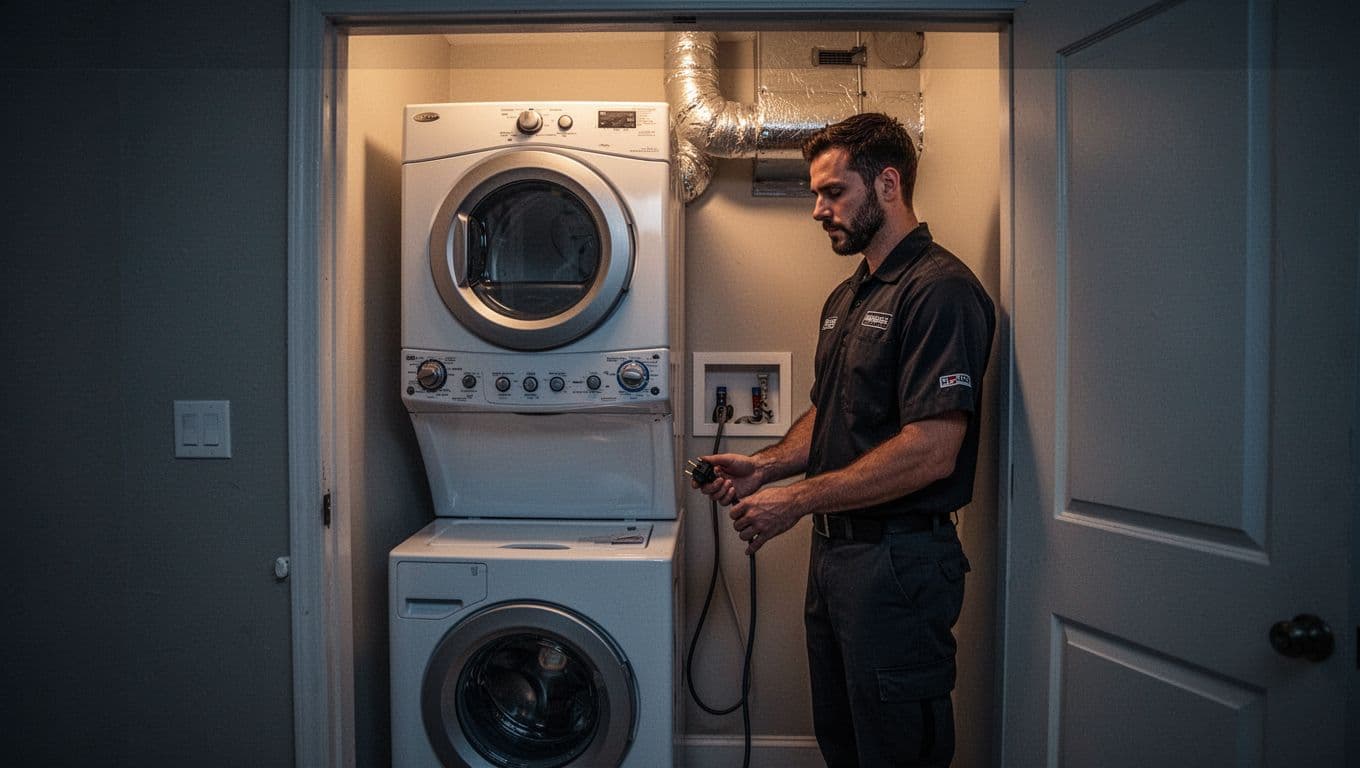
Disconnect power before inspection or cleaning
Turn the dryer off and unplug it before touching the rear connection, lint housing, or accessible duct. If the plug is unreachable, switch off the correct circuit breaker and keep the dryer off until the work is complete.
A gas dryer needs extra care. Do not disconnect, loosen, or reposition the gas line unless you're qualified to perform that work. If the appliance must move and the gas connection is too short or rigid, call a qualified technician.
Use this basic preparation sequence:
- Remove clothing from the dryer and clean the lint screen.
- Unplug the appliance, or turn off its circuit at the electrical panel.
- Clear loose items from around the washer-dryer.
- Check the installation manual for approved access and movement instructions.
- Stop if the appliance must be lifted, unstacked, or pulled against a gas line.
Never run a dryer with the vent disconnected, open, crushed, or temporarily routed into the room. Don't bypass a door switch, thermal fuse, airflow sensor, or another safety component to test the appliance.
Know when homeowner access ends
A homeowner can handle routine lint-screen care and a visual check of easy-to-reach areas. Inaccessible ductwork requires a different approach. Call a professional when the line runs behind finished walls, through a ceiling, into a crawl space, or across a roof.
Professional help is also the right choice for a suspected crushed duct, a loose connection, a damaged exterior hood, or a gas-related concern. The goal is to clean the exhaust route without creating a new leak or damaging the appliance.
What Stacked Dryer Vent Cleaning Should Include
A proper service should address more than the short piece of duct visible behind the dryer. The technician should inspect the route, identify the termination point, and explain any access or repair limits before starting.
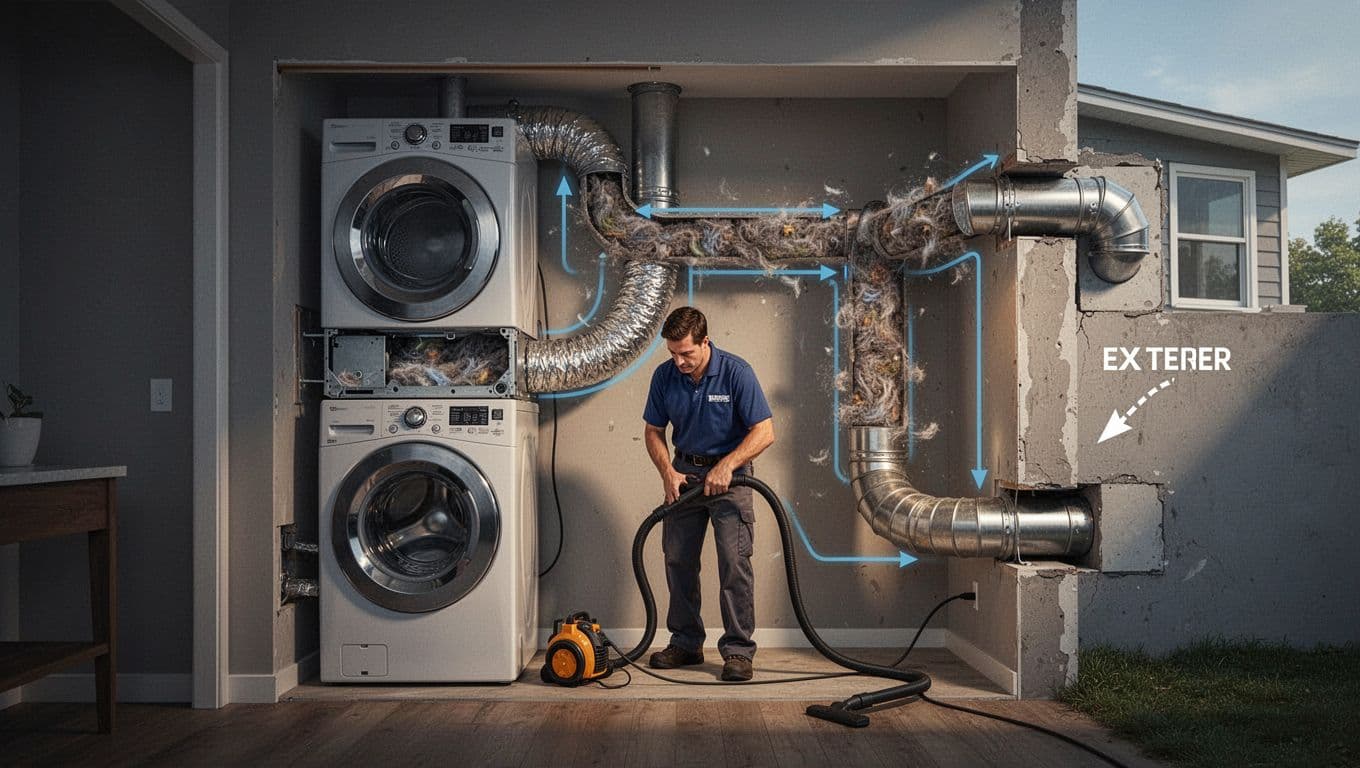
The technician should inspect the full accessible route
The first step is finding out where the vent goes. A short, straight line through an exterior wall is easier to clean than a long duct with several bends or a vertical run.
The inspection should cover the dryer connection, accessible duct sections, bends, signs of crushing, and the exterior termination. The technician should also check whether the vent uses an unsuitable material or has a loose joint that allows lint to escape.
If the duct terminates in an attic, it needs correction rather than routine cleaning alone. Hot, moist air and lint shouldn't discharge into that space. Review these attic dryer vent risks if you suspect the outlet is above the ceiling.
Cleaning methods depend on the duct and access
Professionals may use specialized brushes, rods, air tools, and vacuum equipment. The method depends on the duct's length, material, bends, and termination point. A technician may need to work from the appliance side, the exterior side, or both.
The service should remove lint without puncturing flexible sections or forcing debris deeper into the route. After cleaning, the technician should reconnect the vent securely and check airflow while the dryer operates normally with the vent attached.
Cleaning won't repair a crushed section, incorrect termination, damaged wall penetration, or poorly installed connector. Those problems need repair or rerouting. Ask for a clear explanation before approving additional work.
How Often Should Stacked Dryer Vent Cleaning Be Scheduled?
There isn't one schedule for every home. A short, straight vent may remain clear longer than a long route with bends, while a household that runs several loads daily creates more lint than one that uses the dryer occasionally.
Many homeowners use annual cleaning as a starting point. Consider more frequent inspections when the dryer gets heavy use, the home has pets, drying times increase, or the vent travels a long distance through walls or ceilings.
Schedule service sooner after changes
A new stacked installation deserves an airflow check if drying takes too long soon after setup. The connector may be bent behind the unit, or the duct may have shifted when the appliances were installed.
Service also makes sense after a remodel, appliance replacement, vent rerouting, or exterior wall work. These projects can change the duct path or damage the termination without creating an obvious indoor warning.
Choosing a Professional for a Stacked Unit
Ask what the estimate includes before scheduling. A careful company should explain whether the visit covers the entire accessible exhaust route, the exterior hood, appliance movement, airflow testing, and any repair recommendations.
Ask direct questions about access and safety
Find out whether the technician has experience with stacked washer-dryer installations. Ask how the crew protects the appliance and what happens if the dryer must be unstacked or moved.
You should also ask whether the company is insured, whether gas lines remain untouched unless a qualified professional is present, and whether the final airflow check happens with the vent properly connected. A written estimate should describe the work instead of offering one vague cleaning label.
These questions to ask an air duct cleaning company also apply when a dryer vent cleaning service is part of the visit. Dryer exhaust work needs its own inspection and plan.
Keep HVAC cleaning and dryer service separate
Air duct cleaning addresses the heating and cooling system. Dryer vent cleaning addresses lint and moisture exhaust from the dryer. One service doesn't replace the other.
If you need help with a hard-to-reach vent in Fort Myers, Naples, Tampa, or another Florida Gulf Coast community, you can Get a Free Estimate for dryer vent cleaning and related indoor air services.
Conclusion
A stacked washer-dryer saves space, but its elevated position and hidden duct route can make maintenance harder. Clean the lint screen after every load, disconnect power before inspection, and avoid moving the unit or touching gas connections without the right qualifications.
The strongest reason to arrange stacked dryer vent cleaning is a change in airflow, heat, or drying time. When the duct is inaccessible, crushed, routed through a roof, or connected to a gas dryer that needs moving, professional access protects both the appliance and your household.