5 Warning Signs of a Bait and Switch Duct Cleaning Offer
Searching for bait and switch duct cleaning can lead you to bargain ads that become expensive once a technician arrives. The low price attracts attention, then missing details, new fees, or urgent sales pitches change the deal.
The same concern applies to dryer vent cleaning. A higher price can be honest when newly discovered work is real, documented, and approved before service begins. These warning signs will help you compare offers, protect your budget, and choose service based on clear scope rather than pressure.
What Bait and Switch Duct Cleaning Looks Like
A bait-and-switch offer starts with one promise and ends with a different deal. The advertisement might promote whole-house duct cleaning at an unusually low price, but the fine print may limit the work to a few registers, one small section, or a basic inspection.
Some companies reveal the limits only during a phone call. Others wait until the technician arrives. By then, you may have taken time off work, moved furniture, or planned around the appointment. That pressure can make a homeowner more likely to accept charges that weren't clear earlier.
Read the offer as a scope of work
A trustworthy estimate should explain what the crew will clean, how many systems are included, and what could create an additional charge. It should also separate air duct work from dryer vent service because those systems have different airflow paths and cleaning needs.
Look for clear terms covering supply registers, return grilles, branch lines, main trunks, the air handler, and cleanup. The estimate doesn't need to include every component, but it should state what is and isn't part of the service.
A legitimate price change adds a defined task to a known scope. A bait-and-switch change replaces the advertised scope with a much higher price.
Warning Sign 1: An Unusually Low Price Has Major Restrictions
A low price isn't automatically dishonest. It becomes a concern when the ad presents a small starting price as if it covers an entire home.
An offer may say "whole-house cleaning" but count only a limited number of vents. It might exclude return lines, the main trunk, the air handler, containment, or post-service cleanup. Some offers also leave out travel fees, access charges, or treatment costs until the appointment.

Compare the scope, not just the number
Ask what the advertised price includes before booking. A clear answer should cover:
- The number of supply and return openings included in the price.
- Whether the crew will clean the accessible duct lines and HVAC components.
- Whether the quote covers one HVAC system or more than one.
- Whether containment, access panels, travel, and cleanup cost extra.
- Whether sanitizer, antimicrobial products, or other treatments are optional services.
If the representative can't answer without saying, "The technician will decide when they get there," treat that as a warning. You can also review this guide on how to read a duct cleaning estimate before comparing quotes.
Warning Sign 2: The Estimate Uses Vague Words Instead of Defining the Work
A weak estimate may sound professional while saying almost nothing. Phrases such as "complete vent service," "deep cleaning," or "air quality package" don't tell you which parts of the system receive attention.
The same problem appears with dryer vent offers. A short cleaning behind the dryer isn't the same as checking the full line to the exterior termination. The route may pass through a wall, attic, ceiling, or exterior wall, so the estimate should state how much of that path the crew will inspect and clean.
Ask questions that expose a thin quote
Before accepting an estimate, ask these questions in plain language:
- "How many supply and return openings are included?"
- "Will you clean the main trunk lines and branch lines?"
- "What HVAC components are included, such as the blower compartment or accessible plenums?"
- "For the dryer vent, will you follow the line all the way to the outside cap?"
- "What exact condition would cause the price to change?"
- "Will you show me the added work before I approve the charge?"
A company should answer these questions without becoming defensive. You can find more useful questions to ask an air duct cleaning company before scheduling a visit.
A written quote also gives you something concrete to compare. If one estimate lists the system components and another only says "duct cleaning," the prices aren't describing the same job.
Warning Sign 3: The Technician Changes the Price After Arriving
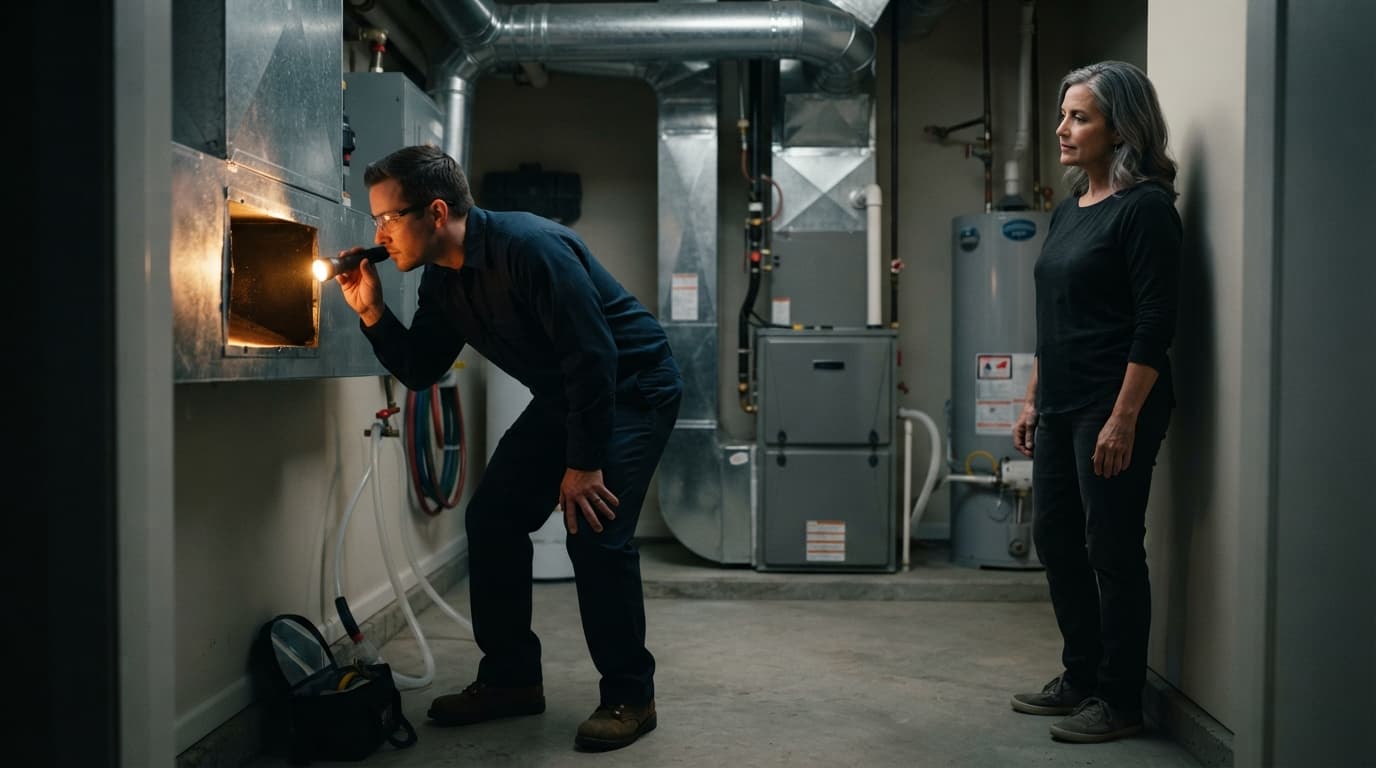
An on-site price change deserves careful attention, but it isn't always a bait-and-switch tactic. A technician may discover that the home has two HVAC systems instead of one, find that the requested dryer vent service wasn't included, or identify a separate access problem that requires a clearly priced task.
The difference is whether the new charge connects to a real condition and whether you can approve it before the work starts.
When a higher price can be legitimate
Use this comparison when the quote changes during an appointment:
| Legitimate price change | Bait-and-switch price change |
|---|---|
| The technician identifies a specific task outside the written scope. | The advertised service turns out to exclude basic work you expected. |
| The company explains the condition and gives a separate price. | The technician uses vague warnings without showing the issue. |
| You can accept or decline before additional work begins. | The crew pressures you to decide immediately. |
| The original service remains available at the quoted price. | The original price is no longer offered at all. |
For example, adding a second HVAC system after the technician confirms it exists is a reasonable scope adjustment. Telling you that the original price covers only a handful of registers, after the ad suggested whole-house service, is a different situation.
A fair technician can pause the job while you consider the change. If someone says the price is available only for the next few minutes, ask for the new scope in writing and take time to review it.
Warning Sign 4: The Sales Call Pushes Treatments You Didn't Request
Duct cleaning companies may offer sanitizers, antimicrobial treatments, odor products, UV lights, or air purification equipment. Some homes may have a reason to consider these services, but they should never appear as unexplained necessities.
A sales representative who adds several products before asking about your concerns may be selling a package rather than assessing your ductwork. Be careful when the conversation relies on broad claims about allergies, illness, mold, or indoor air quality without an inspection or supporting evidence.
Ask what the add-on does and where it goes
Request the product name, application location, separate cost, and reason for recommending it. Ask whether the service is optional and whether declining it changes the price of the duct cleaning already quoted.
You can also ask for photos or other evidence of the condition the treatment addresses. Dust around a register doesn't automatically prove contamination inside the entire system. Likewise, an odor may come from furniture, flooring, tobacco residue, moisture, or another source outside the ductwork.
Dryer vent cleaning should have its own explanation. Lint buildup, restricted airflow, damaged ducting, and a blocked exterior cap require inspection of the exhaust path, not an unrelated indoor air treatment. Learn what a dryer vent inspection can reveal before accepting a package.
Warning Sign 5: The Company Won't Explain Its Process or Show Its Work
Price and sales language aren't the only warning signs. A company can also create confusion by avoiding basic questions about equipment, access, debris containment, and cleanup.
A legitimate duct cleaning appointment should have a defined process. The crew may connect a vacuum system to the ductwork, create negative pressure, and use agitation tools to loosen debris. The exact equipment can vary with the home's layout, duct material, access points, and system condition.
Proof should match the promise
Ask how the crew will prevent loosened debris from entering the living space. Find out whether they protect floors and furnishings, how they access the system, and what cleanup is included.
Photos can help when they clearly show the condition before and after service. However, photos alone don't prove that every quoted component was cleaned. Match the pictures and service report to the written scope.
You can review what to expect during air duct cleaning so unfamiliar equipment or procedures don't make the sales pitch seem more convincing than it is. A large vacuum or complicated setup doesn't replace a clear estimate.
Be cautious when a representative refuses to identify the company, won't provide a written scope, or avoids explaining who will perform the work. You should know the business name, appointment details, total price, and cancellation terms before the crew arrives.
How to Protect Yourself Before and During the Appointment
A few simple habits can reduce confusion when you compare duct cleaning offers. Start by saving a screenshot of the advertisement, including its price and restrictions. Keep emails, text messages, and appointment confirmations in one folder.
Write down the representative's name, the date of the call, and the promises made. If the company gives you a verbal estimate, send a short message confirming your understanding and ask the representative to correct anything inaccurate.
Get important details in writing
Before scheduling, request an estimate that identifies:
- The HVAC systems and duct components included.
- The number of supply and return openings covered.
- The separate scope for dryer vent cleaning, if requested.
- Every included fee, along with conditions that could change the total.
- Optional treatments and equipment, listed separately.
- The expected cleanup and any service documentation provided afterward.
Then compare two estimates by scope. A lower number isn't better if it excludes half the work. A higher number may be reasonable when it includes more components, better containment, or a longer dryer vent route.
Decline high-pressure upsells
You can say, "I didn't approve that additional service. Please keep the work to the written estimate." If the technician insists, ask them to stop and provide the proposed charge in writing.
Don't sign a revised estimate while feeling rushed. Take a photo of the document, review each line, and ask what happens if you decline. If the original offer disappears as soon as you question the added charges, document the interaction and leave without authorizing more work.
When you want a clear starting point for air duct or dryer vent service, you can Get a Free Estimate with the home's system details and the concerns you want addressed.
Conclusion
A bait-and-switch duct cleaning offer usually depends on unclear scope, an unusually low starting price, or pressure at the door. You can avoid most problems by asking what the quote includes, separating HVAC ductwork from dryer vent service, and requiring approval before any price change.
A legitimate company can explain the work in plain language and give you room to decide. Keep the advertisement, estimate, messages, and final invoice together so the promise and the service can be compared clearly. In a home service decision, written scope beats a tempting number .